Skip to content

The best espresso grinders for 2026

Ranked on the two things espresso needs and filter does not: fine, precise adjustment, and consistency at a fineness where small errors become large ones.

Espresso is the demanding case. Filter brewing tolerates a wider spread of particle sizes because water passes through slowly under gravity; espresso forces water through a compressed bed at nine bars, and every inconsistency becomes a channel.

That means two requirements that filter grinders can ignore. The adjustment must be fine enough to move a shot by a couple of seconds, and the grind must be consistent at a fineness where fines clog and boulders let water through. Our ranking below is by how well each grinder meets those two demands, not by price.

Which machine makes your cup?

You only make espresso
A dedicated grinder with fine adjustment, even if it is poor for filter: the useful espresso range is narrow and demands precision.
You alternate espresso and filter
A versatile grinder with a wide range. It will be perfect for neither, but it saves buying two.
You change coffee often
Stepless adjustment earns its keep: every new bean needs a tweak that fixed steps do not always allow.
You want the best result for the money
Put it into the burrs and the adjustment, not into the display or the timer.

Picking by the coffee you drink

One coffee, always the same

Retention and adjustment matter less: you set it once and leave it. A stepped grinder is plenty.

Several coffees across the week

Every change of bean needs a new setting, and coffee left inside mixes into the next dose. That is where retention becomes concrete.

Espresso and filter on one grinder

The range has to cover two worlds. Few grinders do it well, and those that claim to often do one end badly.

Several cups back to back

Burrs heating up shift the grind across doses. It is a real effect, especially on small compact grinders.

The things that change the result

Burr type
Flat or conical: the first is reputed more uniform, the second more forgiving and cooler running. The difference in the cup is real but smaller than the gap between a good and a bad setting.
Adjustment: stepless or stepped
Espresso turns on differences that wide steps cannot reach. Stepless lets you aim between two steps, which is often exactly where the sweet spot sits.
Retention
Coffee left inside comes out with the next dose, stale and from another bean. That is what makes a grinder tiresome when you change coffee often.
How steady the body is
A grinder that walks or vibrates on the worktop grinds less evenly and adjusts less precisely. Weight is not a fault here.

Which figure for which cup

Your useWhat matters mostWhat matters little
One coffee, set onceBurr uniformityRetention
Varied coffeesStepless, low retentionThe timer
Espresso and filterRange widthThe finish
Several cups in a rowBurrs that stay coolThe display

The usual mistakes

Buying a blade grinder for espresso
A blade grinder chops instead of sizing: it produces both dust and chunks at once. For espresso, where fineness must be even, that rules it out.
Setting flow with the tamp
Tamping should be constant; the grind drives flow. Confusing the two means changing two variables at once and learning nothing.
Not purging after a change of setting
The grinder still holds the old setting in its chute. Without a purge, the first dose mixes two grinds and tells you nothing.
Judging a grinder on one shot
Beans change behavior for several days after roasting. A grinder is judged over a week, not over a cup.

By the drinker you are

The daily espresso
A dedicated grinder, stepless, with decent burr size. It is the purchase that improves the cup most at a given budget.
The versatile household
A wide range and easy-to-reach adjustment, because you will be touching it often.
The one who is given coffee
Low retention and quick adjustment: beans change without warning, and it is the grinder that absorbs those changes.

Cleaning, descaling and working life

An espresso grinder degrades through oils before burrs. Oily coffee leaves a deposit that goes rancid and ends up in the cup. No burr life can be stated: it depends on how much you grind and on the roast level.

  • Brush the chamber and the chute regularly, dry.
  • Use grinder cleaning tablets rather than rice, which damages burrs.
  • Purge a few grams after a long pause: what stayed inside has gone stale.
  • Check the adjustment collar: a grinder that drifts on its own usually has one loose.

Safety

Burrs spin fast and do not stop instantly.

  • Unplug before any dismantling, even for a simple brushing.
  • Never put a finger or a metal tool into a running hopper.
  • Pick foreign objects out of the beans — a stone breaks a burr and throws fragments.
  • Let it cool after a long run before opening the chamber.
  1. Best home espresso grinder Grinders

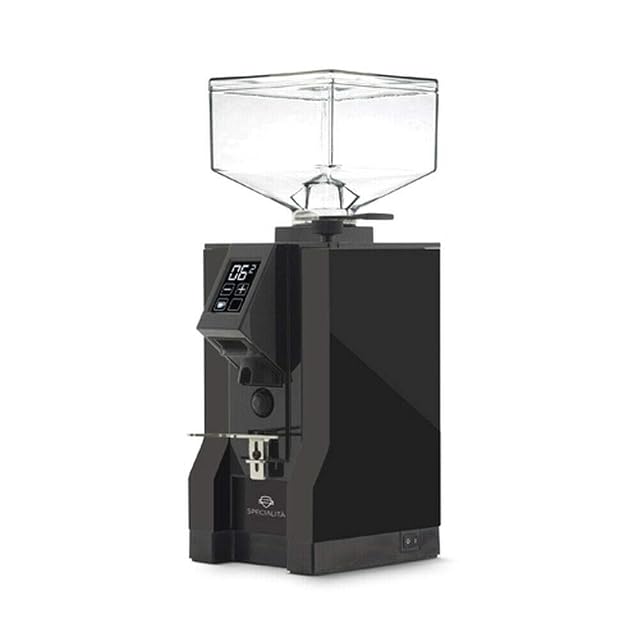
    Eureka Mignon Specialita

    55 mm (2.17 in) flat burr · stepless · near-zero retention

    Stepless adjustment, 55 mm (2.17 in) flat burrs and almost nothing left in the chute — the three things that separate a serious espresso grinder from a good one. It is quiet enough to use at six in the morning without an argument.

    Best for: A Gaggia Classic, Lelit or Rancilio owner who has stopped blaming their technique.
    9.0/10

  2. Best first espresso grinder Grinders

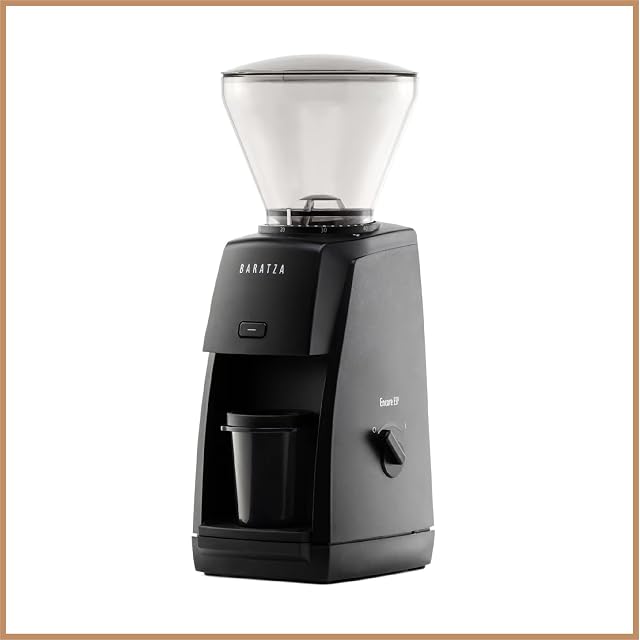
    Baratza Encore ESP

    40 mm (1.57 in) conical · 40 espresso steps + 20 filter

    The cheapest electric grinder that genuinely does espresso and filter without being bad at both. Forty fine steps in the espresso range is the whole point — and Baratza will still sell you a burr set for it in ten years.

    Best for: Anyone pairing a grinder with a Gaggia Classic, a Dedica upgrade, or a Barista Express they have outgrown.

    8.7/10

  3. Best hand grinder Grinders

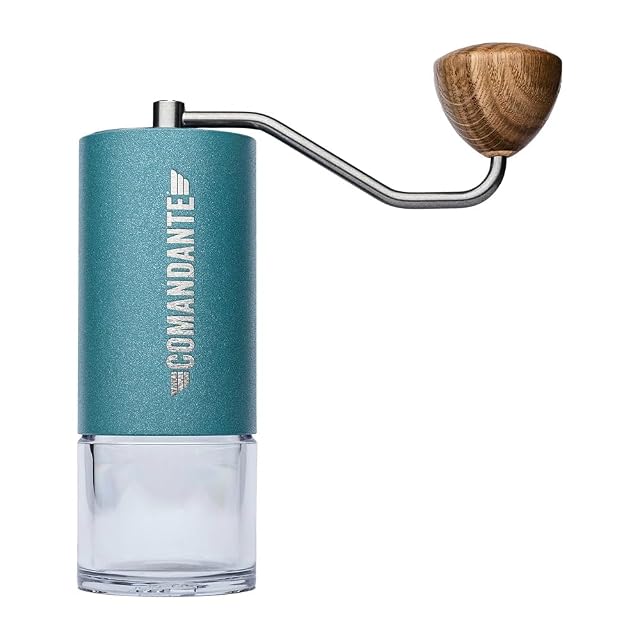
    Comandante C40 MK4 Nitro Blade

    39 mm (1.54 in) nitrogen-hardened burr · hand · filter & espresso

    The hand grinder others are measured against, and priced accordingly. Grinds better than electric grinders at twice the money, and asks for your arm every single morning.

    Best for: One or two exceptional cups a day, travel, and anyone who values the object.

    8.8/10

  4. Best value grinder, full stop Grinders

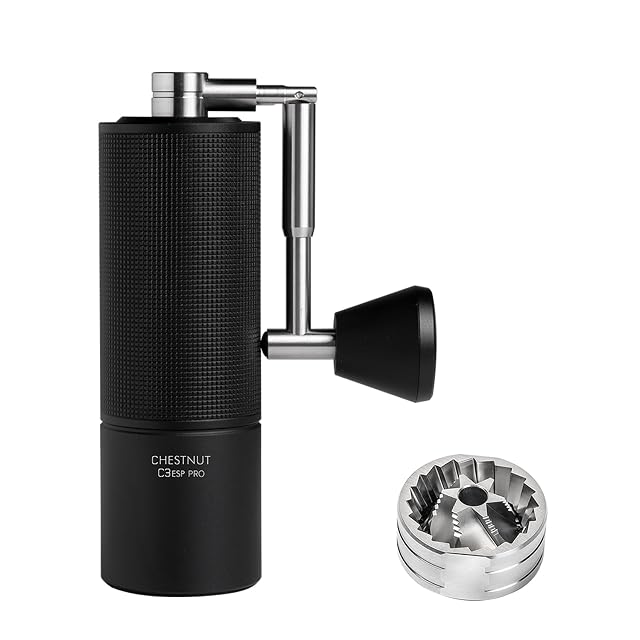
    TIMEMORE Chestnut C3 ESP Pro

    38 mm (1.50 in) stainless burr · hand · espresso-capable

    Out-grinds electric grinders costing three times as much, provided you accept the arm. The ESP burr reaches espresso fineness with real adjustment — which is not true of most hand grinders at any price.

    Best for: One or two coffees a day, or a travel grinder that does not compromise.

    8.4/10

What people want to know

Flat or conical burrs for espresso?

Neither is universally better. Flat burrs give a narrower particle distribution, which reads as clarity and separation — you taste individual notes. Conical burrs give a rounder, heavier, more forgiving shot. Light single origins favor flat; dark roasts with milk make the difference nearly invisible.

What does stepless adjustment actually buy me?

The setting you want always exists. With stepped adjustment you sometimes need a grind between two clicks and cannot have it. The cost is repeatability — there are no numbers to return to, so owners mark the collar with tape or a pen.

How much does retention matter?

Only if you single-dose. If you weigh in exactly what you intend to brew, a gram of retention means yesterday comes out first and today stays behind. If you keep a full hopper and grind on demand, retention is irrelevant.

Should I purge the grinder between shots?

Between two doses of the same coffee, no. After a change of setting or of bean, yes: what sits in the chute comes out with the next dose and skews the result.

Can a hand grinder make espresso?

Yes, and often well: for the same money a hand grinder has better burrs. The limits are the effort, real at fine settings, and the slowness if you serve several coffees.

When do burrs need replacing?

When the grind turns uneven and adjustment no longer rescues it. No lifespan can be quoted: it depends on kilos ground and on roast level, not on the calendar.

Should the grinder cost more than the machine?

Not necessarily, but it must not be trivial next to it. A heavily machine-weighted split is the commonest arrangement and the most regretted.

Why does my grinder throw grounds everywhere?

Static, made worse by dry air and light roasts. A drop of water stirred into the beans before grinding cuts it down sharply.

Each machine, and the cup it is for

Eureka Mignon Specialita

Aimed at: A Gaggia Classic, Lelit or Rancilio owner who has stopped blaming their technique.
Best thing about it: Stepless micrometric adjustment — infinite positions, not clicks

Worst thing about it: Overkill for anything but espresso; the filter range is an afterthought

Read the full review →

Baratza Encore ESP

Aimed at: Anyone pairing a grinder with a Gaggia Classic, a Dedica upgrade, or a Barista Express they have outgrown.

Best thing about it: 40 closely-spaced steps in the espresso range — you can actually dial a shot

Worst thing about it: Retention of roughly a gram means single-dosing needs a bellows or a tap

Read the full review →

Comandante C40 MK4 Nitro Blade

Aimed at: One or two exceptional cups a day, travel, and anyone who values the object.

Best thing about it: Nitrogen-hardened steel burrs that stay sharp for years of daily use

Worst thing about it: Very expensive for a device with no motor

Read the full review →

TIMEMORE Chestnut C3 ESP Pro

Aimed at: One or two coffees a day, or a travel grinder that does not compromise.

Best thing about it: Grind quality genuinely competes with 200-euro electric grinders

Worst thing about it: About 40 seconds of steady cranking per espresso dose

Read the full review →

What each step up in price adds

Entry level

$34 – $40

2 models

Mid range

$80 – $99

3 models

Upper range

$150 – $160

2 models

What moves between bands: Weight (as listed) — Entry level 1678 · Mid range 2041 · Upper range 2898

The quick call

Two-machine pages worth reading

Two machines, one page: the comparisons already written from this guide or this aisle.

How we arrived at this order

The machines above are taken from the catalog of this site. Specifications are what the maker and the Amazon listing publish; prices are the Keepa figure for the date shown, and both shift. The ranking weighs declared specifications, stated strengths against stated limits, and price. None of this gear has been brewed with by us, and nothing here claims it has.

Last checked on

The tool we use ourselves

Chosen your machine? Now buy it at the right price.

Espresso machines and grinders swing by a hundred dollars or more across the year, and the biggest "discounts" often land at prices the same model sold for six weeks earlier. UniverTrack tracks the real price history across retailers, spots fake reductions, and alerts you when it is genuinely the moment to buy.

Real price historyBuy-now alertsAI buying assistant
Try free for 14 days →
No commitment · Cancel in one click · 5 languages