The hand grinder others are measured against, and priced accordingly. Grinds better than electric grinders at twice the money, and asks for your arm every single morning.
The bottom line The best hand grind available, at a price that is a decision rather than a purchase.
There is a point in most equipment categories where further spending buys refinement rather than capability. The Comandante sits just past it, and it is worth being clear which side of that line each of its qualities falls on.
On capability: the nitrogen-hardened burrs produce a grind that genuinely competes with, and often beats, electric grinders costing twice as much. In a pour-over the difference against a mid-range electric is audible in the cup — more separation, less muddiness, fewer fines turning the finish bitter. That part is real and measurable.
On refinement: the crank turns more smoothly under load than any other hand grinder, the tolerances are tight, the axle does not wobble, and the whole thing is built to be taken apart and serviced rather than replaced. Fifteen years from now this will still work and parts will still exist.
The case against is straightforward. It costs as much as a very good electric grinder that would do the same work while you did something else, and at espresso fineness with a dense light roast it is hard physical effort. The click detents, while fine for filter, are a little coarse when you are trying to move a shot by two seconds.
Buy it if you make one or two cups a day, if you travel with coffee, or if you want the last few per cent of grind quality and are prepared to earn it each morning. Otherwise the Timemore C3 gets you most of the way for a quarter of the money, and the Ode does filter better while you stand there doing nothing.
What we like, and what we don't
Strengths
Nitrogen-hardened steel burrs that stay sharp for years of daily use
Grind quality at or above 500-euro electric grinders
Built to be serviced — every part is available and replaceable
Compromises
Very expensive for a device with no motor
Espresso-fine grinding is genuinely hard work with light roasts
Stepped adjustment is a little coarse for espresso specifically
Where this one sits in its aisle
At 340 $, it is the 4 cheapest of the 6 models in this category published here.
Cheapest in the aisle80 $
Median340 $
Dearest in the aisle450 $
Specifications
Burr type
39 mm nitrogen-hardened steel
Range
Filter and espresso
Adjustment
Stepped, click detents
Capacity
40 g
Retention
Near zero
Questions people actually ask
Is it worth four times the Timemore C3?
On grind quality alone, no — the Timemore reaches perhaps eighty per cent of it for a quarter of the price. What the extra buys is burr longevity, smoother cranking under load, better build, and a device that will still be serviceable in fifteen years. Whether that is worth 200 more is a question about you, not about coffee.
Filter or espresso?
Excellent at filter, good at espresso. The click detents are slightly coarser than ideal for dialling a shot, and the effort at espresso fineness is real. Many owners use it for pour-over and keep an electric grinder for espresso.
Our score
8.8/ 10
The best hand grind available, at a price that is a decision rather than a purchase.
Who this one is for
One or two exceptional cups a day, travel, and anyone who values the object.
Compared with its closest rivals
Same category, nearest prices. Only the specifications every one of them states are shown — a half-empty column compares nothing.
A reference exists on these Amazon stores: France, Germany, Italy, Spain, United Kingdom, United States. Listed is not the same as in stock — availability changes daily.
Details checked on August 8, 2026.
Sources
Specifications: manufacturer sheet and Amazon product page. Prices and availability: Keepa. No product on this site has been physically tested.
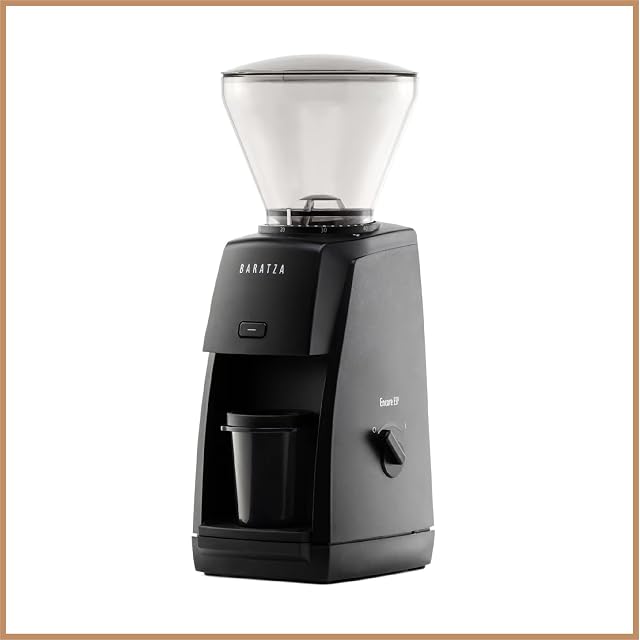
The cheapest electric grinder that genuinely does espresso and filter without being bad at both. Forty fine steps in the espresso range is the whole point — and Baratza will still sell you a burr set for it in ten years.
Best for: Anyone pairing a grinder with a Gaggia Classic, a Dedica upgrade, or a Barista Express they have outgrown.
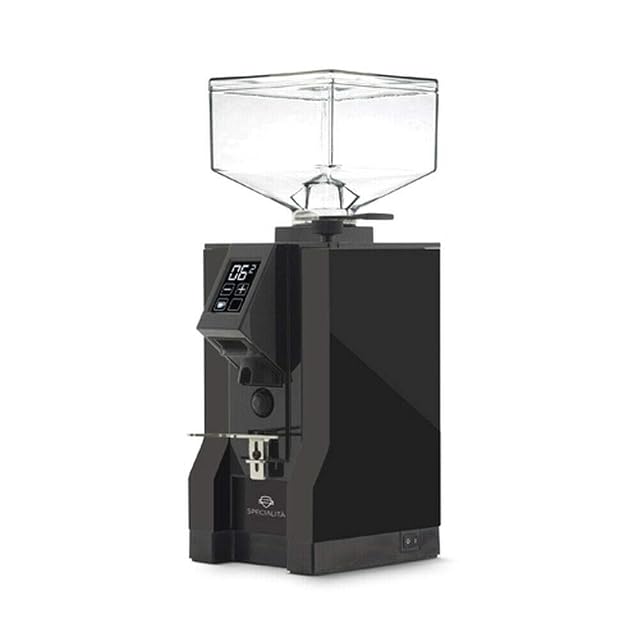
Stepless adjustment, 55 mm flat burrs and almost nothing left in the chute — the three things that separate a serious espresso grinder from a good one. It is quiet enough to use at six in the morning without an argument.
Best for: A Gaggia Classic, Lelit or Rancilio owner who has stopped blaming their technique.
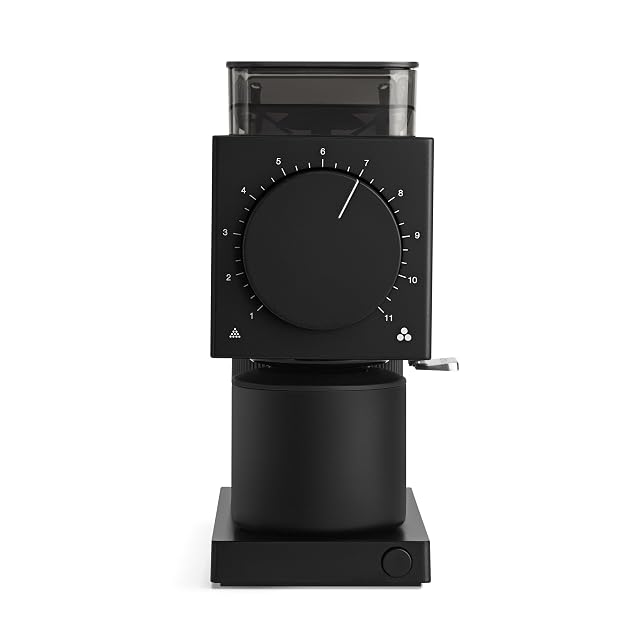
64 mm flat burrs, near-zero retention and a footprint the size of a mug, built for filter and honest about not doing espresso. For pour-over it is the clearest grind you can buy at this price.
Best for: V60, Chemex, AeroPress and batch brewing, where clarity is the whole point.