Skip to content

The best espresso machines for 2026

A portafilter machine asks more of you than a bean-to-cup, and gives more back. We compare single boiler, heat exchanger and dual boiler machines on temperature stability, steam power and build — and say plainly where the extra money stops buying better coffee.

The models we recommend

  1. Cheapest honest espresso

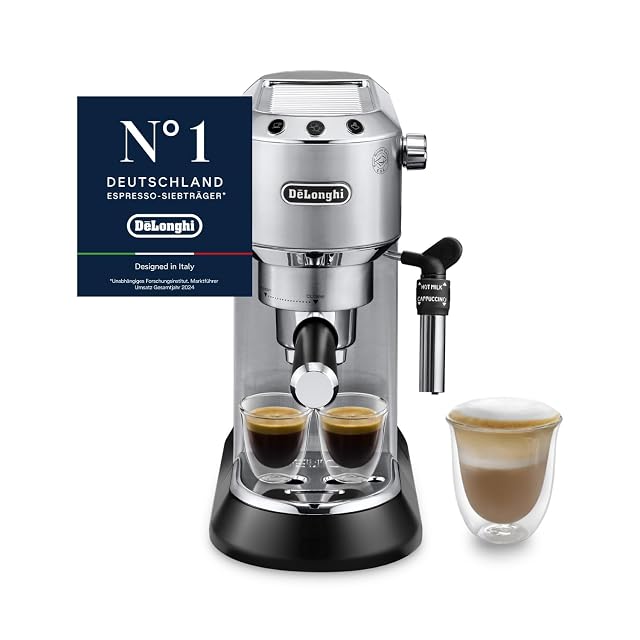
    De'Longhi Dedica Style EC685

    51 mm portafilter · 15 cm wide · pressurised baskets

    Fifteen centimetres wide, heats in forty seconds, and makes a decent drink for under 200. It ships with pressurised baskets that fake crema from any grind — which is exactly why it works for beginners and why it stalls after a year.

    Best for: A tiny kitchen, a first espresso machine, or a second machine for an office.

    7.2/10

    ≈ $200 / £170 / 180 €

  2. Best way to start espresso

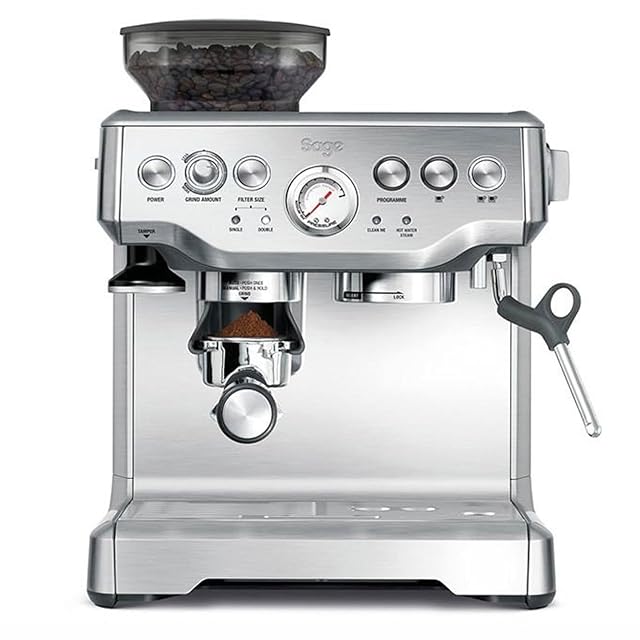
    Sage Barista Express

    54 mm portafilter · built-in conical burr · 2 L tank

    Machine and grinder in one box, at a price that undercuts buying them separately. The compromises are real — 54 mm basket, single boiler, a grinder you will outgrow — but nothing else takes a beginner this far this cheaply.

    Best for: Your first portafilter machine, if you want one purchase rather than a project.

    8.6/10

    ≈ $700 / £550 / 600 €

  3. Best machine to keep

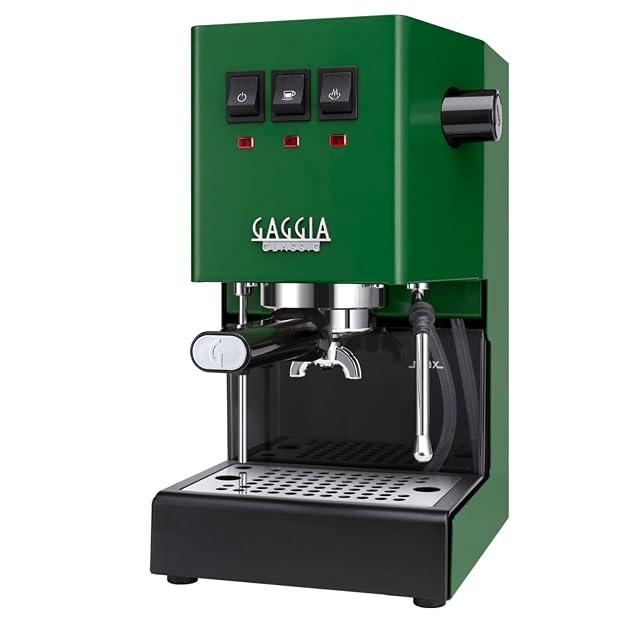
    Gaggia Classic Evo Pro

    58 mm commercial portafilter · 3-way solenoid · steel body

    A 58 mm commercial portafilter, a steel body and a three-way solenoid, in a machine cheap enough to modify. Nothing else at this price is still worth owning in fifteen years, and nothing else has this much of an aftermarket.

    Best for: Someone who wants one espresso machine for the next fifteen years and does not mind learning it.

    8.5/10

    ≈ $500 / £400 / 450 €

  4. PID at the entry price

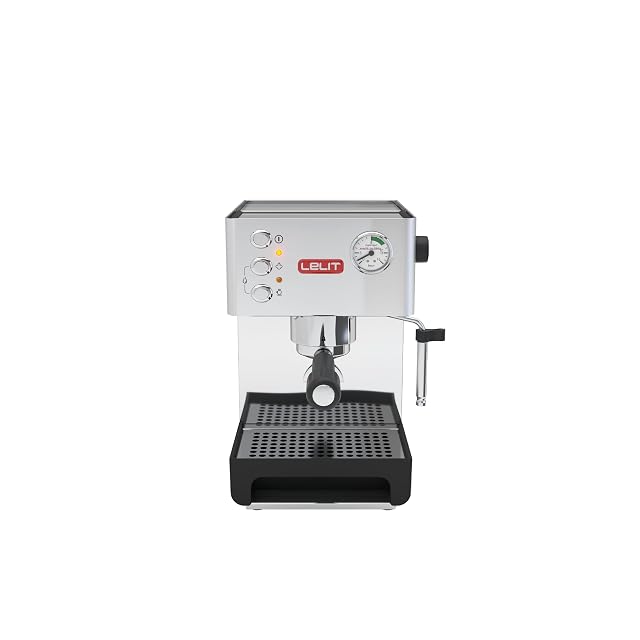
    Lelit Anna PL41TEM

    58 mm · PID temperature control · single boiler

    A 58 mm single boiler with a proper PID, which is a specification that normally starts several hundred higher. Temperature you can set and trust, in a machine that costs about what a Gaggia does.

    Best for: Someone who wants repeatable brew temperature without stepping up to a dual boiler.

    8.5/10

    ≈ £450 / 480 €

  5. Best small espresso machine

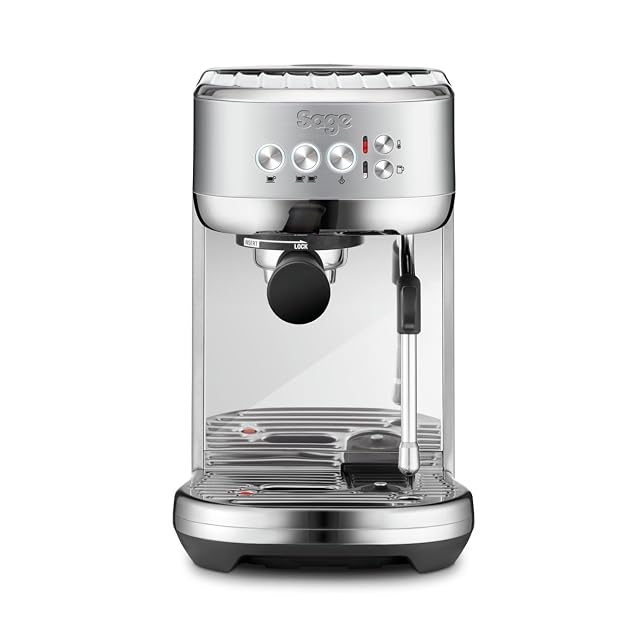
    Sage Bambino Plus

    54 mm · automatic milk texturing · 3 s heat-up

    Ready in three seconds, nineteen centimetres wide, and it textures milk automatically to a temperature you choose. The one espresso machine that suits a small kitchen without pretending grind does not matter.

    Best for: Someone who already owns a grinder, or is buying one, and has no space.

    8.4/10

    ≈ $500 / £380 / 400 €

  6. Best all-in-one alternative

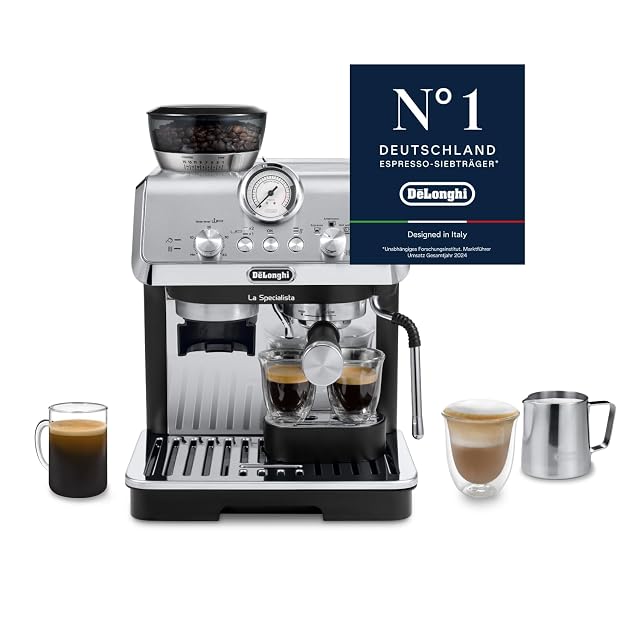
    De'Longhi La Specialista Arte

    51 mm · built-in conical grinder · manual wand

    De'Longhi's answer to the Barista Express, with a tidier grinder-to-portafilter workflow and better temperature control. Worth comparing directly rather than assuming Sage wins by default.

    Best for: A first serious espresso setup where one appliance has to do everything.

    7.9/10

    ≈ $600 / £450 / 480 €

Which one for which need

Moving to real espresso

The portafilter is what separates an espresso machine from a pressurised coffee maker. Its diameter also governs which accessories you can fit to it.

Gaggia Classic Evo Pro

Entertaining without constant refills

On a manual machine the tank empties fast between extractions and steam-wand purges.

Lelit Anna PL41TEM

Starting without overspending

A tight budget sits better in a good grinder than in the machine. The most affordable model in the aisle leaves room for that.

De'Longhi Dedica Style EC685

Who each type suits

Motivated beginner
A simple machine with the right portafilter diameter and a decent grinder beats a sophisticated machine fed pre-ground coffee. The order of priorities is grinder, coffee, machine.
Milk drinker
Look at the steam wand before anything else. A single-hole wand with no assistance makes genuinely textured milk and demands practice; an assisted wand simplifies things and caps out lower.
Limited counter space
Width and height under the portafilter decide as much as performance. A machine that will not fit under the cupboard ends up somewhere else, or nowhere.

The trade-offs to weigh

Thermoblock against boiler
A thermoblock heats fast and regulates less finely. A boiler takes time to come up and holds temperature, which shows most on light roasts and long sessions.
Pressurised basket against classic basket
The pressurised basket forgives an approximate grind and caps quality. The classic basket demands a capable grinder, and it is the only route to real espresso.
Simplicity against adjustment
A one-button machine gives a steady result you cannot improve. An adjustable machine takes time before it beats the first one.

Questions buyers ask

Do I need a dedicated grinder?

Yes, and it is the most rewarding purchase. An average machine with a good grinder consistently beats a high-end machine fed pre-ground coffee or a blade grinder.

What do the advertised 15 or 20 bars mean?

That is the pump's maximum pressure, not the extraction pressure, which sits around 9 bars. Beyond that, the figure is a marketing line with no effect in the cup.

Why does my espresso run too fast?

Grind too coarse in the vast majority of cases, then insufficient dose, then uneven tamping. It is the grinder that needs adjusting, not the machine.

What portafilter size should I choose?

58 mm is the professional standard and opens up every accessory. Smaller diameters work perfectly well but limit the choice of baskets and tampers.

How long should I heat up before the first coffee?

Far longer than advertised: the machine is ready, the group and the portafilter are not. Fifteen to twenty minutes visibly change the result, especially on a boiler machine.

Does an espresso machine need descaling?

Yes, and filtered water sharply reduces the frequency. Scale blocks the narrow lines before it reaches the boiler, and the flow turns erratic well before any breakdown.

Is pre-ground coffee suitable?

In a pressurised basket it gives an acceptable result. In a classic basket, almost never: the particle size is wrong and the water runs through too fast.

How does it differ from a pod machine?

Control. The pod guarantees a constant result and forbids any improvement; the portafilter lets you ruin everything and do markedly better.

What to remember

In this aisle the machine matters less than what surrounds it: a capable grinder and fresh coffee do more for the cup than any extra feature. Check the portafilter diameter and the type of basket supplied — those set the ceiling.

This category at a glance

Every model compared

Only the specifications at least four models out of five state. A column that is more empty than full compares nothing.

ModelPricePortafilterWater tank
De'Longhi Dedica Style EC685200 $51 mm1.1 L
Lelit Anna PL41TEM450 $58 mm commercial2.7 L
Gaggia Classic Evo Pro500 $58 mm commercial2.1 L
Sage Bambino Plus500 $54 mm1.9 L
De'Longhi La Specialista Arte600 $51 mm1.5 L
Sage Barista Express700 $54 mm2 L

What each budget buys here

Lower range

200 – 450 $

2 models

Lelit Anna PL41TEM

Mid range

500 – 500 $

2 models

Sage Bambino Plus

Upper range

600 – 700 $

2 models

Sage Barista Express

Guides covering this category

Sources and method

Specifications: manufacturer sheets and Amazon product pages. Prices and availability: Keepa. No product on this site has been physically tested.

Most recent revision in this category: August 8, 2026.

How we assess products