Skip to content

The best filter coffee grinders

Filter brewing rewards clarity above all, and clarity comes from a narrow particle distribution. These are the grinders that deliver it, including one that refuses to do espresso at all.

Filter coffee is where grind quality shows most clearly, because there is nothing else in the cup to hide behind. No milk, no crema, no nine bars of pressure — just water passing through coffee and taking what it takes.

What you are looking for is a narrow particle distribution. Fines over-extract quickly and turn bitter; boulders never extract properly and taste sour; a grinder that produces a lot of both gives you a cup that is somehow both at once, which people usually blame on the beans.

Which one do you need?

You mostly brew V60 or Chemex
A grinder with a mid range that is even in the coarser settings. Espresso-level fineness will never serve you.
You use a French press
Uniformity at coarse settings becomes the only criterion: fines slip through the metal filter and leave the cup muddy and bitter.
You might want espresso one day
A versatile grinder, knowing it will be less clean at both ends than a dedicated one.
You grind a cup at a time
A good hand grinder rivals many electrics, for far less bulk and money.

Choosing by use

Pour-over in the morning

A medium grind, even, and above all few fines. It is the quantity of very fine particles that drives bitterness, not the average size.

French press

Coarse grind, low tolerance for fines. Many grinders that are fine for pour-over disappoint here, for lack of uniformity at coarse settings.

Speciality coffee

Light roasts are hard and harder to grind evenly. A grinder that copes with a light roast will cope anywhere.

Grinding for several people

A carafe needs a large dose in one go: speed and burr heating become noticeable.

The criteria that actually matter

How many fines it makes
This is the real filter criterion. Two grinders set to the same average size can give very different cups depending on how much dust they produce.
The useful range
A grinder designed for espresso often jumps too far between steps at coarse settings, exactly where filter brewing needs nuance.
Hand or electric
Hand grinders offer better burrs for the money, at the cost of effort and time. At one or two cups a day the sums often favour them.
Static
Coarse grinds cling less, but it still happens. A grinder that sprays grounds across the counter becomes tiresome whatever its quality.

Which criterion for which use

The methodThe grindThe sensitive point
V60, ChemexMedium to fineThe proportion of fines
French pressCoarseUniformity at coarse settings
Electric filter machineMediumConsistency dose to dose
AeropressVaries with the recipeHow wide the range is

Mistakes to avoid

Grinding ahead of time
Ground coffee loses its volatile aromas within minutes and oxidises within hours. It is the one habit that cancels out the benefit of a good grinder.
Using a blade grinder
It makes dust and chips at the same time. In filter brewing, the dust clogs and over-extracts while the chips go untouched.
Keeping one grind for every coffee
A light roast needs a finer grind than a dark one to extract as much. One fixed setting means getting one coffee right and the rest wrong.
Judging the grind by eye
The eye does not see fines, which are exactly what spoils the cup. Taste and drawdown time say far more.

Choosing by profile

One or two cups a day
A good hand grinder: quality burrs, little bulk, and the effort stays reasonable at that dose.
The family carafe
An electric that can take a big dose without heating, with meaningful adjustment at coarse settings.
The curious drinker
A wide range and legible adjustment, to follow coffees as they come without fighting the machine.

Upkeep and how long it lasts

A filter grinder fouls less than an espresso grinder, because light roasts are less oily. The deposit still builds, and it goes rancid. Nothing here allows a burr life to be quoted: it depends on kilos ground and on bean hardness.

  • Brush the chamber dry every few hundred grams.
  • Never wash burrs in water: they rust and lose their bite.
  • Purge after a change of coffee so two batches do not mix.
  • On a hand grinder, check the axle nut, which works loose with use.
  1. Best filter grinder Grinders

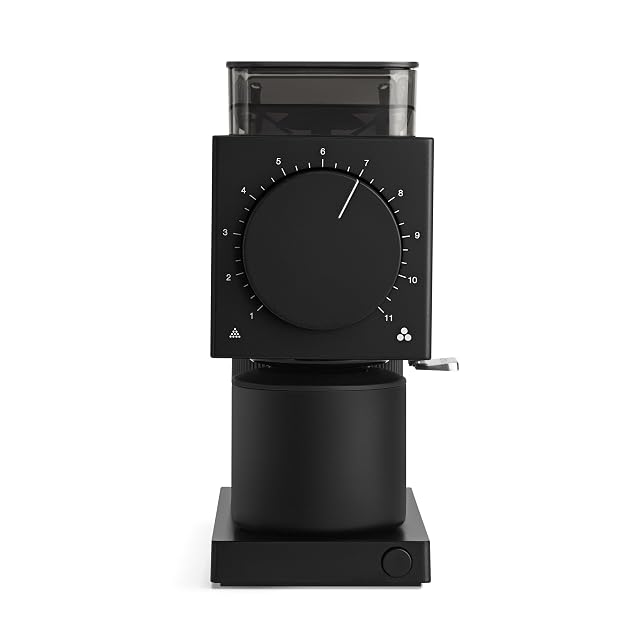
    Fellow Ode Brew Grinder Gen 2

    64 mm flat burr · filter only · single dose

    64 mm flat burrs, near-zero retention and a footprint the size of a mug, built for filter and honest about not doing espresso. For pour-over it is the clearest grind you can buy at this price.

    Best for: V60, Chemex, AeroPress and batch brewing, where clarity is the whole point.

    8.7/10

    ≈ $345 / £275 / 300 €

  2. Best hand grinder Grinders

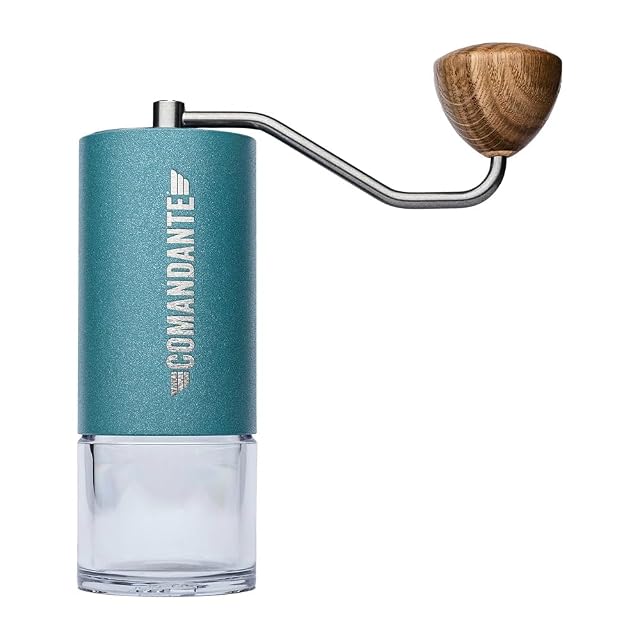
    Comandante C40 MK4 Nitro Blade

    39 mm nitrogen-hardened burr · hand · filter & espresso

    The hand grinder others are measured against, and priced accordingly. Grinds better than electric grinders at twice the money, and asks for your arm every single morning.

    Best for: One or two exceptional cups a day, travel, and anyone who values the object.

    8.8/10

    ≈ $340 / £270 / 290 €

  3. Best first espresso grinder Grinders

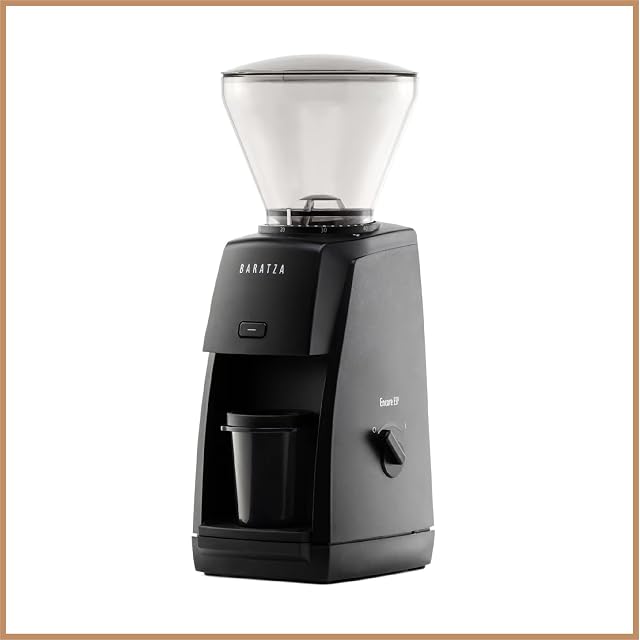
    Baratza Encore ESP

    40 mm conical · 40 espresso steps + 20 filter

    The cheapest electric grinder that genuinely does espresso and filter without being bad at both. Forty fine steps in the espresso range is the whole point — and Baratza will still sell you a burr set for it in ten years.

    Best for: Anyone pairing a grinder with a Gaggia Classic, a Dedica upgrade, or a Barista Express they have outgrown.

    8.7/10

    ≈ $200 / £190 / 220 €

Questions people actually ask

Why would I buy a grinder that cannot do espresso?

Because designing for one range is how a grinder gets its consistency. A grinder that must span espresso and filter compromises the burr geometry for both. If you only brew pour-over, a filter-only grinder at the same price will produce a noticeably cleaner cup.

Does grind consistency matter as much for filter as for espresso?

It matters differently. Espresso punishes inconsistency with channelling, which is dramatic. Filter punishes it with muddiness — fines over-extract and turn bitter while boulders under-extract and taste sour, and the two arrive in the same cup. It is less obvious and just as real.

What is the water trick people mention for static?

Spray or stir a single drop of water into the beans before grinding. It stops static making grounds cling to the chute and the catch cup, and it has no measurable effect on the brew. Almost every flat-burr grinder benefits.

What grind for a French press?

Coarse, and above all even: it is the fines that pass the metal filter and leave the cup muddy and bitter. It is the use most demanding of uniformity.

Will an espresso grinder do for filter?

It gets there, but often badly at coarse settings: the steps spread out just where filter brewing wants nuance. The reverse — a filter grinder on espresso — works even less well.

Weigh, or measure in spoons?

Weigh, always. A spoon of coffee changes mass with roast and grind, and that is precisely the variable you are trying to pin down.

Should the grind change with the coffee?

Yes: a light roast needs a finer grind than a dark one to extract as much. Keeping one setting means getting one coffee right and the rest wrong.

Is a noisy grinder necessarily a bad one?

No, but noise and vibration often betray a body that is not rigid, and a grinder that moves grinds less evenly. It is a clue, not proof.

Why each one, and for whom

Fellow Ode Brew Grinder Gen 2 · $345

For : V60, Chemex, AeroPress and batch brewing, where clarity is the whole point.

Main strength : 64 mm flat burrs give clarity that conical grinders at this price cannot

Main limitation : Filter only — it will not go fine enough for espresso, by design

Read the full review →

Comandante C40 MK4 Nitro Blade · $340

For : One or two exceptional cups a day, travel, and anyone who values the object.

Main strength : Nitrogen-hardened steel burrs that stay sharp for years of daily use

Main limitation : Very expensive for a device with no motor

Read the full review →

Baratza Encore ESP · $200

For : Anyone pairing a grinder with a Gaggia Classic, a Dedica upgrade, or a Barista Express they have outgrown.

Main strength : 40 closely-spaced steps in the espresso range — you can actually dial a shot

Main limitation : Retention of roughly a gram means single-dosing needs a bellows or a tap

Read the full review →

What each price bracket buys

Entry level

$80 – $110

2 models

Mid range

$200 – $340

2 models

Upper range

$345 – $450

2 models

Deciding in one line

Useful comparisons

Head-to-heads already published between two models from this guide or this aisle.

How this guide is built

The models here come from the catalogue of this site. Specifications are those published by the manufacturer and on the Amazon product page; prices are what Keepa reported on the date below, and both move. The ranking uses declared specifications, the balance of stated strengths and limitations, and price. No product on this site has been physically tested, and nothing here claims otherwise.

Last checked on

The tool we use ourselves

Chosen your machine? Now buy it at the right price.

Espresso machines and grinders swing by a hundred euros or more across the year, and the biggest "discounts" often land at prices the same model sold for six weeks earlier. UniverTrack tracks the real price history across retailers, spots fake reductions, and alerts you when it is genuinely the moment to buy.

Real price historyBuy-now alertsAI buying assistant
Try free for 14 days →
No commitment · Cancel in one click · 5 languages