Skip to content

The best milk frothers for home

Three completely different tools for three different situations, ranked on the thing that decides whether an appliance gets used: how long it takes to clean.

Milk is half of most of the coffee people actually drink, and the equipment for it splits into three categories that are not really competing with each other.

If your machine has no steam wand, an automatic frother is the answer. If it has one, a good pitcher will do more for your drinks than any appliance. And if you make a cappuccino twice a month, a manual plunger does eighty per cent of the job for twenty-five euros.

Ranked below on cleaning as much as on foam, because the frother that gets abandoned in a cupboard is the one that took four minutes to wash.

Which one do you need?

You have no steam machine
A standalone frother, heating or not, depending on whether you drink hot or cold.
You have an espresso machine
The steam wand does it better, once you have practised. A frother stays useful for cold drinks and as a fallback.
You drink plant-based milk
Look for an appliance that heats less: plant drinks foam poorly when they get too hot.
You make several drinks at once
Capacity becomes the criterion: a small frother means three rounds, and the milk cools in between.

Choosing by use

Morning cappuccino

Firm, warm foam in a minute, unattended. That is what these appliances are made for.

Lattes and softer drinks

A finer, wetter foam, harder to get from an automatic appliance than from a steam wand.

Cold drinks

A non-heating frother or a cold setting opens up iced drinks, which a steam wand cannot do.

Latte art

That is steam wand territory. Automatic frothers give foam too stiff and too dry to pour patterns.

The criteria that actually matter

Heating or not
A heating frother simplifies everything but imposes its temperature. A non-heating one means warming the milk separately, and leaves you in control.
The texture it makes
Firm foam or fine foam: they are not the same drink. Disc-type appliances generally give firmer foam, good for cappuccino and less so for latte.
Cleaning
This decides whether it actually gets used. A removable jug that goes in the dishwasher changes everything; a heated base you cannot immerse soon becomes a chore.
Usable capacity
Milk doubles in volume as it foams: the quoted capacity is not the amount of milk you can put in. It is a classic cause of overflow.

Which criterion for which use

The drinkWhat you needThe tricky part
CappuccinoFirm foam, heating applianceThe imposed temperature
LatteFine foamHard to get automatically
Cold drinkA cold settingFew appliances do it well
Plant-based drinkModerate heatingThe foam collapses fast

Mistakes to avoid

Filling to the mark with milk
The mark shows the maximum once foamed. Filled to the brim, milk overflows and burns on the element, which is unpleasant to clean.
Heating the milk too much
Past a certain temperature the proteins no longer hold foam and the taste turns cooked. The most stable foam comes well below boiling.
Expecting plant drinks to behave like milk
Proteins and sugars differ, and not every product foams. Barista versions are formulated for it; the others are not.
Letting milk dry inside
Heated milk dries within minutes and becomes very hard to remove. That is what finishes off most of these appliances.

Choosing by profile

The daily cappuccino
A heating frother with a removable jug: the foam is consistent and cleaning takes ten seconds.
The espresso machine owner
The steam wand, plus a small frother for cold drinks. No point duplicating what the machine does better.
The plant-based household
An appliance that heats gently, and products formulated to foam. Equipment does not rescue a drink that will not.

Upkeep and how long it lasts

A frother lives or dies on immediate cleaning. Dried milk clings to the coating and the whisk, and the layer that builds changes the foam before it starts to smell. No lifespan can be stated; it depends entirely on that habit.

  • Rinse in warm water within the minute, before the milk dries.
  • Do not immerse an appliance with an electrical base: wipe the inside.
  • Descale if it heats: milk deposits limescale too.
  • Check the non-stick coating; once scratched, it holds everything.

Safety

Hot milk burns for longer than water because it clings to skin.

  • Do not open a heating frother mid-cycle.
  • Respect the fill mark: milk burnt onto an element smokes.
  • Let it cool before removing the whisk.
  • Keep it out of children's reach during and after the cycle.
  1. Best automatic frother Milk frothers

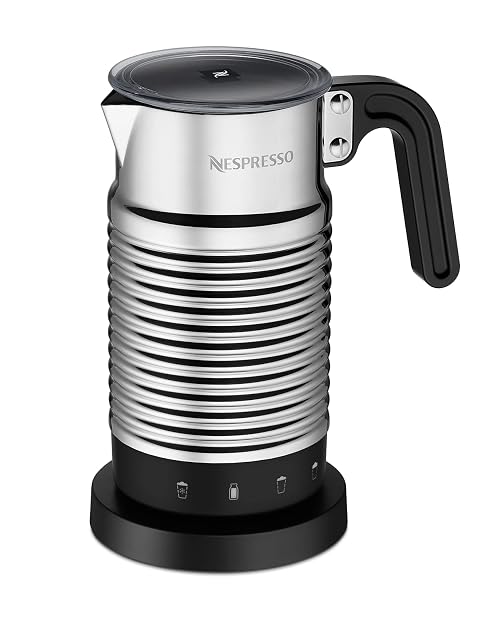
    Nespresso Aeroccino 4

    4 modes · hot & cold froth · 240 ml

    Pour milk in, press once, walk away. It makes better foam than most people manage by hand, handles oat milk properly, and the whole jug goes under a tap.

    Best for: A capsule or black-coffee machine owner who wants cappuccino without a steam wand.

    8.2/10

    ≈ $130 / £90 / 100 €

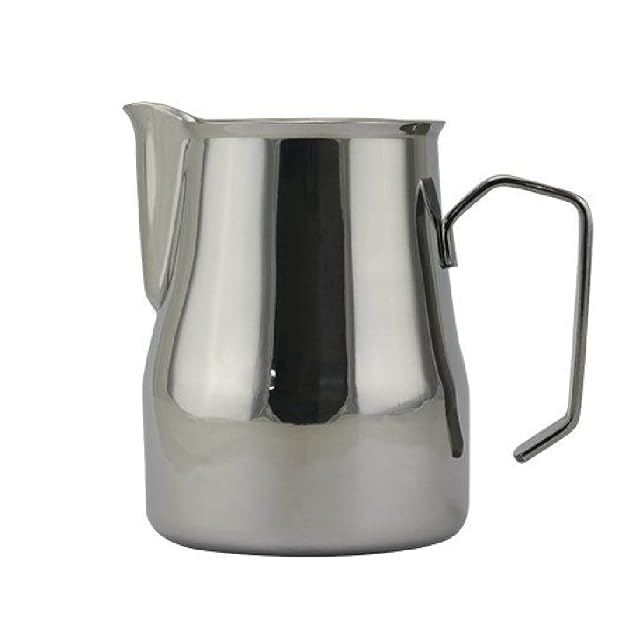
  2. Best pitcher for latte art Milk frothers

    Motta Europa 500 ml

    18/10 stainless · 500 ml · sharp spout

    The pitcher most European baristas actually use. The sharp, low spout is what puts a pattern on the surface rather than a blob — and it costs less than most people spend on beans in a month.

    Best for: Anyone with a steam wand who has been wondering why their pours look like blobs.

    8.9/10

    ≈ $40 / £30 / 32 €

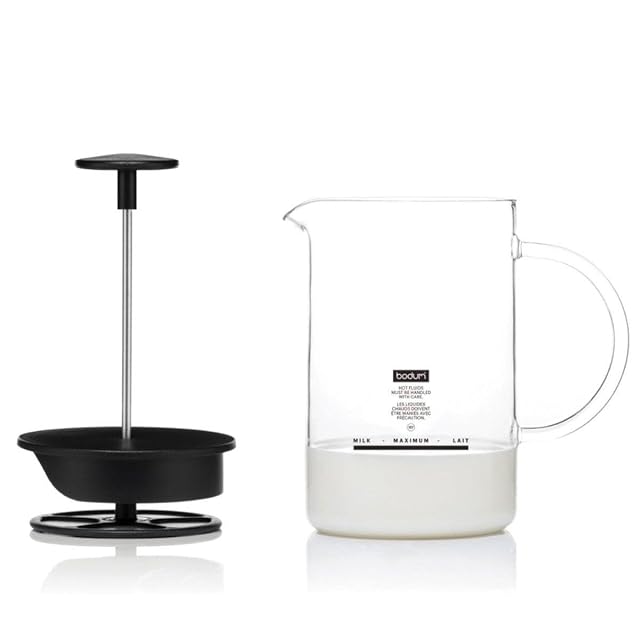
  3. Cheapest way to foam milk Milk frothers

    Bodum Latteo

    Manual pump · 250 ml · glass

    A glass jug and a plunger. No electricity, no cleaning ritual, and foam that is genuinely decent — provided you warm the milk first and accept that it will never be microfoam.

    Best for: An occasional cappuccino, a student kitchen, or a second frother for a desk.

    7.3/10

    ≈ $30 / £22 / 25 €

Questions people actually ask

Automatic frother or steam wand?

A steam wand makes better milk and can make latte art, and it needs practice and a machine that has one. An automatic frother makes correct, dense foam on day one, every day, with no skill. If your machine has no wand, an automatic frother is the answer; if it has one, buy a pitcher and learn.

Why does oat milk foam badly?

Plant milks have a narrower temperature window than dairy — overheat them and the proteins collapse. Cheap frothers with a fixed heating cycle overshoot. Controlled-temperature frothers handle barista-edition oat and soy reliably; standard supermarket oat milk foams less regardless.

How hot should milk be?

Around 60 to 65 C. Beyond about 70 the sugars break down and it tastes cooked and thin. Most baristas judge by hand — stop when the jug becomes uncomfortable to hold — which is more reliable than it sounds.

Which milk foams best?

Whole milk gives the most stable and the sweetest foam; semi-skimmed rises more but holds less. It is a matter of protein and fat, not of brand.

Can I foam milk that is already hot?

You can, but the result is less stable: foam forms better when the milk starts cold. Milk reheated twice barely foams at all.

Do I need a thermometer?

It helps a great deal at first, long enough to associate a temperature with a texture. After that, a hand on the jug is enough for most people.

Why does my foam collapse within a minute?

Milk too hot, a plant drink that is not suited, or bubbles too large. Foam that holds is made just before it is poured, not in advance.

Does a frother replace a steam wand?

For a decent cappuccino, yes. For fine texture and latte art, no: the wand incorporates air differently and gives a wetter foam.

Why each one, and for whom

Nespresso Aeroccino 4 · $130

For : A capsule or black-coffee machine owner who wants cappuccino without a steam wand.

Main strength : Four modes including cold froth, which very few frothers do well

Main limitation : Expensive for a jug that heats milk

Read the full review →

Motta Europa 500 ml · $40

For : Anyone with a steam wand who has been wondering why their pours look like blobs.

Main strength : Sharp, precisely-formed spout — the single biggest factor in latte art

Main limitation : No temperature indicator; you learn by hand or buy a thermometer

Read the full review →

Bodum Latteo · $30

For : An occasional cappuccino, a student kitchen, or a second frother for a desk.

Main strength : Costs a fraction of any electric frother and cannot break down

Main limitation : Does not heat — you warm the milk separately first

Read the full review →

Deciding in one line

How this guide is built

The models here come from the catalogue of this site. Specifications are those published by the manufacturer and on the Amazon product page; prices are what Keepa reported on the date below, and both move. The ranking uses declared specifications, the balance of stated strengths and limitations, and price. No product on this site has been physically tested, and nothing here claims otherwise.

Last checked on

The tool we use ourselves

Chosen your machine? Now buy it at the right price.

Espresso machines and grinders swing by a hundred euros or more across the year, and the biggest "discounts" often land at prices the same model sold for six weeks earlier. UniverTrack tracks the real price history across retailers, spots fake reductions, and alerts you when it is genuinely the moment to buy.

Real price historyBuy-now alertsAI buying assistant
Try free for 14 days →
No commitment · Cancel in one click · 5 languages