Skip to content

The best espresso setup under 500

Not the best machine you can buy for 500, but the best combination — because a 500 machine with no grinder makes worse coffee than a 250 machine with a 200 grinder.

The commonest mistake at this budget is spending it all in one place. A 500 espresso machine with a supermarket grinder produces coffee that is worse than a 250 machine with a 200 grinder, because grind consistency is what makes a shot repeatable and no boiler compensates for its absence.

So this guide is a shopping list rather than a ranking. Machine, grinder, scale, WDT tool — in that order of cost, and roughly the reverse order of how much each one improves the coffee per euro spent.

Which one do you need?

You are starting from nothing
Split it: the grinder first, the machine second, accessories last. A budget concentrated on one item gives an unbalanced set-up.
You already have a decent grinder
The whole budget can go to the machine, and the set-up jumps a level immediately.
You mostly drink milk
Set aside a share for the steam wand and the jug: good foam on average coffee satisfies more than excellent espresso badly steamed.
You are unsure about committing
Start with the grinder and a manual brewer. You keep the grinder if you move to espresso later.

Choosing by use

One espresso a day

The budget is comfortable if the grinder takes its share. The machine does not need to keep pace, only to be steady for one cup.

Two people, morning and evening

Thermal recovery between shots starts to show, and it is where machines at this budget differ most.

Regular cappuccinos

The wand and the jug count as much as the machine. It is the one case where trimming the grinder's share can be justified.

Learning seriously

Scale, fresh coffee, non-pressurised basket: three cheap items that do more for progress than a more expensive machine.

The criteria that actually matter

How the budget is split
That is the real subject of this guide. A four-hundred machine with a hundred-euro grinder almost always does worse than a more even split.
The coffee itself
Often left out of the budget, and yet decisive: beans roasted three days ago and supermarket beans do not need the same equipment to taste good.
What holds its value
A good grinder is kept and resells; an entry-level machine much less so. Putting money where it keeps is a defensible strategy.
The worktop you have
A full set-up takes room. The constraint is real and is weighed before buying, not after.

Which criterion for which use

ItemWhat it bringsWhat happens if you skimp
GrinderConsistent extractionErratic coffee, whatever you do
MachineStability and steamTemperamental shots
ScaleRepeatabilityA setting you cannot find again
Fresh coffeeAromaA flat cup, gear or no gear

Mistakes to avoid

Putting it all into the machine
The classic and most expensive mistake: the grinder becomes the limiting factor, and the machine cannot give what it is capable of.
Forgetting the coffee budget
Fresh, well-roasted beans cost more than supermarket coffee, and they transform a modest set-up. It is the best-returning spend of the lot.
Buying every accessory at once
Many will go unused. Better to add them when a specific fault shows up, which takes a few weeks.
Ignoring the water
Very hard water damages the machine and flattens the coffee. It is a few euros that protect everything else.

Choosing by profile

The first set-up
A decent grinder, a simple machine, a scale. You fill in the gaps once you know what is missing.
Already has a grinder
The whole envelope on the machine and a little on milk. The result sits well above what the budget suggests.
The cautious one
Grinder and manual brewer first, machine later. Nothing is wasted if espresso follows.

Upkeep and how long it lasts

A complete set-up multiplies the routines: the machine's circuit, the grinder's chamber, the scale to keep dry. None is heavy, but none can be skipped for long without the cup showing it.

  • Backflush the machine regularly if it allows it.
  • Brush the grinder dry every week.
  • Wipe the scale and keep it away from splashes.
  • Descale to suit your water, not to a calendar.

Safety

Nothing beyond the usual espresso risks: pressure, steam, electricity near water.

  • Do not remove the portafilter mid-shot.
  • Purge the steam wand away from your hands.
  • Unplug before any maintenance that involves dismantling.
  • Keep cables out of the wet part of the worktop.
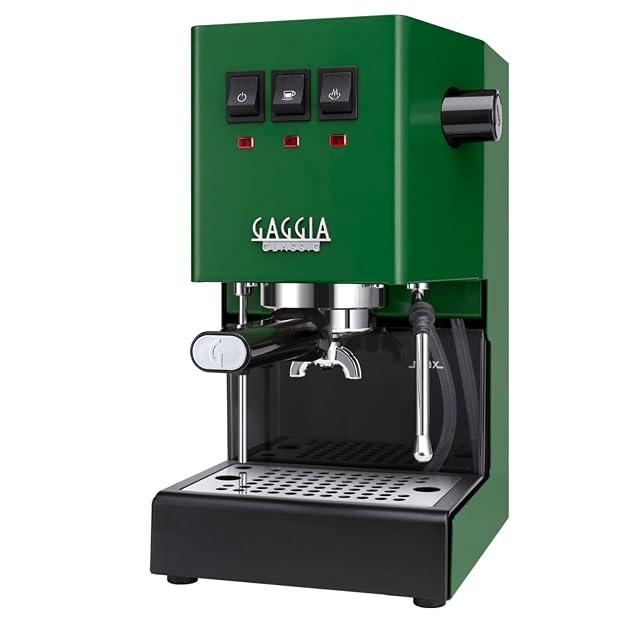
  1. Best machine to keep Espresso machines

    Gaggia Classic Evo Pro

    58 mm commercial portafilter · 3-way solenoid · steel body

    A 58 mm commercial portafilter, a steel body and a three-way solenoid, in a machine cheap enough to modify. Nothing else at this price is still worth owning in fifteen years, and nothing else has this much of an aftermarket.

    Best for: Someone who wants one espresso machine for the next fifteen years and does not mind learning it.

    8.5/10

    ≈ $500 / £400 / 450 €

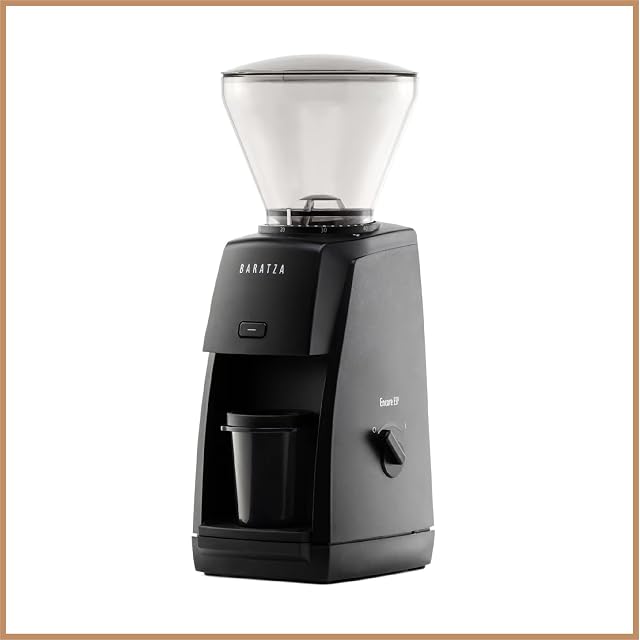
  2. Best first espresso grinder Grinders

    Baratza Encore ESP

    40 mm conical · 40 espresso steps + 20 filter

    The cheapest electric grinder that genuinely does espresso and filter without being bad at both. Forty fine steps in the espresso range is the whole point — and Baratza will still sell you a burr set for it in ten years.

    Best for: Anyone pairing a grinder with a Gaggia Classic, a Dedica upgrade, or a Barista Express they have outgrown.

    8.7/10

    ≈ $200 / £190 / 220 €

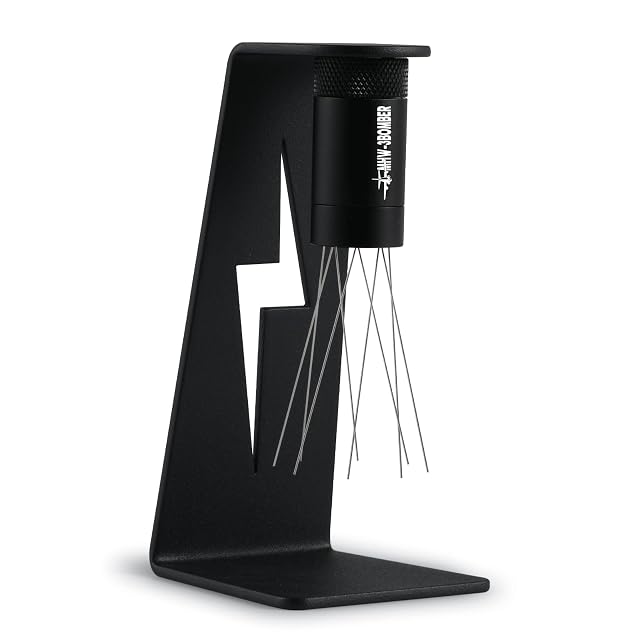
  3. Best value upgrade on this site Puck prep

    MHW-3BOMBER WDT Distribution Tool

    8 × 0.3 mm needles · magnetic stand

    Eight fine needles you stir through the grounds before tamping. It costs twenty euros and fixes more bad shots than any other accessory here — including ones costing twenty times as much.

    Best for: Every single person with a non-pressurised basket. There is no exception worth naming.

    9.1/10

    ≈ $25 / £20 / 22 €

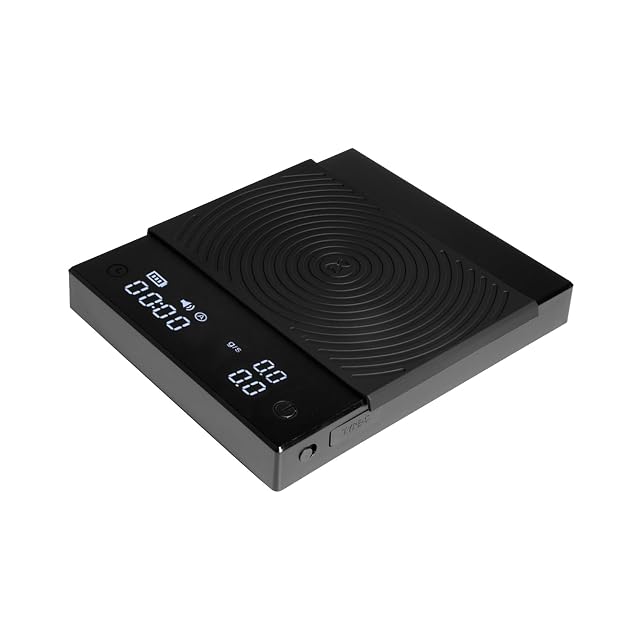
  4. Best scale under 100 Scales

    TIMEMORE Black Mirror Basic 2

    2 kg × 0.1 g · flow rate · under-portafilter footprint

    Fast enough for espresso, small enough for a drip tray, and it shows flow rate — which is the one number that tells you what your shot is doing while it is still happening.

    Best for: Espresso, where 0.1 g and a fast refresh genuinely change what you can control.

    8.5/10

    ≈ $60 / £50 / 55 €

Questions people actually ask

Why split the budget instead of buying one good machine?

Because grind consistency, not machine quality, decides whether espresso is repeatable. A 500 machine paired with a 40 grinder produces shots you cannot control. Splitting roughly evenly between machine and grinder is the single highest-return decision at this budget.

Do I really need a scale and a WDT tool?

They are the cheapest parts of the setup and two of the most useful. A scale makes your dose and yield repeatable, which is the basis of improving. A WDT tool fixes channelling at its cause. Together they cost under 50 and change more than another 100 on the machine would.

What would I gain by spending 800 instead?

Mostly temperature stability and steam power — a dual boiler or a PID. Those are real improvements and they matter after you can already pull a consistent shot. Spend the extra on beans and a better grinder first.

What share of the budget for the grinder?

A substantial share, often close to the machine's. The useful rule is that neither may be trivial next to the other.

New or used?

Used stretches this budget a long way, especially on the grinder. What to check remains the state of the burrs and the availability of consumables.

Can accessories come later?

Better that they do: you then buy them to fix an identified fault rather than in anticipation. Only the scale earns its place from day one.

How much does the coffee cost over a year?

It depends on consumption and supplier, but it is a line that counts against the hardware. Leaving it out distorts every comparison between systems.

Better a good machine or a good grinder?

On a tight budget the grinder returns more per pound spent, because it governs everything the machine can do afterwards.

Why each one, and for whom

Gaggia Classic Evo Pro · $500

For : Someone who wants one espresso machine for the next fifteen years and does not mind learning it.

Main strength : Full 58 mm commercial portafilter — the entire aftermarket fits it

Main limitation : No temperature control out of the box — you learn to time it, or you fit a PID

Read the full review →

Baratza Encore ESP · $200

For : Anyone pairing a grinder with a Gaggia Classic, a Dedica upgrade, or a Barista Express they have outgrown.

Main strength : 40 closely-spaced steps in the espresso range — you can actually dial a shot

Main limitation : Retention of roughly a gram means single-dosing needs a bellows or a tap

Read the full review →

MHW-3BOMBER WDT Distribution Tool · $25

For : Every single person with a non-pressurised basket. There is no exception worth naming.

Main strength : Fixes channelling at its actual cause — clumps inside the bed

Main limitation : Adds fifteen seconds to every shot

Read the full review →

TIMEMORE Black Mirror Basic 2 · $60

For : Espresso, where 0.1 g and a fast refresh genuinely change what you can control.

Main strength : 0.1 g resolution with a genuinely fast refresh — usable live under a portafilter

Main limitation : Not waterproof — a drip tray is a wet place and this is a known weak point

Read the full review →

What each price bracket buys

Deciding in one line

Useful comparisons

Head-to-heads already published between two models from this guide or this aisle.

How this guide is built

The models here come from the catalogue of this site. Specifications are those published by the manufacturer and on the Amazon product page; prices are what Keepa reported on the date below, and both move. The ranking uses declared specifications, the balance of stated strengths and limitations, and price. No product on this site has been physically tested, and nothing here claims otherwise.

Last checked on

The tool we use ourselves

Chosen your machine? Now buy it at the right price.

Espresso machines and grinders swing by a hundred euros or more across the year, and the biggest "discounts" often land at prices the same model sold for six weeks earlier. UniverTrack tracks the real price history across retailers, spots fake reductions, and alerts you when it is genuinely the moment to buy.

Real price historyBuy-now alertsAI buying assistant
Try free for 14 days →
No commitment · Cancel in one click · 5 languages