Where we land on it Forty-eight settings, 40 mm (1.57 in) burrs, a touchscreen that times to half a second and an anti-static system, at half the price of the two grinders that publish as much. The gaps are a wattage and a warranty, and neither is in the listing.
What the maker puts in writing
Grind settings: 48
Burrs: 40 mm (1.57 in) stainless steel conical
Timing: up to 40 s, in 0.5-second steps, on an LED touchscreen
Cups: 2 to 12
Hopper: 10.6 oz, removable, UV-blocking tint, trap door
Anti-static technology, stated
Four of the shelf’s six comparable figures
Across these seven grinders, six things are published often enough to compare: the settings count, the burr type, the burr diameter, the hopper capacity, a timing increment and a wattage.
This listing gives four of them. The Breville gives four as well, but a different four — it has the wattage and the warranty, and no burr diameter. Everything else here gives three or fewer.
What the timing step is for
set precise grinding times up to 40s with 0.5s accuracy.
A timed dose is how you repeat yesterday’s cup. Two grinders on this shelf publish a step: 0.2 seconds on the Breville, half a second here. Two more count cups instead, which is coarser. The Baratza counts nothing.
Where this listing stops short
No wattage, no warranty, and nothing about portafilters. The first two are figures a buyer can ask for; the third is the one thing the most expensive grinder here does that no amount of settings replaces.
Availability
Read on the day this page was built: $80 at the American Amazon shop.
Read from Keepa on the day this page was last revised; stock and price both move without notice.
What it gets right, and wrong
Strengths
Publishes four of the shelf’s six comparable figures — settings, burr diameter, hopper capacity and a timing increment — which only the Breville matches
The second-finest published timing step on the shelf: 0.5 seconds up to 40 seconds, against 0.2 seconds from the grinder costing twice as much
One of two grinders here to state an anti-static system, and the only one to pair it with a stated UV-blocking hopper
A trap door on the hopper, stated, so the beans do not spill when it comes off
Compromises
No wattage and no warranty published, which the most expensive grinder here gives both of
Forty-eight settings with no published step size is a count, not a grind range
Nothing in the listing about grinding into a portafilter, so an espresso owner transfers
Where this one stands among its neighbors
At $80, it is the 3 cheapest of the 7 models in this category published here.
Least costly of the neighbors$34
Median$80
Most costly of the neighbors$160
Specifications
Grind settings
48
Burr
Conical, 40 mm (1.57 in), stainless steel
Dose control
LED touchscreen: 2–12 cups, or timed to 40 s in 0.5 s steps, plus a manual mode
Hopper capacity
10.6 oz
Hopper
Removable, UV-blocking tint, trap door
Static
Anti-static technology and a stainless steel container, stated
Power
Not stated by the maker
Warranty
Not stated by the maker
Weight (as listed)
2,449 g (86.4 oz)
Amazon reference
B0FH35Y5K4
EAN
0789091057598
What people want to know
How close is this to the Breville on paper?
Closer than the price gap suggests on four figures, and short on two. Both publish settings, a hopper capacity and a timing increment; this one adds a 40 mm (1.57 in) burr diameter the Breville does not give. The Breville adds 165 W, a two-year warranty and portafilter cradle sizes, none of which appear here.
What does anti-static actually mean on this listing?
The maker states built-in anti-static technology and a stainless steel container, to reduce cling and spills. It is one of two grinders on this shelf to claim it; the Amazon Basics is the other. Neither publishes a figure for it, so it stays a described feature rather than a measured one.
Can I set a dose rather than a number of cups?
Yes, by time: the listing gives grinding times up to 40 seconds in 0.5-second steps, alongside a 2-to-12-cup selector and a manual start-stop. That is the second-finest published increment here.
Is 10.6 oz a lot of beans?
It is the third-largest published hopper on this shelf, behind the Breville’s 18 oz and the larger OXO’s 12 oz, and ahead of the Amazon Basics at 6.5 oz. Two grinders here do not publish a capacity at all.
Compared with the neighboring coffee machines
These coffee machines share the category and the price bracket. Only what each one states is shown; an incomplete column would mislead.
The difference between the models, in coffee machines
If price decides: SHARDOR US-CG835B2004, at $40.
Highest Weight (as listed) in the table: this model (2,449 g (86.4 oz)).
This model holds the table’s highest figure for Weight (as listed).
Today’s price and availability, for coffee machines
Details checked on October 4, 2026.
This one and its buyer, among coffee machines
Someone who wants a timed dose and a fine collar without paying for a portafilter cradle they will not use
What buyers actually choose
Amazon reports what buyers took in the month before this page was last checked: at least 1,000.
The figure is a floor, rounded by Amazon, and read through Keepa — it says what buyers picked, not what a maker claims.
Sources
Specifications: the manufacturer sheet for coffee equipment and the matching Amazon product page. Prices and availability: Keepa. Every figure on this page names its source.
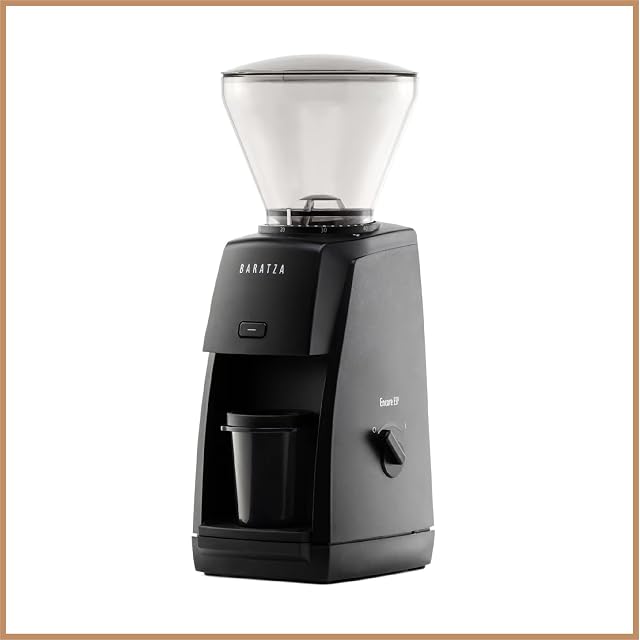
The cheapest electric grinder that genuinely does espresso and filter without being bad at both. Forty fine steps in the espresso range is the whole point — and Baratza will still sell you a burr set for it in ten years.
Best for: Anyone pairing a grinder with a Gaggia Classic, a Dedica upgrade, or a Barista Express they have outgrown.
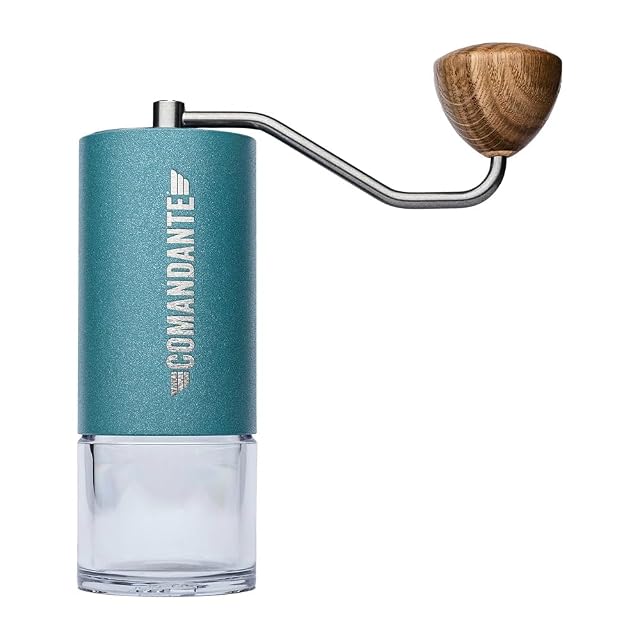
39 mm (1.54 in) nitrogen-hardened burr · hand · filter & espresso
The hand grinder others are measured against, and priced accordingly. Grinds better than electric grinders at twice the money, and asks for your arm every single morning.
Best for: One or two exceptional cups a day, travel, and anyone who values the object.
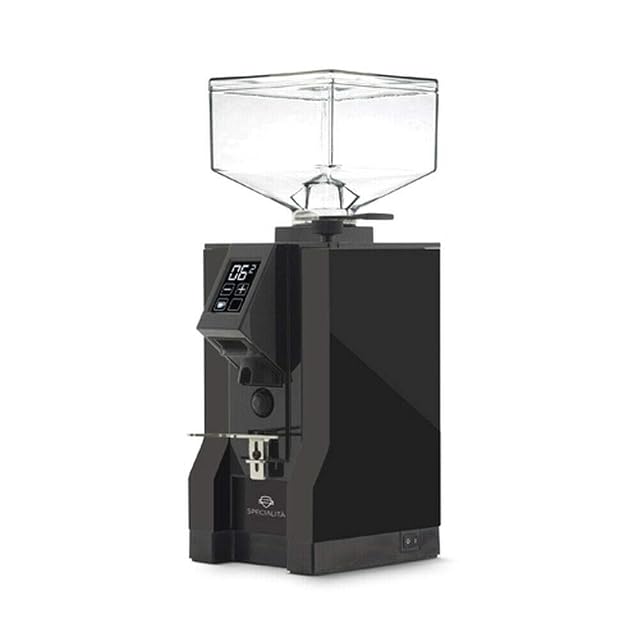
Stepless adjustment, 55 mm (2.17 in) flat burrs and almost nothing left in the chute — the three things that separate a serious espresso grinder from a good one. It is quiet enough to use at six in the morning without an argument.
Best for: A Gaggia Classic, Lelit or Rancilio owner who has stopped blaming their technique.