Skip to content

The best milk frothers & pitchers for 2026

Milk is half of most of the coffee people actually drink. We compare automatic jug frothers against steam wands, and cover pitchers, thermometers and how each option copes with oat and soy — where a lot of cheap frothers quietly fall apart.

The models we recommend

  1. The cheaper Aeroccino

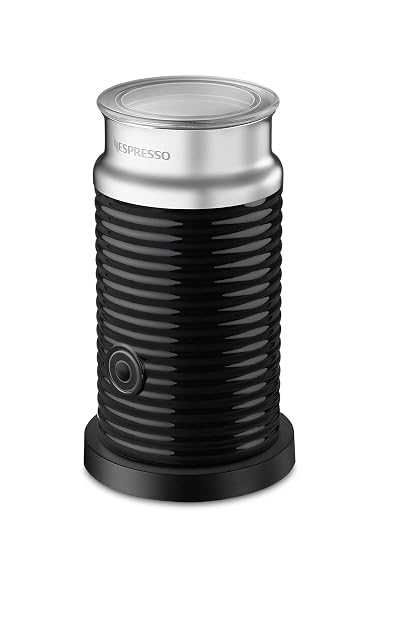
    Nespresso Aeroccino 3

    2 modes · hot & cold · 240 ml

    The Aeroccino 4 without the two extra modes and without the price. If all you want is hot foam and cold foam, this does exactly that with the same non-stick jug and the same fifteen-second clean.

    Best for: A capsule machine owner who wants cappuccino without paying for four modes.

    7.9/10

    ≈ $100 / £70 / 75 €

  2. Cheapest way to foam milk

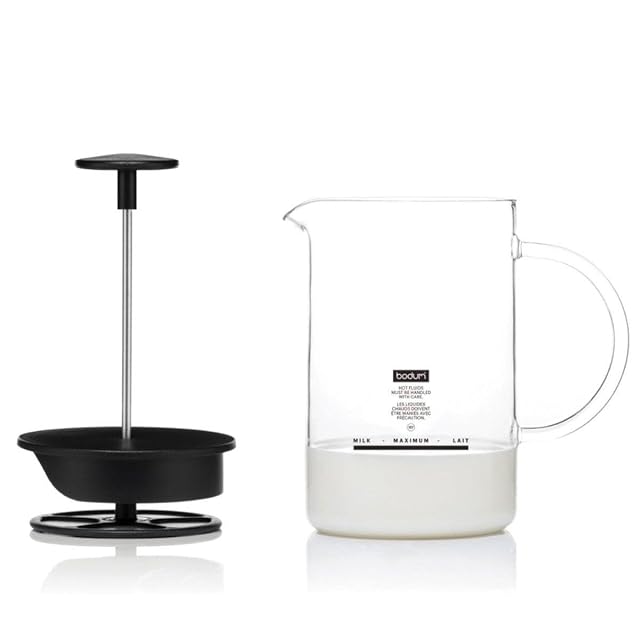
    Bodum Latteo

    Manual pump · 250 ml · glass

    A glass jug and a plunger. No electricity, no cleaning ritual, and foam that is genuinely decent — provided you warm the milk first and accept that it will never be microfoam.

    Best for: An occasional cappuccino, a student kitchen, or a second frother for a desk.

    7.3/10

    ≈ $30 / £22 / 25 €

  3. Best pitcher for latte art

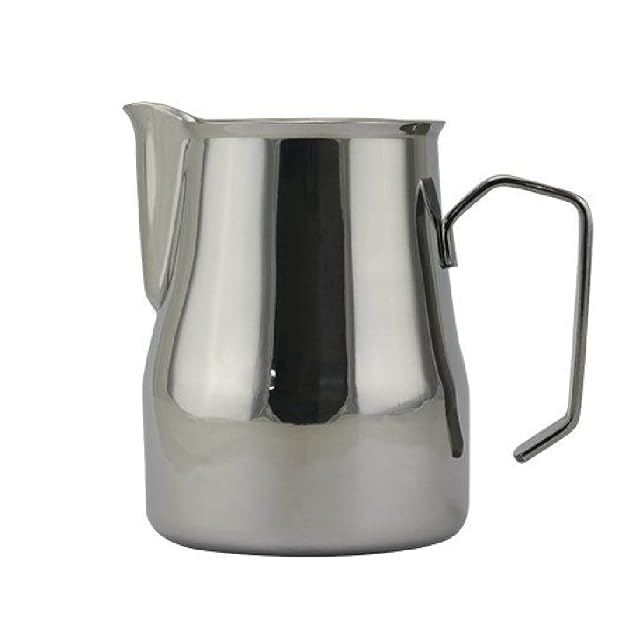
    Motta Europa 500 ml

    18/10 stainless · 500 ml · sharp spout

    The pitcher most European baristas actually use. The sharp, low spout is what puts a pattern on the surface rather than a blob — and it costs less than most people spend on beans in a month.

    Best for: Anyone with a steam wand who has been wondering why their pours look like blobs.

    8.9/10

    ≈ $40 / £30 / 32 €

  4. Best automatic frother

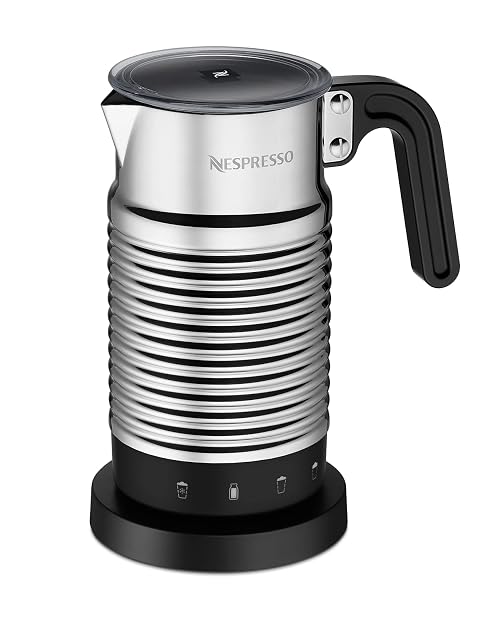
    Nespresso Aeroccino 4

    4 modes · hot & cold froth · 240 ml

    Pour milk in, press once, walk away. It makes better foam than most people manage by hand, handles oat milk properly, and the whole jug goes under a tap.

    Best for: A capsule or black-coffee machine owner who wants cappuccino without a steam wand.

    8.2/10

    ≈ $130 / £90 / 100 €

  5. Biggest capacity

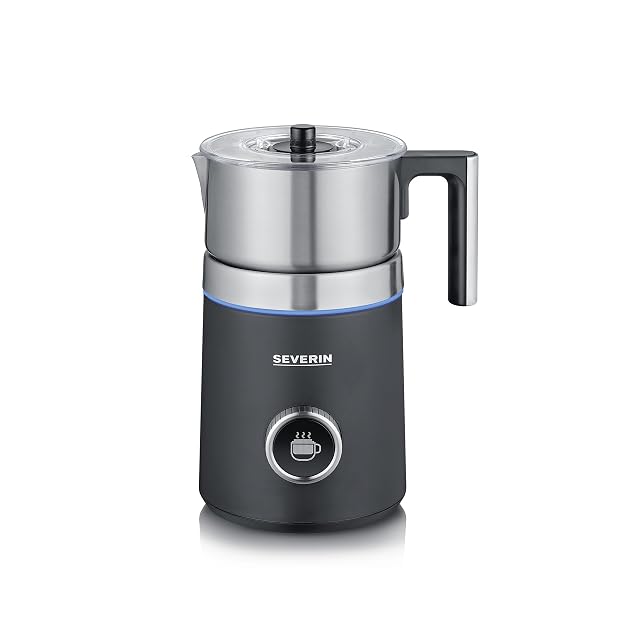
    SEVERIN SM 3587 Milk Frother

    Induction · 700 ml · 4 modes

    Seven hundred millilitres, which is three or four drinks rather than one. Induction heating with no element in contact with the milk, so nothing bakes on and the whole jug goes under a tap.

    Best for: A household of three or four who all want milk drinks at the same time.

    7.6/10

    ≈ £80 / 85 €

Which one for which need

Making several milk drinks

Capacity decides how many cups per cycle, and a frother is rinsed between each use.

SEVERIN SM 3587 Milk Frother

A simple, consistent cappuccino

In this aisle consistency beats finesse. The highest-rated model here is the safest starting point.

Motta Europa 500 ml

An occasional extra

For hot chocolate now and then or a Sunday cappuccino, the most affordable model does exactly the job.

Bodum Latteo

Who each type suits

Machine with no steam wand
The main use case: a standalone frother gives decent milk where the machine cannot. It is the most useful companion to a filter or pod machine.
Cold drinks
Not every frother does cold. If iced coffees are part of the routine, it is a function to check explicitly.
Plant-based milks
They behave very differently from cow's milk. The so-called barista versions contain stabilisers that change everything — without them the foam collapses in seconds.

The trade-offs to weigh

Automatic against steam wand
A standalone frother is consistent and capped; a steam wand demands practice and allows far better milk. The first suits whoever wants a result, the second whoever wants to improve.
Induction against direct heating
Induction heats the jug with no element in contact with the milk: less scorched milk at the bottom, far simpler cleaning. This is where the extra spend is justified.
Non-stick against durability
The coating makes cleaning easy and wears out, often within a few years. Bare stainless lasts indefinitely and demands washing straight away.

Questions buyers ask

Which milk froths best?

Cold whole milk, rich in protein. Semi-skimmed froths too, with a less stable texture. Milk that is already hot will not froth at all.

Do plant milks froth?

The barista versions do, thanks to added stabilisers. Ordinary versions make a coarse foam that collapses within seconds.

What temperature should I aim for?

Between 60 and 65 °C. Beyond that the proteins denature, the foam collapses and the milk takes on a cooked taste no coffee masks.

What is the difference between foam and textured milk?

Foam is a layer of air sitting on the milk; textured milk is a homogeneous, glossy microemulsion that pours. Only a well-handled steam wand gives the second.

How should a frother be cleaned?

Immediately after use, with lukewarm water. Dried milk forms a film that becomes very hard to remove and smells after two days.

Can I make hot chocolate in it?

On models that allow it, yes. On the others the cocoa burns at the bottom and fouls it lastingly — check first.

Is a hand whisk enough?

For a quick foam on a long coffee, often yes, and for a couple of euros. For a cappuccino with a texture that holds, no.

What to remember

A standalone frother is the most useful companion to a machine without a steam wand, provided you stay within its limits: cold whole milk, 60 to 65 °C, immediate rinsing. It does not replace a mastered steam wand, and does not claim to.

This category at a glance

Every model compared

Only the specifications at least four models out of five state. A column that is more empty than full compares nothing.

ModelPriceCapacity
Bodum Latteo30 $250 ml
Motta Europa 500 ml40 $500 ml
SEVERIN SM 3587 Milk Frother80 $700 ml
Nespresso Aeroccino 3100 $240 ml froth / 120 ml milk
Nespresso Aeroccino 4130 $240 ml froth / 120 ml hot milk

Guides covering this category

Sources and method

Specifications: manufacturer sheets and Amazon product pages. Prices and availability: Keepa. No product on this site has been physically tested.

Most recent revision in this category: August 8, 2026.

How we assess products