Forty settings on 40 mm (1.57 in) commercial-grade conical burrs, hardened alloy steel made in Liechtenstein — and an on/off switch where the rest of the shelf has a timer.
Where we land on it The only grinder here that says where its burrs are made and backs them with a warranty — and the only one above forty dollars with no timer of any kind. You are paying for the burr and the support, not for the controls.
What the maker puts in writing
Grind settings: 40
Burrs: 40 mm (1.57 in) conical, hardened alloy steel
Made: Liechtenstein, Europe
Motor: DC
Controls: on/off switch and front pulse button
Warranty: 1 year
The burr is the specification here
Hardened alloy steel burrs manufactured in Liechtenstein, Europe, plus a powerful DC motor.
No other grinder on this shelf names a burr material. None names a country. Three others publish a 40 mm (1.57 in) diameter — the OXO above, the AMZCHEF below — and stop there. Whether that origin is worth the gap in price is a judgment; that it is the only one published is a fact about the shelf.
The controls are the trade
There is no timer. The listing is plain about it, and it is the thing that separates this grinder from everything else here above forty dollars: the SHARDOR at a quarter of the price stops itself between two and fourteen cups, and the two OXOs run a dial of grinding time.
If you weigh your dose, that costs you nothing. If you do not, it costs you a step every morning.
The brewers it names
espresso, Aeropress, Hario V60, Chemex, French Press, and automatic brewers.
That list is unusually specific for this shelf, and it is worth reading as a range statement rather than a promise: it says the collar reaches from espresso-fine to French-press-coarse, which is what forty settings are for.
Where this listing stops short
No hopper capacity, no wattage, no dimensions in the maker’s own text. Five of the seven grinders here say how many beans they hold.
Availability
Read on the day this page was built: $150 at the American Amazon shop.
Read from Keepa on the day this page was last revised; stock and price both move without notice.
What it gets right, and wrong
Strengths
The only grinder on this shelf that names where its burrs are made — hardened alloy steel, Liechtenstein — and the only one to name the burr material at all
Forty settings on burrs the maker calls commercial-grade, with the brewers they are meant for listed by name: espresso, Aeropress, Hario V60, Chemex, French press and automatic brewers
One of only two grinders here with a published warranty
A DC motor, stated — the only motor type published on the shelf
Compromises
No timer and no cup selector: the listing describes an on/off switch and a pulse button, and nothing else
No hopper capacity published, where five of the seven grinders here give one
At this price, two cheaper grinders on the same shelf publish an anti-static system and this one does not mention one
Where this one stands among its neighbors
At $150, it is the 6 cheapest of the 7 models in this category published here.
Least costly of the neighbors$34
Median$80
Most costly of the neighbors$160
Specifications
Grind settings
40
Burr
Conical, 40 mm (1.57 in), commercial-grade
Burr material
Hardened alloy steel
Burr origin
Manufactured in Liechtenstein, Europe
Motor
DC
Dose control
On/off switch and a front-mounted pulse button
Hopper capacity
Not stated by the maker
Power
Not stated by the maker
Warranty
1 year
Weight (as listed)
2,531 g (89.3 oz)
Amazon reference
B007F183LK
EAN
0838823004857
What people want to know
Why is there no timer?
The listing does not explain it, and it does not claim one: it describes *a convenient, front-mounted pulse button, plus a simple ON/OFF switch*. In practice you grind onto a scale or into a dosing cup and stop when you have what you want. Five of the seven grinders on this shelf will stop themselves.
What does commercial-grade mean here?
It is the maker’s own word for the burrs, alongside two facts that are checkable: 40 mm (1.57 in), and hardened alloy steel manufactured in Liechtenstein. Those two are published; the adjective is not a measurement.
How does 40 settings compare with the OXO’s 15?
Less directly than the numbers suggest. OXO publishes *15 settings plus 43 micro-adjustments*, which is 58 positions by its own description. Neither maker publishes how far apart two neighboring positions are, so the counts describe the collar, not the grind.
Does the warranty cover the burrs?
The listing states a one-year warranty on the grinder and says the burrs are backed by the maker’s support, without separating the two. It is one of two warranties published on this shelf; the other is Breville’s two years.
Compared with the neighboring coffee machines
These coffee machines share the category and the price bracket. Only what each one states is shown; an incomplete column would mislead.
LED touchscreen: 2–12 cups, or timed to 40 s in 0.5 s steps, plus a manual mode
10.6 oz
The difference between the models, in coffee machines
If price decides: AMZCHEF CG209-SV, at $80.
Today’s price and availability, for coffee machines
Details checked on October 4, 2026.
This one and its buyer, among coffee machines
A filter brewer who grinds by eye or by scale and wants burrs with a stated material and origin
What buyers actually choose
Amazon reports what buyers took in the month before this page was last checked: at least 2,000.
The figure is a floor, rounded by Amazon, and read through Keepa — it says what buyers picked, not what a maker claims.
Sources
Specifications: the manufacturer sheet for coffee equipment and the matching Amazon product page. Prices and availability: Keepa. Every figure on this page names its source.
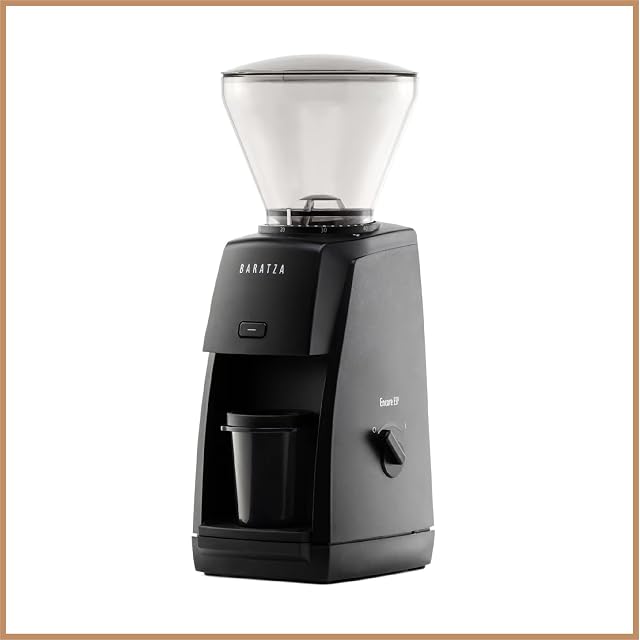
The cheapest electric grinder that genuinely does espresso and filter without being bad at both. Forty fine steps in the espresso range is the whole point — and Baratza will still sell you a burr set for it in ten years.
Best for: Anyone pairing a grinder with a Gaggia Classic, a Dedica upgrade, or a Barista Express they have outgrown.
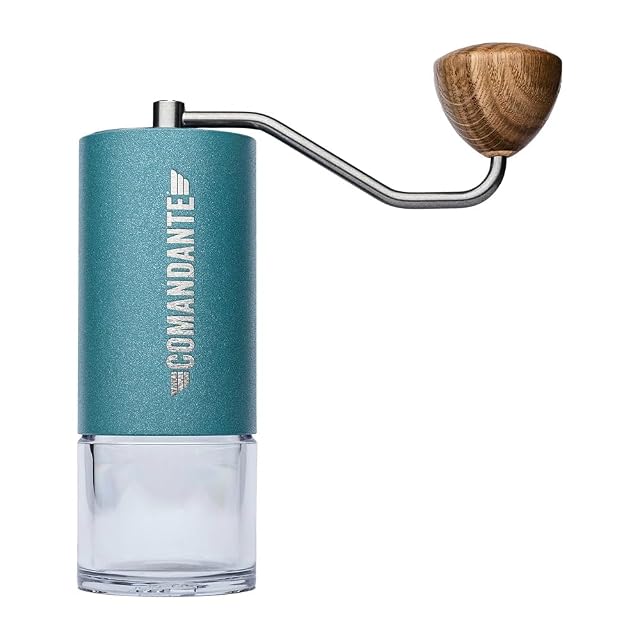
39 mm (1.54 in) nitrogen-hardened burr · hand · filter & espresso
The hand grinder others are measured against, and priced accordingly. Grinds better than electric grinders at twice the money, and asks for your arm every single morning.
Best for: One or two exceptional cups a day, travel, and anyone who values the object.
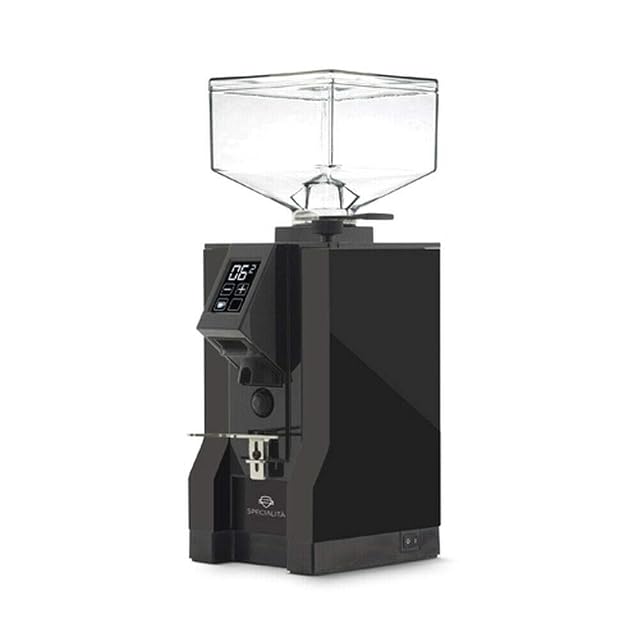
Stepless adjustment, 55 mm (2.17 in) flat burrs and almost nothing left in the chute — the three things that separate a serious espresso grinder from a good one. It is quiet enough to use at six in the morning without an argument.
Best for: A Gaggia Classic, Lelit or Rancilio owner who has stopped blaming their technique.