Skip to content

The best water filters & descalers for 2026

Coffee is mostly water, and hard water is the single most common cause of a dead machine. We compare pitcher filters, in-tank cartridges and mineral recipes, and cover descaling properly — including how often you actually need to.

The models we recommend

Finding your need in water & descaling

Stretching the intervals between descalings

A cartridge's service life decides how often it is replaced, and a spent cartridge filters nothing while staying in place.

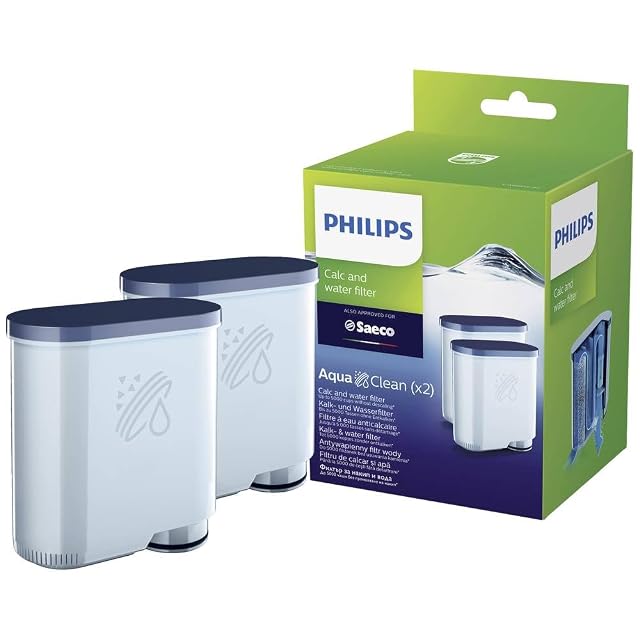
Philips AquaClean CA6903

Protecting a machine in hard water

In very calcareous water, filtration costs less than descaling cycles — and infinitely less than a repair.

Keurig 2.0 Water Filter Cartridges

Finding the same taste from one week to the next

Water whose hardness varies makes the extraction vary with no change to the recipe. Filtering, or building a stable water, is what makes a grind repeatable.

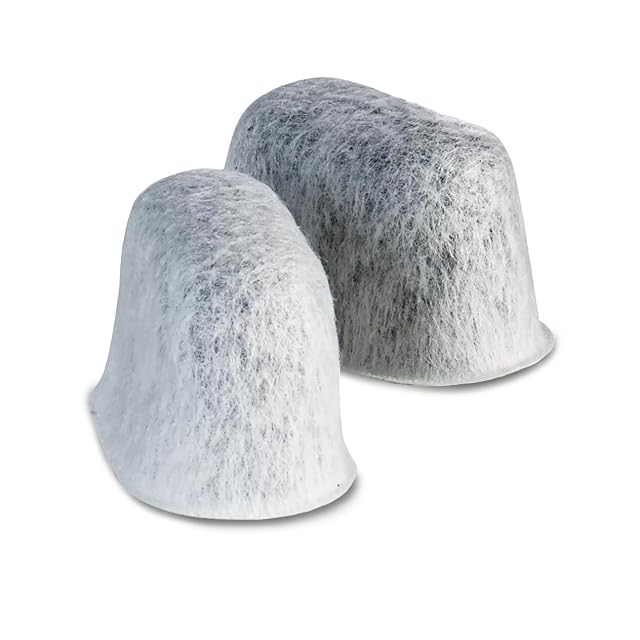
GE Universal Carbon Filters

The buyer behind each kind, in water & descaling

Very hard water region
Filtration stops being optional: it protects the boiler and improves the cup. Some manufacturers even make the warranty conditional on using it.
Espresso machine
The narrow lines block before the scale is visible. This is the type of machine where prevention pays off most.
Chasing taste
Water is more than 98% of the cup. Medium-mineralized water extracts better than very hard or fully demineralized water.

The downsides that come with water & descaling

Filtering against descaling
The filter prevents and costs regularly; descaling corrects and costs occasionally. In soft water the second is enough; in hard water the first works out cheaper.
In-tank cartridge against filter pitcher
A cartridge in the tank demands no discipline and costs more per liter. A filter pitcher costs less and assumes you remember to fill it.
Demineralization against extraction
Fully demineralized water protects the machine perfectly and extracts badly: minerals are needed to carry the aromas. The middle ground beats either extreme.

The questions people ask about water & descaling

Does water really change the taste of coffee?

Enormously — it is more than 98% of the cup. The same coffee made with two different waters gives two markedly different results.

What hardness should I aim for?

Medium hardness, neither very soft nor very calcareous. Water that is too soft gives a flat coffee; very hard water masks the aromas and scales the machine.

Is a filter pitcher enough?

It reduces hardness and improves taste for a modest cost. On an expensive machine in very hard water, a dedicated cartridge protects better.

When should the cartridge be changed?

At the stated volume or duration, whichever comes first. A spent cartridge no longer filters and can release what it has held.

Is bottled water a good idea?

Some lightly mineralized waters work very well. It is mainly a recurring cost and bulk for a gain filtration often reaches.

Does a filter replace descaling?

It stretches it a great deal without removing it. No domestic filtration retains all the minerals responsible for scale.

Can I use pure demineralized water?

For a steam appliance it is often recommended. For coffee, no: without minerals the extraction is incomplete and the cup hollow.

How do you find out your water's hardness?

The supplier publishes it by district, and a test strip gives it in a minute. It is the only figure to know before choosing between filtering and descaling.

Worth remembering, on water & descaling

Water is the most important and least examined ingredient in coffee. In a calcareous region, filtering costs less than descaling and far less than a repair — but aiming for fully demineralized water degrades the cup as much as limescale does.

Water & descaling in brief

Comparison table for water & descaling

A characteristic enters this table only if four machines in five state it. Below that, the column would mostly speak of what is missing.

ModelPriceFitsQuantity
Keurig 2.0 Water Filter Cartridges$6Keurig 2.0 K-Cup pod coffee makers2 cartridges
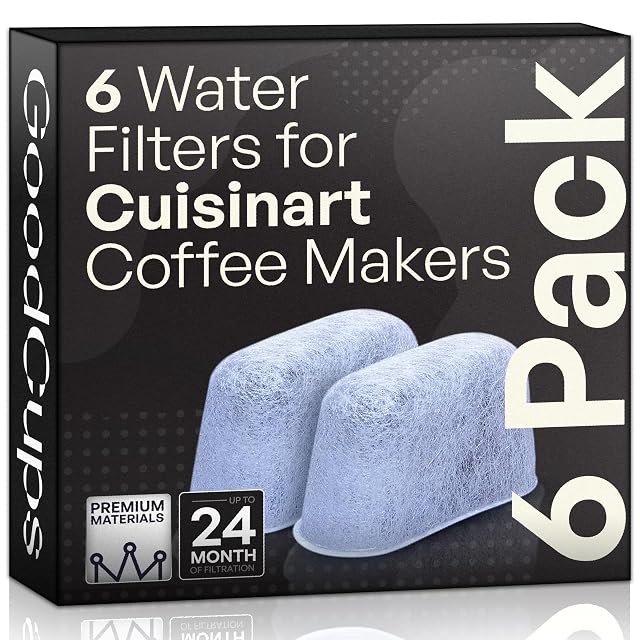
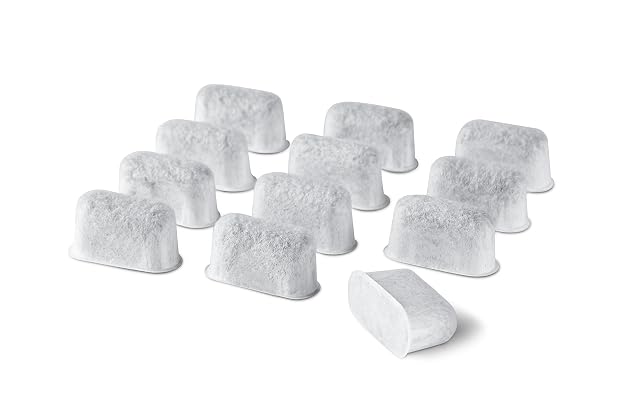
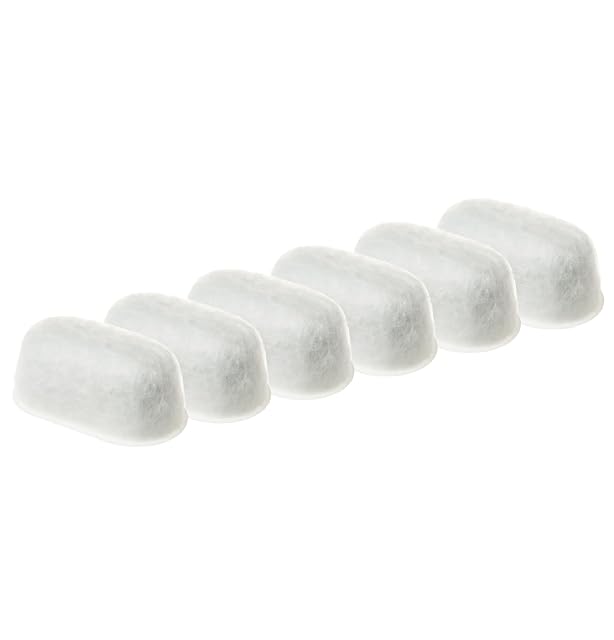
GoodCups Cuisinart Filters 6-Pack$8All Cuisinart coffee maker models, newer and older6 charcoal filters
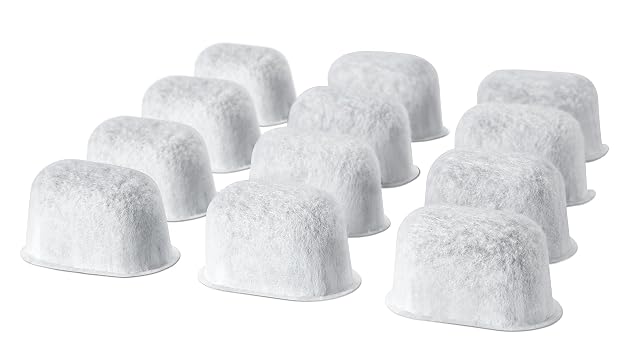
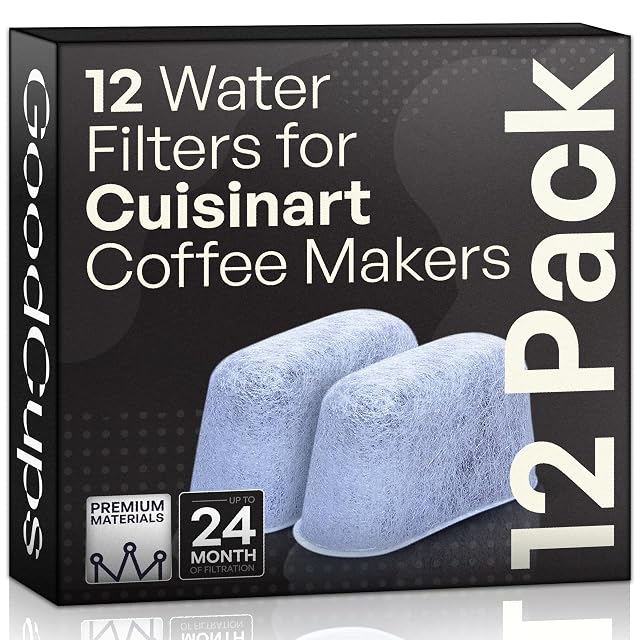
GoodCups Cuisinart Filters 12-Pack$10All Cuisinart models, newer and older, including 12 cup, Grind and Brew, and coffee makers with grinders12 charcoal filters
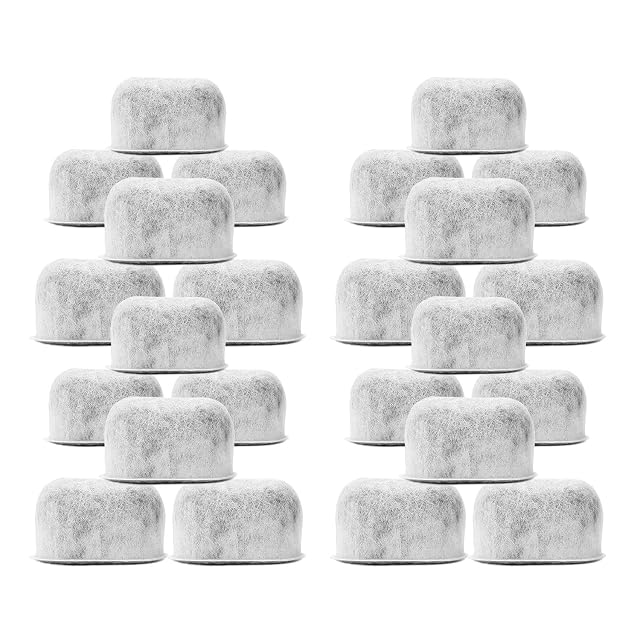
BRENSTEN Cuisinart Charcoal Filters$12Cuisinart DCC, DGB, CBC and Brew Central series — around thirty models named24 filters
Geesta Cuisinart Charcoal Filters$12Cuisinart Coffee Grind & Brew, Burr Grind & Brew, Single Cup Grind & Brew, Programmable and PerfecTemp series12 charcoal filters
Geesta Keurig Charcoal Filters$13Keurig machines bought after August 2007: 1.0 Elite, Classic, Ultra, Special Edition, Ultimate, Platinum; 2.0 K200, K300, K400, K50012 cartridges, described as a one-year supply
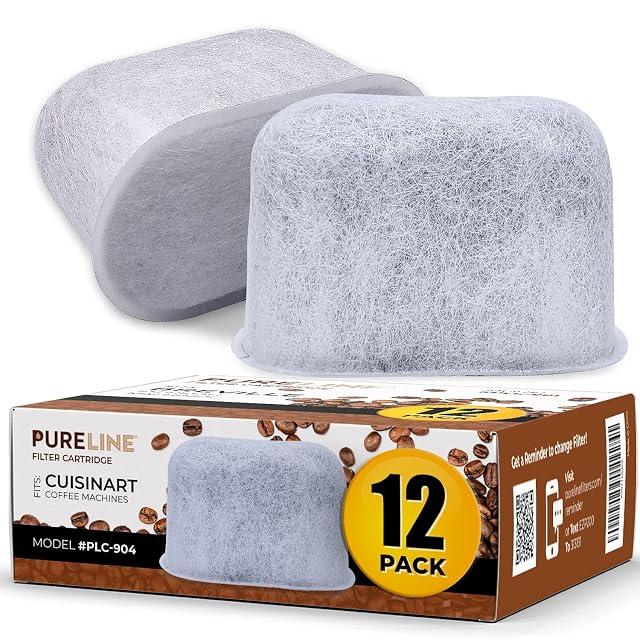
PURELINE Cuisinart Charcoal Filters$13All Cuisinart coffee machines12 filters, described as up to two years of use
GE Universal Carbon Filters$15Select GE Appliances and Café coffee makers6 cartridges
Philips AquaClean CA6903$0Philips and Saeco espresso machines—

What a budget buys on this shelf

The guides that discuss water & descaling

Sources, and the method

Specifications: manufacturer sheets for coffee equipment and the matching Amazon product pages. Prices and availability: Keepa. Every figure in this table names its source.

Most recent revision in this category: October 30, 2026.

The way we judge water & descaling