Skip to content

The best gooseneck kettles for 2026

A gooseneck spout turns pouring from a guess into a control. We compare kettles on pour control at low flow, temperature accuracy against a probe thermometer, and whether the hold function actually holds.

The models we recommend

  1. Best pour control

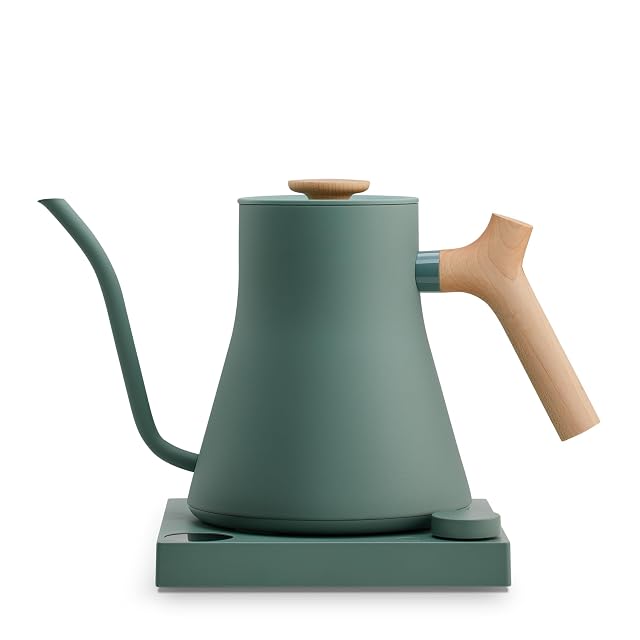
    Fellow Stagg EKG Pro

    0.9 L · ±1 °C (±1.8 °F) hold · counterbalanced gooseneck

    The best-pouring kettle sold, and the hold function matters more than the thermometer. Expensive for boiling water — but if you brew pour-over daily, it is the accessory that most improves the cup.

    Best for: Daily pour-over, where flow rate is the variable you are trying to control.

    8.6/10

Finding your need in kettles

Making several filter coffees

Capacity decides how many brews without reboiling, and reboiling water changes its taste.

Fellow Stagg EKG Pro

Controlling the temperature

Between 92 and 96 °C (205 °F) the extraction is right; at 100 °C (212 °F) it turns bitter. A variable-temperature kettle is what separates a successful manual method from an approximation.

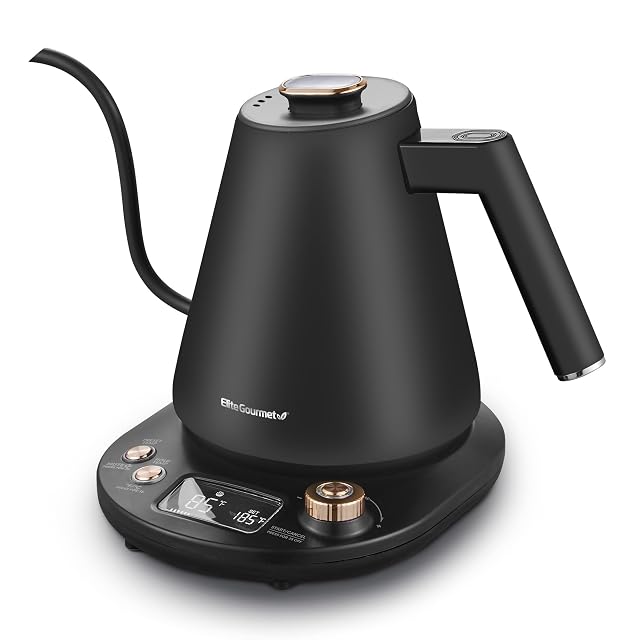
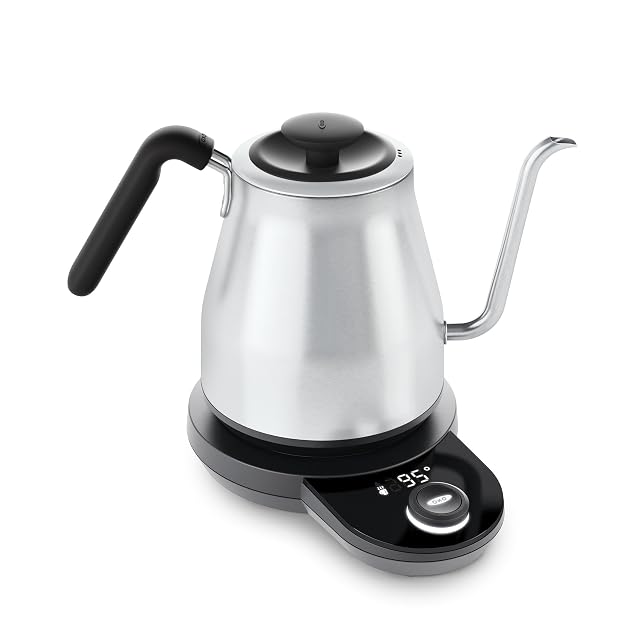
OXO Brew Adjustable Gooseneck Kettle

A simple kettle

For tea or an automatic filter machine, fine adjustment adds nothing. The most affordable model in the aisle is enough.

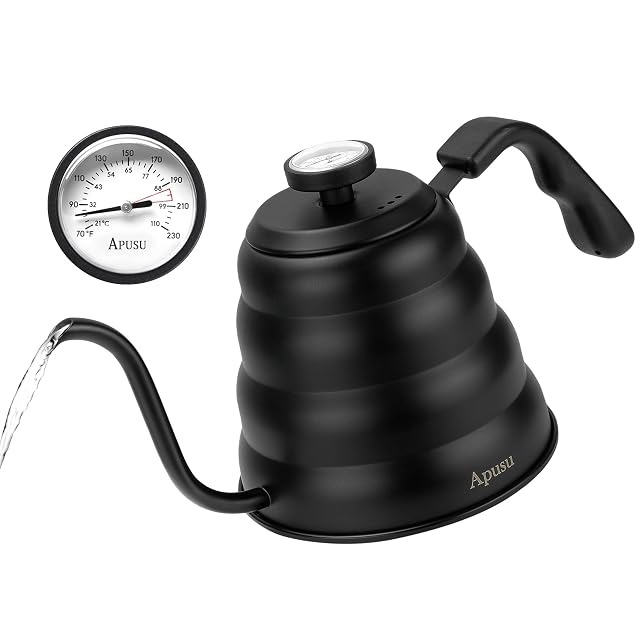
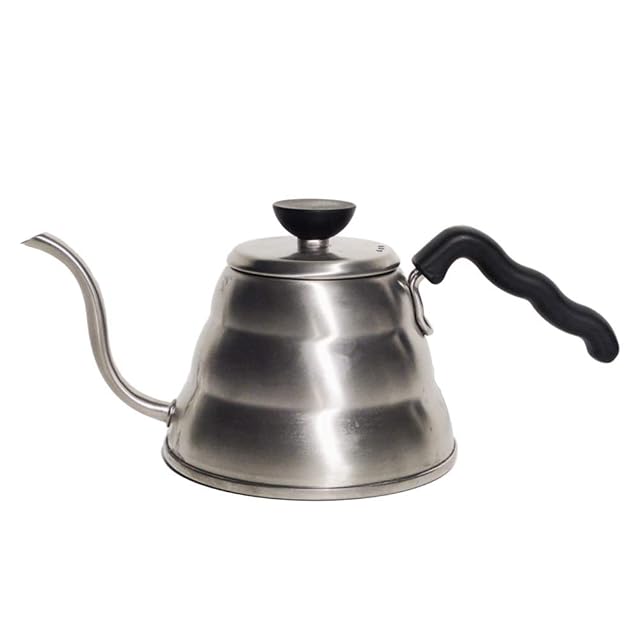
Apusu Stovetop Gooseneck Kettle

The buyer behind each kind, in kettles

Manual coffee methods
The spout matters as much as the temperature: a gooseneck lets you pour slowly and in the right place, which changes extraction far more than people expect.
Tea
Every type of tea has its temperature, from green at 70 °C (158 °F) to black at 95 °C (203 °F). Here a variable kettle is a real tool, not a gadget.
Family use
Capacity and speed come first. A large kettle that heats fast earns its place when several people use it in the morning.

The downsides that come with kettles

Gooseneck against versatility
A gooseneck pours with unmatched precision and fills a saucepan very slowly. It is a coffee tool, not a kitchen kettle.
Keep-warm against consumption
Holding water at temperature avoids reboiling and draws power continuously. Useful during a coffee session, pointless all day.
Stainless spout against a plastic body
Stainless imparts no taste and gets scalding to the touch. Plastic stays lukewarm and can mark the water, especially in the first months.

The questions people ask about kettles

Do I really need a variable-temperature kettle?

For filter coffee and tea, yes: the difference between 96 and 100 °C (212 °F) is tasted immediately. For ordinary hot water, no.

Why a gooseneck spout?

It allows a slow, directed stream, and therefore an even saturation of the grounds. On a manual brewer it is what makes the pour repeatable.

Can the same water be boiled twice?

It is possible and not advisable for coffee: reboiled water has lost its dissolved oxygen and gives a flatter cup.

What water should I use?

Lightly mineralized water. Very hard water scales the kettle and masks the aromas; fully demineralized water extracts poorly.

How often should I descale?

As soon as a white deposit appears at the bottom, meaning every few weeks in hard water. Scale slows heating before it becomes visible.

Does keep-warm spoil the water?

Held for a long time it concentrates through evaporation and loses its oxygen. Over a half-hour coffee session the effect is negligible.

Is a double-walled kettle worth it?

It avoids burns and keeps water hot longer, at the cost of extra bulk. It is a real comfort in a kitchen where children pass through.

Does a kettle hold the temperature it displays?

The display shows the set point, not the temperature at the spout. On a slow pour the water loses a few degrees on the way, which is why you aim a degree or two above the target.

Worth remembering, on kettles

For manual coffee methods the kettle is a genuine instrument: variable temperature and a gooseneck spout change the result more than the brewer itself. For any other use, capacity and heating speed are enough to decide.

Kettles in brief

Comparison table for kettles

A characteristic enters this table only if four machines in five state it. Below that, the column would mostly speak of what is missing.

What a budget buys on this shelf

The guides that discuss kettles

Sources, and the method

Specifications: manufacturer sheets for coffee equipment and the matching Amazon product pages. Prices and availability: Keepa. Every figure in this table names its source.

Most recent revision in this category: October 30, 2026.

The way we judge kettles