Skip to content

The best manual brewers to start with

Ranked by forgiveness, not by ceiling. The brewer that makes the best coffee in expert hands is the one that makes the worst coffee in new ones.

Manual brewing is the cheapest route to genuinely excellent coffee and the easiest place to be discouraged. The difference between those two outcomes is usually which brewer someone started with.

The mechanism explains it. In a pour-over, water passes through the bed and everything about your pour changes the result. In an immersion brewer, the coffee steeps for a fixed time and then gets separated, so pour rate stops existing as a variable and only grind size and time remain.

Our ranking follows that logic: most forgiving first, most rewarding last. If you want the cleanest possible cup and are prepared to practise, read the list backwards.

Which one do you need?

You want to understand what you are doing
A forgiving method with wide parameters, before a demanding one. You learn better on a tolerant system.
You have no grinder yet
An immersion method, which is less sensitive to an uneven grind than percolation is.
You are in a hurry in the morning
A quick method with no flow to control; precision can wait for the weekend.
You want to take your coffee with you
Something compact and unbreakable, which tolerates approximation and washes under a tap.

Choosing by use

Learning what coffee tastes like

Change one parameter at a time — grind, dose, temperature — and taste. That is what manual methods allow and what automatic machines hide.

One cup, every morning

The routine settles into three minutes. Consistency does more for quality than equipment does.

Having people over

Some methods scale badly. Four cups means either a larger format or two rounds.

Taking it with you

Travel demands unbreakable and compact; that is a selection criterion in its own right, not a detail.

The criteria that actually matter

How forgiving the method is
Some tolerate an approximate grind and an uneven pour; others punish everything. To start with, forgiveness beats a high ceiling.
How many variables it has
Flow, temperature, time, agitation: the more there are, the more you learn and the more you get wrong at first. Starting with fewer speeds up progress.
The cost of consumables
Paper filters, metal filters, gaskets: some methods cost almost nothing to run, others need a specific part that is not always easy to find.
Robustness
Glass and ceramic break, usually at the sink. Not a flaw, but worth weighing in a busy kitchen.

Which criterion for which use

Your priorityWhat suitsWhat to accept
Learning quicklyA forgiving methodA lower ceiling
Chasing the best cupA demanding methodAn uneven start
Speed in the morningFew variablesLess room to progress
Taking it alongCompact and unbreakableLess finesse

Mistakes to avoid

Starting with the most demanding method
You get it wrong, you do not know why, and you conclude speciality coffee is not for you. Progression matters more than the starting point.
Ignoring the water
Coffee is more than ninety per cent water. Heavily mineralised or chlorinated water imposes its taste whatever the method.
Pouring water straight off the boil
Water at boiling scorches light roasts. Waiting a minute changes the cup more than most accessories do.
Changing two things at once
If grind and dose move together, the next cup teaches nothing. One parameter, one cup.

Choosing by profile

The curious beginner
A forgiving method, a scale, fresh coffee. Extra equipment can wait until a question makes it necessary.
The morning rush
A quick method that is not fussy about technique, keeping precision for the weekend.
The traveller
Compact, unbreakable, no rare consumables. Coffee away from home is better with a simple method than with a perfect one left behind.

Upkeep and how long it lasts

Manual brewers take seconds to clean, and are easily neglected because they look clean. The coffee film settles in threads, gaskets and metal filters.

  • Rinse straight after use: dried coffee is far harder to shift.
  • Brush metal filters against the direction of filtration.
  • Dry before storing, especially plastic parts and gaskets.
  • Descale kettles and carafes to suit your water.

Safety

The risk is very hot water and glass vessels.

  • Stand the carafe on a stable surface before pouring.
  • Do not pour boiling water into cold or cracked glass.
  • Beware metal stands, which conduct heat.
  • Keep children clear during the pour, which lasts several minutes.
  1. Most forgiving brewer Manual brewers

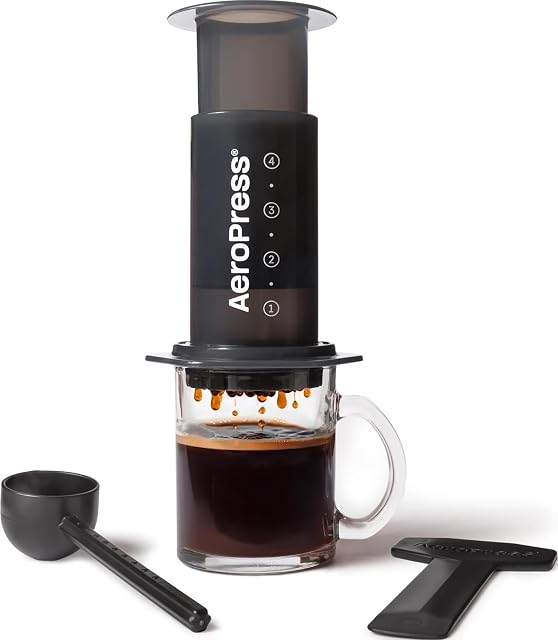
    AeroPress Original

    Immersion + pressure · 1–3 cups · unbreakable

    The one brewer that makes a good cup while you are still learning. Immersion means time does the work instead of your pour — so a mediocre grinder and an ordinary kettle still produce something you want to drink.

    Best for: Your first real brewer, an office drawer, or anywhere a V60 would be a nuisance.

    8.8/10

    ≈ $40 / £30 / 35 €

  2. Most versatile brewer Manual brewers

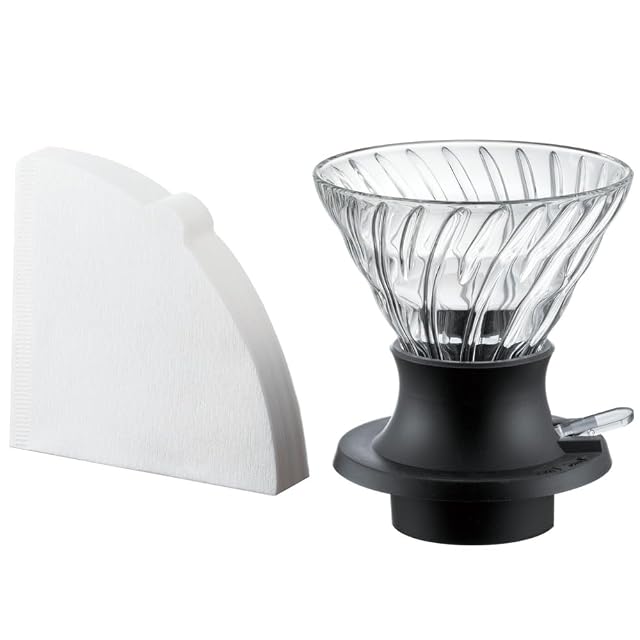
    Hario Switch Immersion Dripper 02

    V60 cone + steel valve · immersion or percolation

    A V60 with a valve in the bottom, which sounds like a gimmick and is not. It brews as a pour-over, as a full immersion, or as any hybrid of the two — and the hybrid is what makes it special.

    Best for: Someone who wants V60 clarity without V60 punishment, or who brews different beans weekly.

    8.5/10

    ≈ $60 / £50 / 55 €

  3. Best value brewer Manual brewers

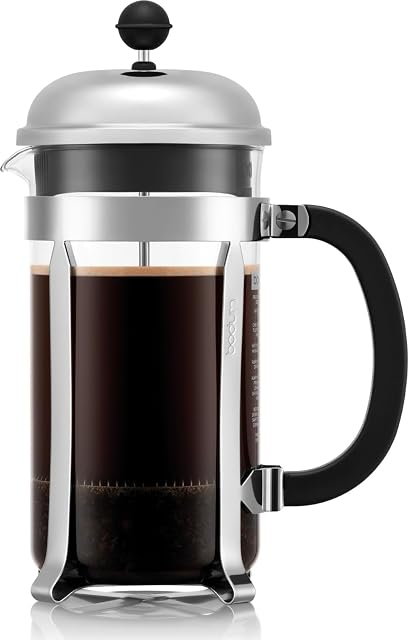
    Bodum Chambord French Press 1 L

    1 L · steel mesh · borosilicate glass

    Full immersion, full body, and no paper to buy ever again. The cheapest genuinely good brewer here — and the one most ruined by grinding too fine.

    Best for: Big-bodied dark and medium roasts, and anyone who does not want to buy papers.

    8.1/10

    ≈ $45 / £35 / 38 €

  4. The reference pour-over Manual brewers

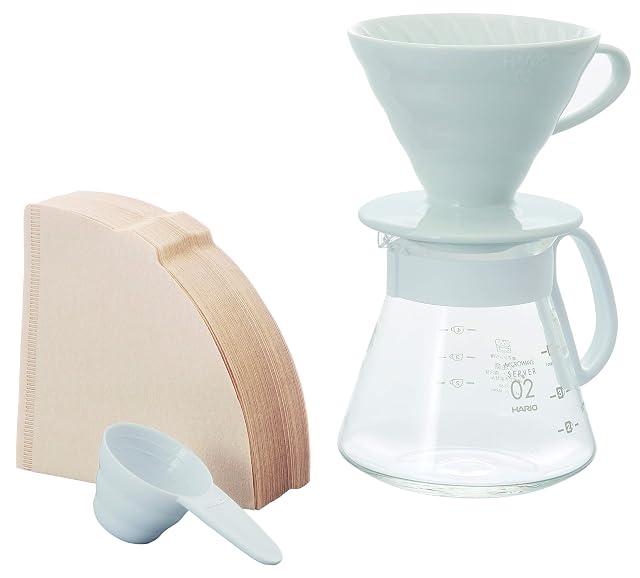
    Hario V60 02 Ceramic

    60° cone · spiral ribs · 1–4 cups

    The most transparent cup you can brew for twenty euros, and the least forgiving. Ceramic holds heat where plastic does not — and the open bottom means your pour, not the dripper, decides the coffee.

    Best for: Someone who wants to taste what a single-origin coffee is actually doing.

    8.2/10

    ≈ $25 / £20 / 22 €

  5. Cleanest cup Manual brewers

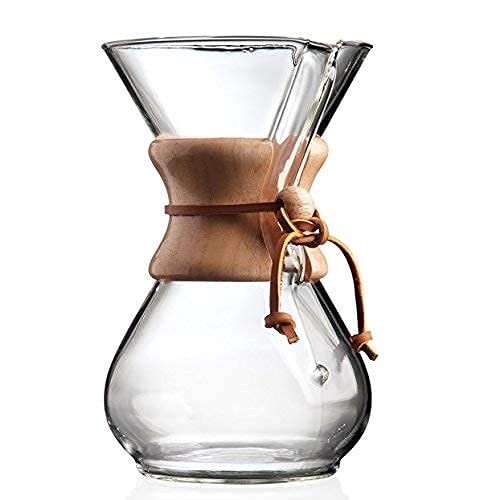
    Chemex Classic 6-cup

    Borosilicate glass · thick bonded filters · 3–6 cups

    The thickest filter paper in coffee, which strips out oils and fines and leaves a cup like tea. Divisive by design — you will either love the clarity or find it hollow.

    Best for: Light-roast single origins where you want acidity and florals, not body.

    8.0/10

    ≈ $50 / £45 / 48 €

Questions people actually ask

Why not just start with a V60?

Because a V60 has one large hole and no flow control, so your pour is the brew. Pour unevenly and water channels straight through, giving a sour, thin cup. Immersion brewers remove pour rate from the equation entirely, which is why they make good coffee while you are still learning.

Do I need a gooseneck kettle to start?

For a V60 or Chemex, effectively yes. For an AeroPress, a French press or a Switch used in immersion mode, no — nothing is draining while you pour, so pour rate does not matter. That is one reason to start with immersion.

Which brewer suits which coffee?

Paper cone brewers strip oils and give clarity, which flatters light, fruity, acidic coffees. Metal-filter immersion keeps oils and gives body, which flatters dark, chocolatey roasts. Match the brewer to what you actually buy.

How much coffee for one cup?

A constant ratio of coffee to water, weighed, rather than a spoonful. The exact value is set to taste; what matters is being able to find it again tomorrow.

How long should a brew take?

It depends on the method and the grind. What helps is timing it and writing it down: too fast gives a hollow cup, too slow a bitter one.

Should I wet the paper filter first?

Yes: it removes the paper taste, seats the filter and preheats the gear. Three effects for ten seconds.

Can I brew several cups at once?

Some methods scale, others do not. Doubling the dose without changing the method lengthens the brew and unbalances the result.

Should I stir during the brew?

It depends on the method: agitation speeds up extraction and evens it out. It is a parameter in its own right, so vary it on its own if you want to learn anything.

Why each one, and for whom

AeroPress Original · $40

For : Your first real brewer, an office drawer, or anywhere a V60 would be a nuisance.

Main strength : Forgiving: bad technique still yields a decent cup

Main limitation : Not espresso, whatever the box implies — no real pressure, no crema

Read the full review →

Hario Switch Immersion Dripper 02 · $60

For : Someone who wants V60 clarity without V60 punishment, or who brews different beans weekly.

Main strength : Immersion, percolation and hybrid recipes from one brewer

Main limitation : The valve is a moving part in a device that had none

Read the full review →

Bodum Chambord French Press 1 L · $45

For : Big-bodied dark and medium roasts, and anyone who does not want to buy papers.

Main strength : No filters to buy, forever — the only zero-consumable brewer here

Main limitation : Sediment in the cup is inherent, not a fault

Read the full review →

Hario V60 02 Ceramic · $25

For : Someone who wants to taste what a single-origin coffee is actually doing.

Main strength : Exceptional clarity — this is the cup other brewers are compared against

Main limitation : Unforgiving — a careless pour produces a genuinely bad cup

Read the full review →

Chemex Classic 6-cup · $50

For : Light-roast single origins where you want acidity and florals, not body.

Main strength : Exceptional clarity — no sediment, no oils, no muddiness at all

Main limitation : Proprietary filters that are thick, expensive and easy to run out of

Read the full review →

What each price bracket buys

Entry level

$25 – $35

2 models

Mid range

$40 – $45

2 models

Deciding in one line

Useful comparisons

Head-to-heads already published between two models from this guide or this aisle.

How this guide is built

The models here come from the catalogue of this site. Specifications are those published by the manufacturer and on the Amazon product page; prices are what Keepa reported on the date below, and both move. The ranking uses declared specifications, the balance of stated strengths and limitations, and price. No product on this site has been physically tested, and nothing here claims otherwise.

Last checked on

The tool we use ourselves

Chosen your machine? Now buy it at the right price.

Espresso machines and grinders swing by a hundred euros or more across the year, and the biggest "discounts" often land at prices the same model sold for six weeks earlier. UniverTrack tracks the real price history across retailers, spots fake reductions, and alerts you when it is genuinely the moment to buy.

Real price historyBuy-now alertsAI buying assistant
Try free for 14 days →
No commitment · Cancel in one click · 5 languages