Skip to content

The best filter coffee machines

Ranked on brew temperature, because that single number is the difference between the sour, thin drip coffee people complain about and something genuinely worth making by the litre.

Filter coffee has a poor reputation across most of Europe, and it was earned by machines rather than by the method. The average drip machine trickles water that never reaches 90 C and gets cooler as the cycle runs.

That produces under-extraction, which tastes sour, thin and papery — which is exactly what most people think filter coffee tastes like. Hold the water between 92 and 96 C for a four-minute brew and the same beans give you something round and chocolatey.

So this ranking is really a ranking by temperature control, with build quality and flexibility as the tie-breakers.

Which one do you need?

You drink several cups in the morning
A machine with a thermal carafe: the coffee does not keep cooking on a hotplate, which is what turns it bitter after half an hour.
You want the best cup a machine can give
One certified by a professional body, which guarantees temperature and contact time — two parameters most filter machines do not hold.
You brew one or two cups
A small machine or a manual method: a large machine half filled extracts badly, because the coffee bed is too shallow.
You want coffee ready when you get up
A timer becomes the deciding feature, and you then accept coffee ground the night before.

Choosing by use

Family coffee

One carafe for several people, made once. This is what these machines are for, and where they are unbeatable for convenience.

Office coffee

Keeping it hot becomes the subject: on a hotplate the coffee degrades within half an hour. A thermal carafe keeps it drinkable far longer.

Speciality coffee

Light roasts want hot water and enough contact time. Few entry-level machines manage it, and you can hear it in the acidity.

One cup at a time

Not their ground: too shallow a bed lets water through too fast. A manual method does better for less.

The criteria that actually matter

Brew temperature
It is what most explains the acidity of cheap filter coffee: water that is too cool pulls the acids and leaves the rest. Professional certifications look at this first.
The shower head
A single-point water inlet digs a crater and leaves half the bed dry. A head that spreads the water changes the result more than the wattage does.
Thermal carafe or hotplate
The hotplate keeps cooking the coffee. A thermal carafe keeps it hot without transforming it. Over an hour, the difference is plain.
Capacity against your actual need
A ten-cup machine used for two extracts badly. The coffee bed needs enough depth for the water to dwell in it.

Which criterion for which use

What you wantWhat to look atWhat will change nothing
Coffee still good after an hourA thermal carafeWattage
Even extractionThe shower headThe number of programmes
A speciality-grade cupTemperature and contact timeCarafe styling
Only two cupsA capacity that fitsThe timer

Mistakes to avoid

Leaving coffee on the hotplate
Coffee held at eighty degrees goes on oxidising and concentrating. After half an hour it is no longer the same coffee — and that is the one being judged.
Using an espresso grind
Too fine, it blinds the filter, stretches the drawdown and over-extracts. Filter brewing wants a medium grind, and that is a setting in its own right.
Filling the tank without weighing the coffee
Dosing is by weight, not by spoon: two different coffees have neither the same density nor the same volume at equal weight.
Ignoring the paper filter
Poor paper leaves a taste. Rinsing the filter before use removes that taste and preheats the carafe at the same time.

Choosing by profile

The large household
Big capacity, thermal carafe, timer. Convenience leads, and the coffee stays good longer.
The demanding drinker
A certified machine, a dialled-in grind, filtered water. That trio brings a filter machine close to a manual brew.
Breakfast for two
A modest capacity rather than a big machine half full, or a manual method.

Upkeep and how long it lasts

A filter machine suffers from limescale and from oils. Limescale slows the flow and drops the temperature; oils go rancid in the basket and the carafe. No universal interval can be stated: it depends on water hardness.

  • Descale as soon as the cycle gets noticeably longer.
  • Wash carafe and basket in hot water after use, not just rinse them.
  • Run a clear-water cycle after descaling.
  • Empty the tank if the machine sits unused: standing water spoils.

Safety

The risks are heat, escaping steam and descaling products.

  • Do not open the lid mid-cycle: steam escapes upwards.
  • Stand the machine back from the edge and out of children's reach.
  • Rinse twice after descaling before making coffee again.
  • Do not put a cracked glass carafe back on the hotplate.
  1. Best batch brewer Filter machines

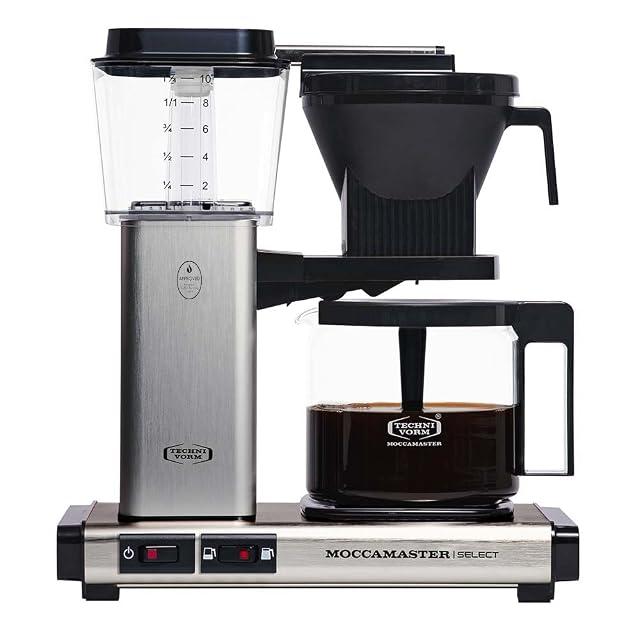
    Moccamaster KBG Select

    1.25 L · 92–96 °C brew · copper element · SCA certified

    Hits proper brew temperature in about four minutes and holds it, which is the entire job and which almost no cheap drip machine does. Hand-built in the Netherlands, repairable indefinitely, and priced accordingly.

    Best for: A household that drinks filter coffee by the pot, every day, for years.

    8.9/10

    ≈ $360 / £280 / 300 €

  2. Most adjustable batch brewer Filter machines

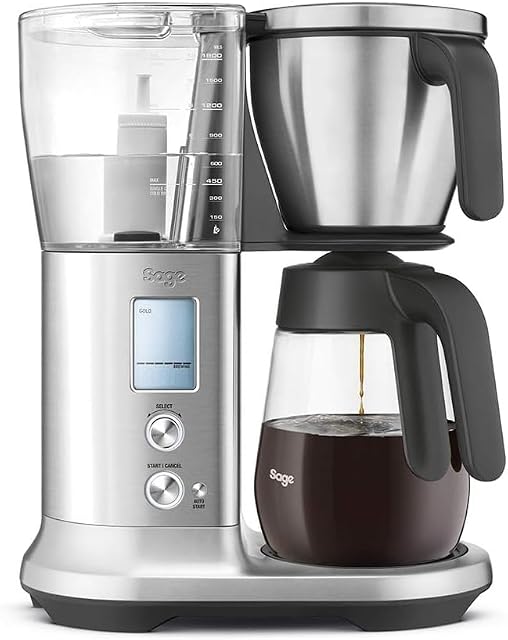
    Sage Precision Brewer

    1.7 L · 6 brew modes · SCA certified

    The only batch brewer that lets you set brew temperature, bloom time and flow rate yourself. If a Moccamaster is a fixed recipe done perfectly, this is a machine you can argue with.

    Best for: Someone who wants to tune a batch brew the way they would tune a pour-over.

    8.6/10

    ≈ $330 / £250 / 280 €

  3. Best grind-and-brew Filter machines

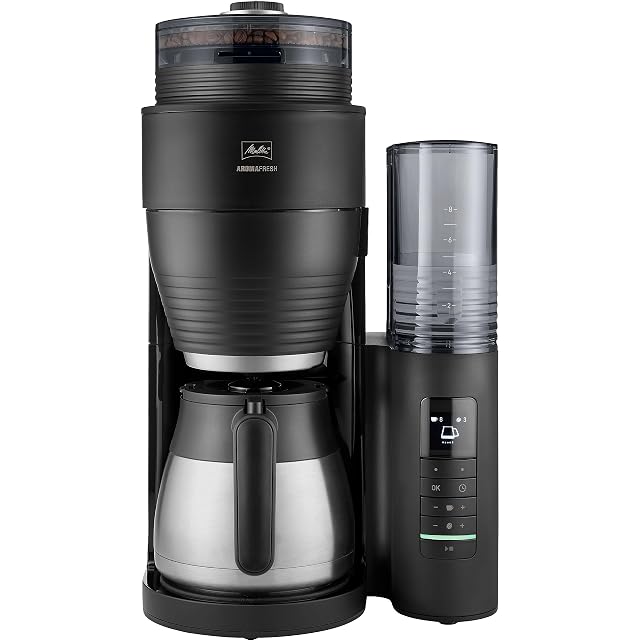
    Melitta AromaFresh Therm Pro X

    1 L thermal · built-in grinder · timer

    Whole beans in the hopper, brewed coffee in a thermal jug, on a timer. The grinder is ordinary and the convenience is enormous — for a lot of households that is the right trade.

    Best for: A household that wants fresh-ground filter coffee without doing anything at 7 a.m.

    7.7/10

    ≈ £190 / 200 €

Questions people actually ask

Why is cheap drip coffee always sour?

Under-extraction. A cheap machine trickles water that starts below 90 C and cools as it goes, so it pulls out the acids — which come out early — without the sugars, which need heat and time. Holding 92 to 96 C across a four-minute brew is what makes the same beans taste round and sweet.

What does SCA certification actually mean?

That the machine was measured brewing a full batch and held water in the 92 to 96 C band for the whole cycle, finished within a defined time and produced coffee in the target extraction range. It is a real test with a pass mark, and most cheap machines fail it.

Glass carafe or thermal?

Thermal if the pot sits for more than twenty minutes. A hotplate keeps coffee hot by continuing to cook it, and it tastes it after half an hour. Glass is fine if the pot is drunk quickly.

How much coffee per litre of water?

The dose is weighed and set to taste, keeping the same ratio each time. What matters is writing it down: without a recorded reference you make a different coffee every morning.

Should I rinse the paper filter?

Yes: it removes the paper taste and preheats the carafe. It is the free step that improves a filter machine most.

Is a permanent metal filter better than paper?

It removes the consumable and lets more oils through, so more body and sometimes more sediment. It is a matter of taste, not progress in itself.

Why is my filter coffee bitter?

Usually a grind that is too fine, or prolonged keeping warm. End-of-carafe bitterness almost always comes from the hotplate.

Should I preheat a thermal carafe?

Yes, with hot water before the cycle: a cold carafe steals a noticeable share of the coffee's heat and shortens how long it stays good.

Why each one, and for whom

Moccamaster KBG Select · $360

For : A household that drinks filter coffee by the pot, every day, for years.

Main strength : Genuinely brews at 92–96 °C for the whole cycle — the reason it tastes different

Main limitation : Expensive against a supermarket drip machine that looks similar

Read the full review →

Sage Precision Brewer · $330

For : Someone who wants to tune a batch brew the way they would tune a pour-over.

Main strength : Genuine control over temperature, bloom and flow — rare at any price

Main limitation : More menus and settings than most people will ever touch

Read the full review →

Melitta AromaFresh Therm Pro X · $190

For : A household that wants fresh-ground filter coffee without doing anything at 7 a.m.

Main strength : Grinds and brews on a timer — fresh coffee waiting when you get up

Main limitation : The built-in grinder is a flat-blade type, not a proper burr

Read the full review →

Deciding in one line

Useful comparisons

Head-to-heads already published between two models from this guide or this aisle.

How this guide is built

The models here come from the catalogue of this site. Specifications are those published by the manufacturer and on the Amazon product page; prices are what Keepa reported on the date below, and both move. The ranking uses declared specifications, the balance of stated strengths and limitations, and price. No product on this site has been physically tested, and nothing here claims otherwise.

Last checked on

The tool we use ourselves

Chosen your machine? Now buy it at the right price.

Espresso machines and grinders swing by a hundred euros or more across the year, and the biggest "discounts" often land at prices the same model sold for six weeks earlier. UniverTrack tracks the real price history across retailers, spots fake reductions, and alerts you when it is genuinely the moment to buy.

Real price historyBuy-now alertsAI buying assistant
Try free for 14 days →
No commitment · Cancel in one click · 5 languages