Skip to content

The best capsule machines, and what they really cost

Buy the system, not the machine. The machine costs 80 once; the capsules cost that every couple of months for the rest of its life, and only one of these systems lets you shop around.

Capsule machines are almost always reviewed on the machine, which is the wrong end of the problem. The machine is a one-off cost of somewhere between 70 and 190. The capsules are a permanent subscription, and at three cups a day they will outspend the machine before the summer is out.

So the first question is not which machine, it is which system — and specifically, who is allowed to sell you capsules for it. That single fact changes the three-year cost by several hundred, and it is the axis this guide is ranked on.

Which machine makes your cup?

You drink one or two cups a day
Capsules remain defensible: the annual cost is moderate and the convenience genuine. It is beyond that the arithmetic turns.
You drink milk more often than black
Look at the milk module rather than the machine: it is what costs, what needs cleaning and what fails.
You want a choice of coffees
A system that compatible capsules are made for widens the catalog enormously and brings the cost per cup down.
You are chasing the lowest cost per cup
Capsules are not the answer. A grinder and a filter machine cost more up front and far less afterwards.

Picking by the coffee you drink

Office and small kitchen

Small footprint, relative quiet and no grounds to deal with: this is where capsules are hardest to beat.

One cup in the morning

No long warm-up, no cleaning. The convenience is real and it explains why the format persists.

Guests without preparation

Everyone picks their own capsule, nobody waits. That is the social use of the system, and it has no simple equivalent.

Milk drinks

The most expensive and most demanding use: the milk module adds a daily cleaning that the format was supposed to avoid.

The things that change the result

The real cost per cup
It is worked out on the capsule price, not the machine, which is often sold at a loss. Over a few years the gap between systems far exceeds the price of the appliance.
How open the system is
A format other roasters produce for leaves real choice and puts pressure on prices. A closed format locks you into one catalog.
The used-capsule bin
A small bin needs emptying every other day. That is the sort of detail that governs daily irritation more than what is in the cup.
Whether refillable capsules work
They change the economics of the system and let you use your own coffee. Not every machine takes them properly.

Which figure for which cup

What you wantWhat to look atWhat it changes
Cost in useThe capsule price, not the machineThe gap runs into hundreds
Choice of coffeeWhether compatibles existAn open or a closed catalog
Milk drinksThe milk module and its cleaningOne more daily task
SimplicityCapsule bin and tank sizeHow often you handle it

The usual mistakes

Comparing machines rather than capsules
The purchase price is marginal beside what you will spend on capsules. Yet it is almost always what the comparison is made on.
Assuming recyclable means recycled
Recyclable and recycled are not the same thing: the second depends on a collection scheme, and those do not exist everywhere in the same form.
Expecting the taste of freshly ground coffee
A capsule protects coffee well, but it was filled months ago. The format aims at consistency, not at the aroma of beans ground a moment before.
Skipping descaling
A capsule machine scales up exactly like any other, and its narrow circuit copes with it even less well.

By the drinker you are

The single drinker
A simple machine, no milk module, and compatible capsules to bring the running cost down.
The mixed household
An open system and a decent bin: everyone finds their coffee without the machine becoming a chore.
The one weighing up espresso
Compare over three years, capsules included. The question is not cup quality but what you are prepared to do every morning.

Cleaning, descaling and working life

A capsule machine asks little, but that little is decisive: the circuit is narrow and copes badly with limescale. The rest is the bin and the capsule holder, where wet grounds eventually smell.

  • Descale to suit your water, without waiting for the flow to drop.
  • Rinse the capsule holder and the bin regularly, in plain hot water.
  • Run a water-only cycle after a long absence.
  • Clean the milk module the same day: heated milk dries fast and becomes hard to shift.

Safety

The main risk comes from heat and from the capsule being pierced.

  • Do not open the head during extraction: the needle is hot and the circuit pressurized.
  • Let it cool before removing a jammed capsule, and never force it with a knife.
  • Rinse carefully after descaling.
  • Keep capsules away from small children: they are colorful and small.
  1. Cheapest cup per capsule Capsule machines

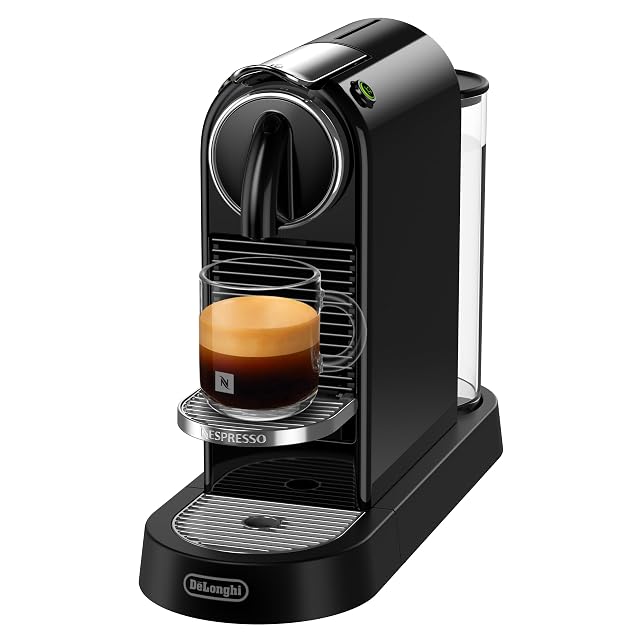
    Nespresso CitiZ

    19 bar · Original system · 1 L tank

    The Original system, where the patents expired and everyone makes capsules. The machine is unremarkable; the point is that you can buy pods from a supermarket at a third of Nespresso's price.

    Best for: Espresso and lungo drinkers who want capsule convenience without capsule prices.
    7.6/10

  2. Best for long coffee Capsule machines

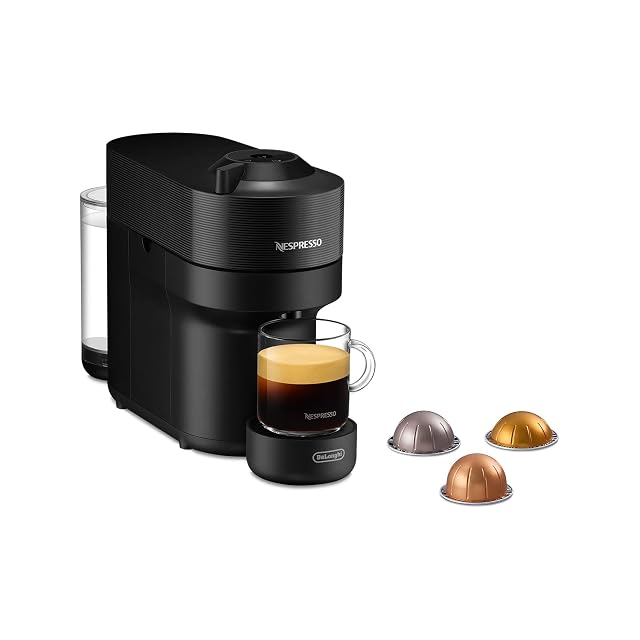
    Nespresso Vertuo Pop

    Centrifusion · barcode-read capsules · 4 cup sizes

    Spins the capsule instead of pressing water through it, which makes genuinely good long black coffee — and locks you into a closed capsule system with almost no third-party competition.

    Best for: Someone who drinks mugs of black coffee and wants zero decisions.

    7.4/10

  3. Widest drink range Capsule machines

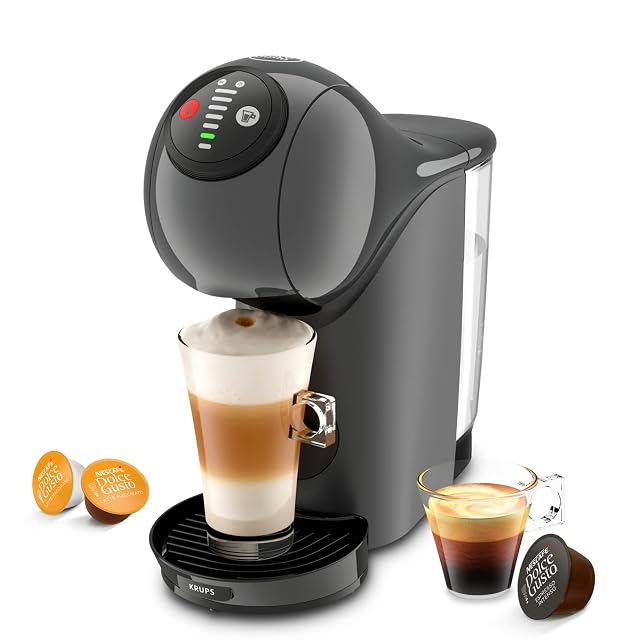
    NESCAFÉ Dolce Gusto Genio S

    15 bar · hot & cold drinks · milk capsules

    Makes hot chocolate, chai and iced drinks as well as coffee, using a separate milk capsule instead of real milk. Good at being a drinks machine, mediocre at being a coffee machine.

    Best for: A household with mixed tastes where not everyone drinks coffee.

    6.8/10

What people want to know

Which capsule system is cheapest to run?

Nespresso Original, by a wide margin, because its key patents have expired and dozens of brands sell compatible capsules at roughly a third of Nespresso prices. Vertuo capsules are effectively single-source. Dolce Gusto sits in between and needs two capsules for a milk drink.

Are third-party capsules as good?

The good ones are close, and capsules from a small independent roaster are often fresher than Nespresso own-brand because they are filled to order. Cheap supermarket own-brands are noticeably thinner. The point is having the choice.

Is a capsule machine ever the right answer?

Yes — when consistency and zero effort matter more than quality, and when consumption is low. At one or two cups a day the capsule premium is modest. At four a day it exceeds the cost of a bean-to-cup machine within about two years.

Do refillable capsules give a good result?

They change the economics of the system and let you use your own coffee. Cup quality then depends on grind and tamp, so on a grinder — which moves the problem rather than solving it.

How long do capsules keep?

They carry a best-before date that rests on the sealed packaging. Past it the coffee mostly loses aroma; the format protects better than an open bag, but it does not suspend time.

Why does my machine run weaker than it used to?

Almost always limescale, sometimes a fouled needle. Descaling and cleaning the capsule holder settle most cases before you start thinking about a fault.

Is capsule coffee more expensive per kilo?

Markedly, and that is the heart of it: a capsule holds a few grams. The sum is done on the price per cup over a year, not on the price of the box.

Can you make a real cappuccino with a capsule machine?

With a milk module you get a decent milk drink. The texture of steam-wand foam remains different, and the module adds the daily cleaning the format was meant to avoid.

Each machine, and the cup it is for

Nespresso CitiZ

Aimed at: Espresso and lungo drinkers who want capsule convenience without capsule prices.
Best thing about it: Original system: compatible capsules from dozens of brands, far cheaper

Worst thing about it: Espresso-sized only; long coffee is watery compared with Vertuo

Read the full review →

Nespresso Vertuo Pop

Aimed at: Someone who drinks mugs of black coffee and wants zero decisions.

Best thing about it: Best long coffee of any capsule system — the crema on a 230 ml cup is real

Worst thing about it: Closed system: Vertuo capsules are effectively Nespresso-only, and priced like it

Read the full review →

NESCAFÉ Dolce Gusto Genio S

Aimed at: A household with mixed tastes where not everyone drinks coffee.

Best thing about it: By far the widest drink range — chocolate, chai, iced, and coffee

Worst thing about it: The coffee is the weakest of the three capsule systems here

Read the full review →

What each step up in price adds

Entry level

$70 – $85

2 models

Upper range

$185 – $190

2 models

The quick call

Two-machine pages worth reading

Two machines, one page: the comparisons already written from this guide or this aisle.

How we arrived at this order

The machines above are taken from the catalog of this site. Specifications are what the maker and the Amazon listing publish; prices are the Keepa figure for the date shown, and both shift. The ranking weighs declared specifications, stated strengths against stated limits, and price. None of this gear has been brewed with by us, and nothing here claims it has.

Last checked on

The tool we use ourselves

Chosen your machine? Now buy it at the right price.

Espresso machines and grinders swing by a hundred dollars or more across the year, and the biggest "discounts" often land at prices the same model sold for six weeks earlier. UniverTrack tracks the real price history across retailers, spots fake reductions, and alerts you when it is genuinely the moment to buy.

Real price historyBuy-now alertsAI buying assistant
Try free for 14 days →
No commitment · Cancel in one click · 5 languages