Skip to content

The best bean-to-cup machines for 2026, ranked

Ranked on the three things that decide satisfaction over a decade: how good the milk system is, how good the grinder is, and whether the part that brews can be cleaned by you or only by a technician.

A bean-to-cup machine is bought for convenience and kept for reliability, and those are not the same thing. Almost every machine at this price makes acceptable coffee on day one. What separates them is what the machine is like in year six.

Three questions decide it. Can you take the brew unit out and rinse it, or is it sealed? Is the milk system something you will genuinely clean daily, or something you will abandon after a month? And are the burrs going to be sharp when the machine is eight years old?

The ranking below weights those questions ahead of the espresso in the cup, which is why the machine that makes the best coffee here is not first.

Which one do you need?

You mostly drink milk-based coffee
Look at the milk system first: a removable carafe you can put in the fridge, or an automatic wand. It decides the daily cleaning, and therefore whether the machine actually gets used.
You drink black, long or short
The milk system becomes secondary. The grinder and temperature stability matter more, and a simpler machine will do.
You mean to keep it ten years
A removable brew unit stops being a detail: it is the difference between maintenance you do at the sink and a trip to a service centre.
There are several of you, with different tastes
Look for saved profiles and a decent water tank: those are the two things that wear out patience in a busy household.

Choosing by use

Weekday mornings

One or two cups, quickly, without thinking. Warm-up time and automatic rinsing do most of the work; the rest is barely noticed.

Cappuccinos and lattes

This is where machines genuinely part ways. A carafe that goes in the fridge changes everything; a wand you must purge and wipe after every drink eventually wears you down.

Having people over

Several cups in a row: grounds bin capacity, tank size and recovery time between cups become the real limits.

Exploring speciality coffee

A bean-to-cup favours consistency over fine control. To follow a roaster gram by gram, manual espresso stays truer.

The criteria that actually matter

The brew unit: removable or sealed
A removable unit rinses under the tap every week, no chemicals, no dismantling. A sealed one relies on an automatic cycle and, the day it needs opening, on a workshop. It is the first criterion of longevity.
The milk system
Three families: removable carafe, tube into a carton, manual steam wand. The criterion is not the foam it makes but the cleaning ritual it imposes twice a day.
The grinder and its range
A grinder that will not go fine enough caps every other quality the machine has. The number of settings is countable, and it tells you what you will be able to adjust.
Noise
A bean-to-cup grinds for every cup, usually early, often in an open-plan kitchen. It is the criterion nobody checks and everybody lives with.
Access to consumables
Water filters, cleaning tablets, seals: their availability and price matter more over the years than the difference in purchase price.

Which criterion for which use

What you drinkWhat decidesWhat matters less
Espresso and long blackGrinder, temperature stabilityThe milk system
Daily cappuccinoRemovable carafe, quick cleaningThe number of recipes
Varied drinks, several peopleSaved profiles, capacitiesFine grind control
Speciality coffeeGrinder adjustment rangeAutomation

Mistakes to avoid

Choosing on the number of drinks listed
Fifteen drinks on the menu come down to three combinations of dose and milk. That catalogue says nothing about extraction quality and takes the place of a useful figure on the spec sheet.
Ignoring water hardness
It is the leading cause of failure in a bean-to-cup. Hard water with no filtering and no descaling scales the circuit long before anything wears out mechanically.
Buying beans too dark for an automatic
Very dark, oily beans stick in the grinder and the chute. Many a "grinder fault" is a coffee problem first.
Expecting an expensive machine to need no cleaning
Price buys consistency and materials, not freedom from maintenance. The cleaning rhythm follows the milk system and the water, not the amount spent.

Choosing by profile

The busy household
A simple machine, a removable brew unit, automatic rinsing. What counts is the number of steps between waking up and the cup.
The cappuccino drinker
The removable carafe before everything else: it decides whether the machine is still in use in six months.
The curious one
A wide grind range and a decent burr set. A bean-to-cup will remain a compromise, but an adjustable one.

Upkeep and how long it lasts

A bean-to-cup lives on three routines: daily rinsing of the milk circuit, weekly cleaning of the brew unit where it comes out, and descaling to suit the water. No service life can be stated: it depends on the water, the beans and how faithfully those routines are kept.

  • Purge the milk circuit after every service, not just at the end of the day.
  • Rinse the brew unit in clear water, with no washing-up liquid to leave a taste behind.
  • Empty the grounds bin before it compacts: that is where mould starts.
  • Follow the descaling alert rather than the calendar: it counts cycles, not days.

Safety

The risks are limited but real: pressurised water, steam, descaling chemicals.

  • Never open a circuit still under pressure or loosen a hot part.
  • Rinse thoroughly after descaling: the acids used are not for drinking.
  • Keep the steam wand out of reach during and just after use.
  • Do not fill the tank with hot or sparkling water: both damage the circuit.
  1. Best milk system Bean-to-cup

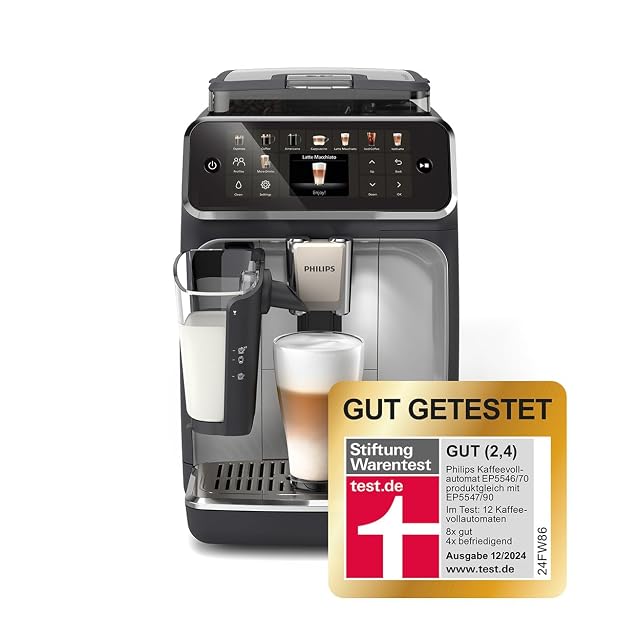
    Philips 5500 Series LatteGo

    12-step ceramic burr · 20 drinks · 2-part milk system

    LatteGo is the only automatic milk system we do not resent cleaning: two parts, no tubes, both dishwasher-safe. Combined with ceramic burrs that will outlast the machine, it makes this the sensible middle of the bean-to-cup market.

    Best for: A household where two or three people each drink something different, with milk.

    8.4/10

    ≈ $800 / £600 / 600 €

  2. Best espresso from an automatic Bean-to-cup

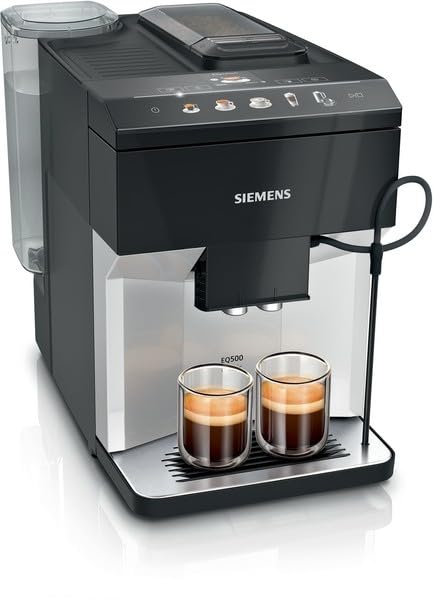
    Siemens EQ.500 integral

    Ceramic burr · iAroma system · milk carafe

    The best straight espresso in the automatic mid-range, from a brand that quietly builds these for Bosch too. Its weakness is the same as every premium automatic: you cannot take the brew unit out.

    Best for: A household that wants espresso quality closer to Jura without paying Jura money.

    8.3/10

    ≈ £750 / 800 €

  3. Best first bean-to-cup Bean-to-cup

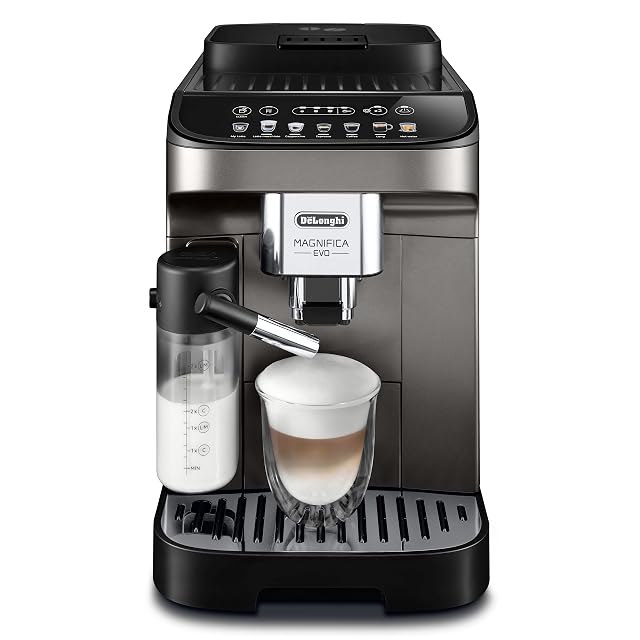
    De'Longhi Magnifica Evo

    13-step steel burr · manual or LatteCrema wand

    The machine most people should start with. The grinder is ordinary and the coffee is good rather than great — but the brew unit pops out in two seconds, and that single design decision is why these are still running after eight years.

    Best for: Someone moving off capsules who wants fresh coffee without a hobby attached.

    8.1/10

    ≈ $600 / £450 / 450 €

  4. Best short-shot extraction Bean-to-cup

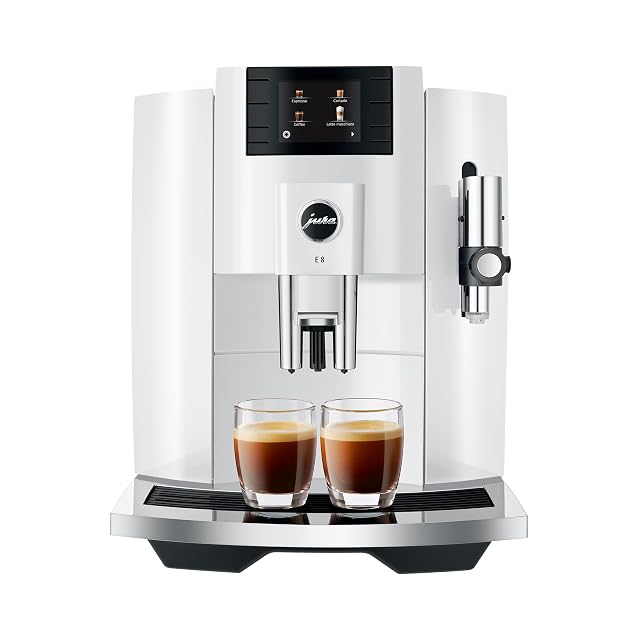
    JURA E8

    Pulse Extraction · sealed brew unit · 17 drinks

    The best espresso an automatic machine makes, from a company that will not let you clean the part that brews it. Extraordinary in the cup, uncomfortable as a ten-year purchase — and you should know both before spending this much.

    Best for: Someone who drinks short black coffee daily, values the cup over the repair bill, and will pay for it.

    7.6/10

    ≈ $2,000 / £1,300 / 1 200 €

  5. Best if you never make milk drinks Bean-to-cup

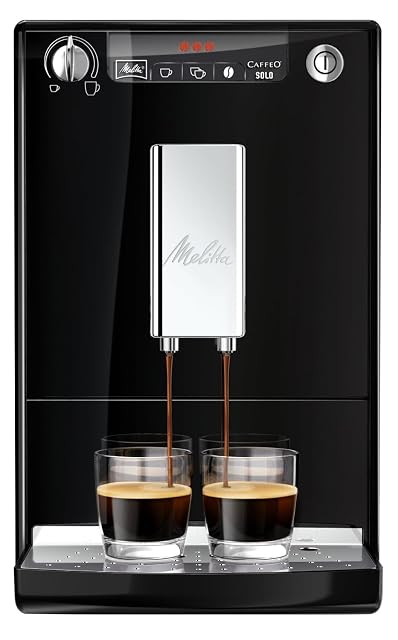
    Melitta Caffeo Solo

    Steel conical burr · 1.2 L · black coffee only

    A bean-to-cup machine that deliberately does not do milk, and is cheaper, narrower and simpler for it. If you drink your coffee black, you are paying for nothing you do not use.

    Best for: Espresso, lungo and americano drinkers who genuinely never make a cappuccino.

    7.9/10

    ≈ £280 / 300 €

Questions people actually ask

Removable or sealed brew unit — how much does it matter?

A great deal over ten years. Coffee oils accumulate in the group on every machine. A removable unit is rinsed under a tap in ten seconds; a sealed one is cleaned by pushing a tablet through, which works well for years and then becomes a workshop job costing a meaningful fraction of the machine.

Are ceramic burrs worth paying for?

Narrowly, yes. Ceramic keeps its edge far longer than the cheap hardened steel used at this price, which matters across a decade of daily use. It does not grind more consistently than good steel on day one, and it chips if a stone reaches the hopper.

Can any bean-to-cup machine make latte art?

No. Every automatic milk system produces dense, stable foam that sits on the drink rather than the pourable microfoam a steam wand creates. If latte art matters, you want a portafilter machine and a pitcher.

How long does a bean-to-cup last?

No honest figure can be quoted: it depends on water hardness, on the beans and on how faithfully it is cleaned. What is known is that a removable brew unit and regular descaling are the two factors that come up in almost every long-lived machine.

Can I use pre-ground coffee in a bean-to-cup?

Most have a chute for exactly that, useful for an occasional decaf. It is not an everyday mode: the chute is dosed by spoon and the result is less consistent than the built-in grinder.

Do I need a softener, or is a filter enough?

For a domestic machine the maker's cartridge is enough in the great majority of cases. A plumbed-in softener answers a whole-house problem, not a machine problem.

What if the coffee runs too pale?

Three leads, in order: the grind too coarse, the dose too low, the brew unit fouled. On most machines the grind is adjusted while the grinder is running, one step at a time.

Is a bean-to-cup right for an office?

For a small office, yes, provided someone owns the cleaning: the milk circuit and the grounds bin need daily attention that nobody takes on spontaneously in a shared space.

Why each one, and for whom

Philips 5500 Series LatteGo · $800

For : A household where two or three people each drink something different, with milk.

Main strength : LatteGo milk carafe is two parts with no tubes — 15 seconds to clean

Main limitation : Brew unit is removable but stiffer to reseat than De'Longhi's

Read the full review →

Siemens EQ.500 integral · $750

For : A household that wants espresso quality closer to Jura without paying Jura money.

Main strength : iAroma pressure profiling makes a genuinely better short espresso

Main limitation : Sealed brew unit — tablet cleaning only, servicing is a workshop job

Read the full review →

De'Longhi Magnifica Evo · $600

For : Someone moving off capsules who wants fresh coffee without a hobby attached.

Main strength : Removable brew unit — rinse it under a tap, no service call

Main limitation : The burr set is the weak link — fine for milk drinks, ordinary for black coffee

Read the full review →

JURA E8 · $2 000

For : Someone who drinks short black coffee daily, values the cup over the repair bill, and will pay for it.

Main strength : Pulse Extraction genuinely improves ristretto and short espresso

Main limitation : Sealed brew unit — cleaning is by tablet only, servicing means a technician

Read the full review →

Melitta Caffeo Solo · $280

For : Espresso, lungo and americano drinkers who genuinely never make a cappuccino.

Main strength : Only 20 cm wide — it fits where other bean-to-cups do not

Main limitation : No milk at all — a separate frother is not optional, it is required

Read the full review →

What each price bracket buys

Entry level

$280 – $600

2 models

Mid range

$750 – $800

2 models

Upper range

$900 – $2 000

2 models

Deciding in one line

Useful comparisons

Head-to-heads already published between two models from this guide or this aisle.

How this guide is built

The models here come from the catalogue of this site. Specifications are those published by the manufacturer and on the Amazon product page; prices are what Keepa reported on the date below, and both move. The ranking uses declared specifications, the balance of stated strengths and limitations, and price. No product on this site has been physically tested, and nothing here claims otherwise.

Last checked on

The tool we use ourselves

Chosen your machine? Now buy it at the right price.

Espresso machines and grinders swing by a hundred euros or more across the year, and the biggest "discounts" often land at prices the same model sold for six weeks earlier. UniverTrack tracks the real price history across retailers, spots fake reductions, and alerts you when it is genuinely the moment to buy.

Real price historyBuy-now alertsAI buying assistant
Try free for 14 days →
No commitment · Cancel in one click · 5 languages