Skip to content

The best espresso machines for beginners

Five machines, ranked by how far each one takes a beginner before the equipment becomes the limitation — not by which makes the best espresso in expert hands.

The honest question for a first espresso machine is not which one makes the best coffee. It is which one lets you make coffee you enjoy while you are still learning, without hitting a wall in six months.

That splits into two decisions. The first is whether the grinder is included. An all-in-one is cheaper than the parts and simpler to live with; a separate grinder makes better coffee and costs more thought. The second is basket size, which sounds like trivia and decides what accessories you can ever buy — 58 mm is the commercial standard with an enormous aftermarket, while 51 and 54 mm are proprietary sizes with much thinner support.

Our order below reflects those two decisions more than any difference in shot quality, because at this level the grind is doing most of the work anyway.

Which one do you need?

You have no grinder yet
The grinder comes before the machine. A decent machine with badly ground coffee makes bad espresso; the reverse is far less true.
You want to actually learn
A non-pressurised basket, even though it forgives less: it is what makes the grind visible, and therefore learning possible.
You mainly want coffee, not a hobby
A pressurised basket and pre-ground coffee will do, as long as you accept the ceiling on quality that comes with them.
You make cappuccinos
Look at the steam wand before anything else: its length, its reach and its power decide the foam far more than the machine does.

Choosing by use

One or two espressos a day

The commonest case. A thermoblock machine is enough; stability across a series never gets the chance to become a problem.

Espresso then milk straight after

The switch from brewing to steaming becomes the weak point: on many entry-level machines you have to wait between the two.

Learning to dial in

Non-pressurised basket, scale, fresh coffee: that trio is what lets you understand what changes the taste. Without it you adjust blind.

Serving several people

Two or three coffees in a row is already a thermal demand. Very compact machines show their limits there.

The criteria that actually matter

The basket: pressurised or not
A pressurised basket manufactures crema artificially and hides an unsuitable grind. It helps at the start and becomes a ceiling the moment you want to progress. Many machines ship with both.
The steam wand
A short, fixed wand pointing down makes foaming hard whatever your skill. It is a design detail that governs every cappuccino you will ever make on that machine.
Temperature stability
Thermoblock, heat exchanger or boiler: the difference shows on the second and third coffee, not the first. At one cup a day it matters little.
The portafilter
Its diameter decides compatibility with the baskets and accessories on the market. A common size opens the whole catalogue; a rare one closes it.

Which criterion for which use

Your situationThe machine that suitsWhat to budget alongside
Starting with no grinderSimple machine, pressurised basketA grinder, as soon as you can
Learning to dial inNon-pressurised basketA scale and fresh coffee
Daily cappuccinosA long, movable steam wandA milk jug that fits
Serving several cupsBetter thermal massA little patience between cups

Mistakes to avoid

Buying the machine before the grinder
It is the mistake that costs most, because you fix it by buying again. Ground coffee loses most of its aroma within days, and no machine setting brings it back.
Judging by the crema
Handsome crema can come from a pressurised basket and over-roasted beans. It says nothing about extraction, and it misleads beginners in particular.
Tamping harder when the shot runs fast
Flow is set by the grind, not by the wrist. Tamping harder does not make up for a coarse grind and makes your technique less repeatable.
Ignoring how much goes in the basket
A basket meant for eighteen grams filled with fourteen leaves headroom where water rushes through. The dose is weighed, not estimated.

Choosing by profile

The cautious beginner
An entry-level machine with both baskets, and a decent grinder bought at the same time. Start pressurised, switch when you want to.
The one who wants to learn
Non-pressurised basket, a scale, coffee from a roaster with a roast date. The gear matters less than the freshness of the beans.
The cappuccino drinker
The steam wand first. A machine that is mediocre at coffee but good at steam makes better cappuccinos than the other way round.

Upkeep and how long it lasts

An espresso machine is maintained in three places: the group and its gasket, the steam wand, and the water circuit. Coffee oils foul the first, milk the second, limescale the third. No lifespan can be predicted: it depends on the water and on how often you brew.

  • Purge the wand before and after use, and wipe it while it is still warm.
  • Backflush regularly if the machine has a three-way valve.
  • Replace the group gasket when the portafilter starts locking further and further round.
  • Empty the tank if the machine sits unused for several days.

Safety

An espresso machine combines near-boiling water, pressurised steam and mains electricity on a damp worktop.

  • Never remove the portafilter during extraction: pressure is holding it.
  • Purge the wand away from your face and hands.
  • Keep children away while steaming: the wand stays scalding long afterwards.
  • Unplug before any dismantling, even to change a gasket.
  1. Best way to start espresso Espresso machines

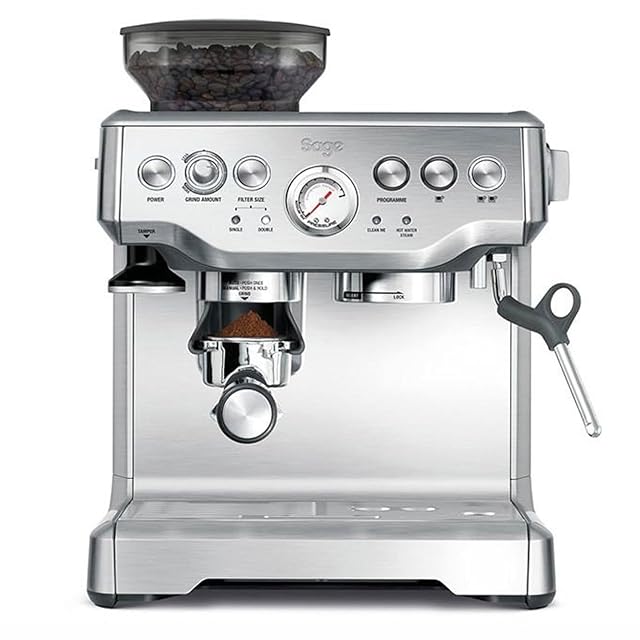
    Sage Barista Express

    54 mm portafilter · built-in conical burr · 2 L tank

    Machine and grinder in one box, at a price that undercuts buying them separately. The compromises are real — 54 mm basket, single boiler, a grinder you will outgrow — but nothing else takes a beginner this far this cheaply.

    Best for: Your first portafilter machine, if you want one purchase rather than a project.

    8.6/10

    ≈ $700 / £550 / 600 €

  2. Best small espresso machine Espresso machines

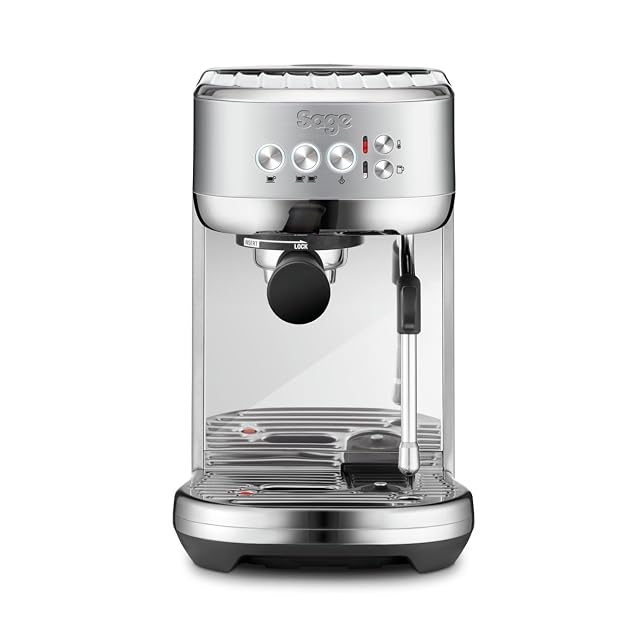
    Sage Bambino Plus

    54 mm · automatic milk texturing · 3 s heat-up

    Ready in three seconds, nineteen centimetres wide, and it textures milk automatically to a temperature you choose. The one espresso machine that suits a small kitchen without pretending grind does not matter.

    Best for: Someone who already owns a grinder, or is buying one, and has no space.

    8.4/10

    ≈ $500 / £380 / 400 €

  3. Best machine to keep Espresso machines

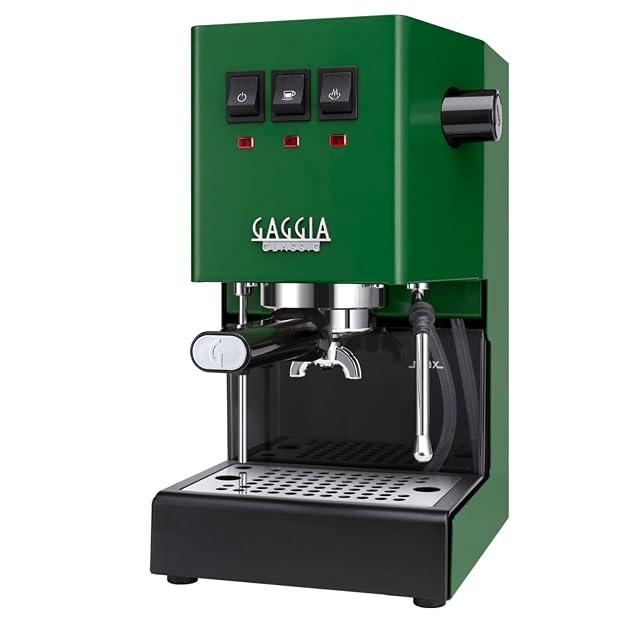
    Gaggia Classic Evo Pro

    58 mm commercial portafilter · 3-way solenoid · steel body

    A 58 mm commercial portafilter, a steel body and a three-way solenoid, in a machine cheap enough to modify. Nothing else at this price is still worth owning in fifteen years, and nothing else has this much of an aftermarket.

    Best for: Someone who wants one espresso machine for the next fifteen years and does not mind learning it.

    8.5/10

    ≈ $500 / £400 / 450 €

  4. Best all-in-one alternative Espresso machines

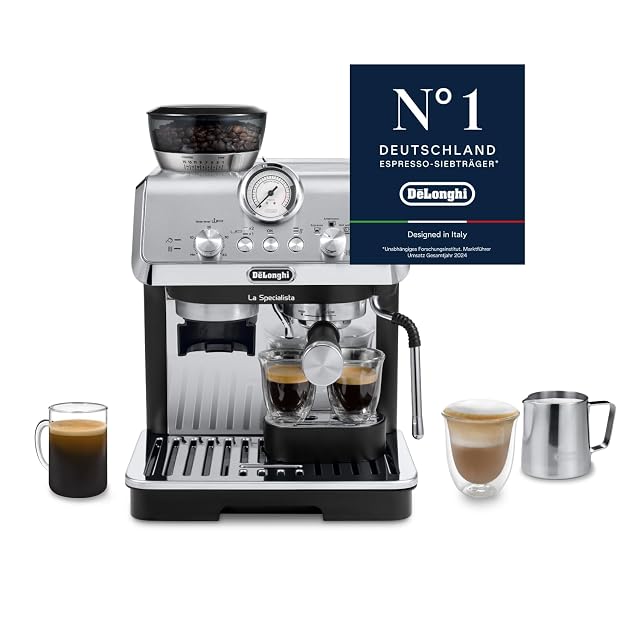
    De'Longhi La Specialista Arte

    51 mm · built-in conical grinder · manual wand

    De'Longhi's answer to the Barista Express, with a tidier grinder-to-portafilter workflow and better temperature control. Worth comparing directly rather than assuming Sage wins by default.

    Best for: A first serious espresso setup where one appliance has to do everything.

    7.9/10

    ≈ $600 / £450 / 480 €

  5. Cheapest honest espresso Espresso machines

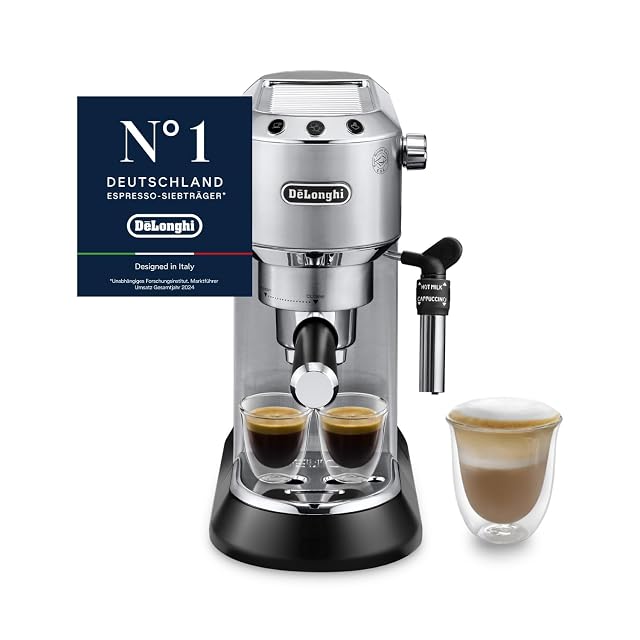
    De'Longhi Dedica Style EC685

    51 mm portafilter · 15 cm wide · pressurised baskets

    Fifteen centimetres wide, heats in forty seconds, and makes a decent drink for under 200. It ships with pressurised baskets that fake crema from any grind — which is exactly why it works for beginners and why it stalls after a year.

    Best for: A tiny kitchen, a first espresso machine, or a second machine for an office.

    7.2/10

    ≈ $200 / £170 / 180 €

Questions people actually ask

Should my first espresso machine include a grinder?

It depends on whether you want one purchase or the best coffee. An all-in-one like the Barista Express costs less than a comparable machine and grinder bought separately, and it works out of the box. A machine without a grinder plus a dedicated grinder makes better coffee for similar money, and requires two decisions instead of one.

How much should I actually spend to start?

Around 400 to 600 in total, split across machine and grinder, is the point where espresso stops being frustrating. Below roughly 250 the grinder cannot resolve finely enough and you are fighting the equipment. Above 900 you are buying refinement that a beginner cannot yet use.

Is a pressurised basket a bad thing for a beginner?

No, as a starting point. It forgives a coarse or inconsistent grind, so the machine works on day one. It also caps how good the coffee gets, because pressure comes from a valve rather than from the coffee. Treat it as training wheels you will remove.

Should I preheat the portafilter?

Yes, and it costs nothing: a cold portafilter absorbs part of the brew heat and gives a more acidic shot. Leaving it locked in between shots is enough.

How much coffee goes in the basket?

What the basket is designed for, stated by the maker or readable from its capacity. Weighing that dose is the first step that makes a shot repeatable.

Why does my coffee taste burnt?

Usually over-extraction: grind too fine, dose too low, or water too hot. A very dark roast amplifies it and narrows the window you have to work in.

Should I flush the group before each shot?

A short flush clears residue from the previous shot and steadies the temperature. It takes a second, and it shows in the first coffee of the day.

Is a dual boiler worth the jump?

For a beginner, rarely: the gain is in going from brewing to steaming, which only becomes a problem past several milk drinks in a row. The money does more in the grinder and the coffee.

Why each one, and for whom

Sage Barista Express · $700

For : Your first portafilter machine, if you want one purchase rather than a project.

Main strength : Grinder and machine together for less than the two bought apart

Main limitation : Single boiler: you brew, then you steam, never both

Read the full review →

Sage Bambino Plus · $500

For : Someone who already owns a grinder, or is buying one, and has no space.

Main strength : Genuinely 3 seconds from cold to first shot — a thermojet, not a boiler

Main limitation : No grinder — budget for one separately, it is not optional

Read the full review →

Gaggia Classic Evo Pro · $500

For : Someone who wants one espresso machine for the next fifteen years and does not mind learning it.

Main strength : Full 58 mm commercial portafilter — the entire aftermarket fits it

Main limitation : No temperature control out of the box — you learn to time it, or you fit a PID

Read the full review →

De'Longhi La Specialista Arte · $600

For : A first serious espresso setup where one appliance has to do everything.

Main strength : Grinds straight into the portafilter with a genuinely useful dosing guide

Main limitation : 51 mm basket, so a thinner accessory market than the 58 mm standard

Read the full review →

De'Longhi Dedica Style EC685 · $200

For : A tiny kitchen, a first espresso machine, or a second machine for an office.

Main strength : 15 cm wide — it fits where nothing else fits

Main limitation : Pressurised baskets mask a bad grind — and cap how good the coffee gets

Read the full review →

What each price bracket buys

Entry level

$200 – $450

2 models

Mid range

$500

2 models

Upper range

$600 – $700

2 models

Deciding in one line

Useful comparisons

Head-to-heads already published between two models from this guide or this aisle.

How this guide is built

The models here come from the catalogue of this site. Specifications are those published by the manufacturer and on the Amazon product page; prices are what Keepa reported on the date below, and both move. The ranking uses declared specifications, the balance of stated strengths and limitations, and price. No product on this site has been physically tested, and nothing here claims otherwise.

Last checked on

The tool we use ourselves

Chosen your machine? Now buy it at the right price.

Espresso machines and grinders swing by a hundred euros or more across the year, and the biggest "discounts" often land at prices the same model sold for six weeks earlier. UniverTrack tracks the real price history across retailers, spots fake reductions, and alerts you when it is genuinely the moment to buy.

Real price historyBuy-now alertsAI buying assistant
Try free for 14 days →
No commitment · Cancel in one click · 5 languages