A 58 mm commercial portafilter, a steel body and a three-way solenoid, in a machine cheap enough to modify. Nothing else at this price is still worth owning in fifteen years, and nothing else has this much of an aftermarket.
The bottom line The cheapest espresso machine that is genuinely worth keeping — and modifying.
The Gaggia Classic has survived thirty years of redesigns, and the Evo Pro is the version that put back what earlier revisions removed: a proper 58 mm commercial portafilter and non-pressurised baskets in the box. That combination is why this machine occupies a category of one.
Fifty-eight millimetres is not a specification, it is an ecosystem. It is the size used by commercial machines, which means every precision basket, bottomless portafilter, calibrated tamper, distribution tool and puck screen made in the last three decades fits yours. Machines with proprietary basket sizes sell you into a catalogue; this one sells you into a market. Over a decade of ownership that difference compounds.
The steel body and the three-way solenoid come from the same instinct. The solenoid vents trapped pressure when the shot ends, so the puck knocks out dry and firm and the group stays clean — a small thing that you notice every single day. And because everything inside is documented and stocked, a fifteen-year-old Classic is a machine you service, not a machine you replace.
What you do not get is convenience. There is no temperature readout, so you learn the machine’s rhythm: flush, wait, pull. The boiler is small, so steaming after brewing means a pause, and a dinner party means patience. And this machine will not save you from a bad grinder — with 58 mm non-pressurised baskets, the grind is doing the work, and a coarse or inconsistent one produces sour, gushing shots that are entirely the grinder’s fault.
Pair it with a real espresso grinder and give it a fortnight. Then keep it for fifteen years.
What we like, and what we don't
Strengths
Full 58 mm commercial portafilter — the entire aftermarket fits it
Three-way solenoid leaves a dry puck and a clean group
Every part is documented, cheap and replaceable; these run for decades
Real steam wand with enough pressure to texture milk properly
Compromises
No temperature control out of the box — you learn to time it, or you fit a PID
Small boiler: fine for two drinks, slow for a dinner party
Steam and brew are sequential, with a wait between
Demands a proper grinder — it will not rescue a bad one
Where this one sits in its aisle
At 500 $, it is the 3 cheapest of the 6 models in this category published here.
Cheapest in the aisle200 $
Median500 $
Dearest in the aisle700 $
Specifications
Portafilter
58 mm commercial
Boiler
Single aluminium, 100 ml
Solenoid
Three-way
Body
Stainless steel
Water tank
2.1 L
Baskets
Non-pressurised included
Questions people actually ask
Why does 58 mm matter so much?
It is the commercial standard, so every precision basket, bottomless portafilter, tamper, puck screen and distribution tool made in the last thirty years fits. Machines with proprietary sizes lock you into one manufacturer's catalogue at one manufacturer's prices; this one opens the whole market to you.
Do I need to fit a PID?
No, and most owners never do. The stock machine has no temperature readout, so you learn its rhythm — a flush, a pause, then the shot. A PID makes that repeatable rather than learnt, which is worth it if you chase light roasts and worth nothing if you drink one flat white a day.
What is a three-way solenoid actually for?
When the shot ends it vents the pressure still trapped above the coffee, out through a drain. The practical result is a firm, dry puck that knocks out cleanly instead of a sodden mess, and a group head that stays clean. Machines without one are messier to live with.
Our score
8.5/ 10
The cheapest espresso machine that is genuinely worth keeping — and modifying.
Who this one is for
Someone who wants one espresso machine for the next fifteen years and does not mind learning it.
Compared with its closest rivals
Same category, nearest prices. Only the specifications every one of them states are shown — a half-empty column compares nothing.
A reference exists on these Amazon stores: France, Germany, Italy, Spain, United Kingdom, United States. Listed is not the same as in stock — availability changes daily.
Details checked on August 8, 2026.
Sources
Specifications: manufacturer sheet and Amazon product page. Prices and availability: Keepa. No product on this site has been physically tested.
51 mm portafilter · 15 cm wide · pressurised baskets
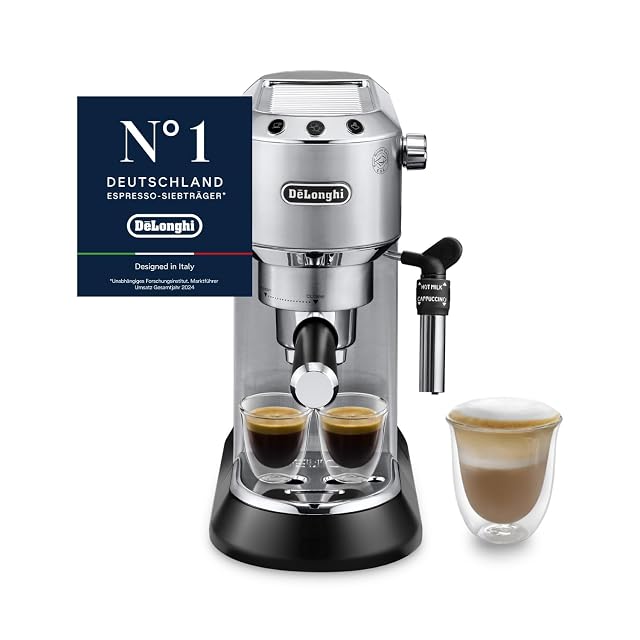
Fifteen centimetres wide, heats in forty seconds, and makes a decent drink for under 200. It ships with pressurised baskets that fake crema from any grind — which is exactly why it works for beginners and why it stalls after a year.
Best for: A tiny kitchen, a first espresso machine, or a second machine for an office.
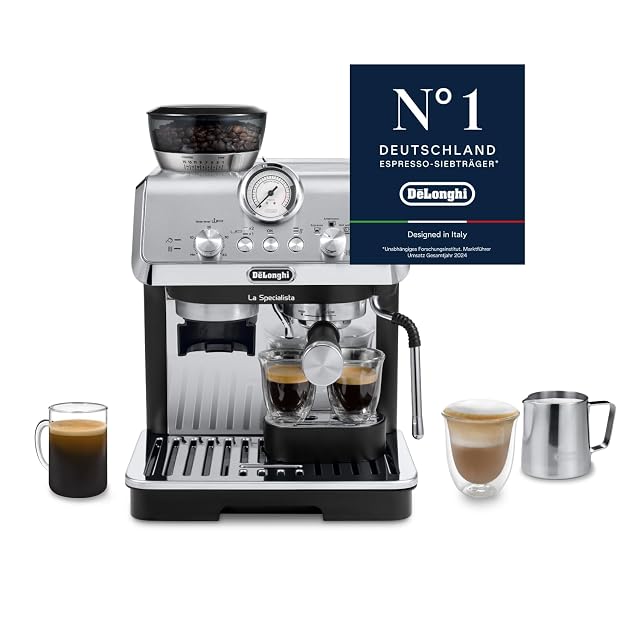
De'Longhi's answer to the Barista Express, with a tidier grinder-to-portafilter workflow and better temperature control. Worth comparing directly rather than assuming Sage wins by default.
Best for: A first serious espresso setup where one appliance has to do everything.
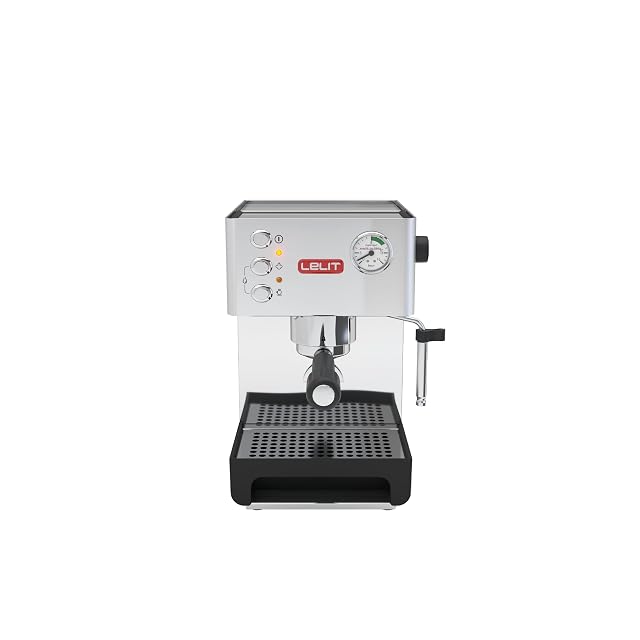
A 58 mm single boiler with a proper PID, which is a specification that normally starts several hundred higher. Temperature you can set and trust, in a machine that costs about what a Gaggia does.
Best for: Someone who wants repeatable brew temperature without stepping up to a dual boiler.