The best espresso an automatic machine makes, from a company that will not let you clean the part that brews it. Extraordinary in the cup, uncomfortable as a ten-year purchase — and you should know both before spending this much.
The bottom line The finest cup in the category, bought at the cost of ever opening the machine.
There is a version of this review that simply says the E8 makes the best coffee any automatic machine makes, and stops. In the cup that is close to true, particularly for anything short and black. Pulse Extraction — water delivered in pulses rather than one continuous push — lengthens the time water spends in the puck without lengthening the drink, and on a ristretto the difference in body is not subtle. Add a genuinely stable brew temperature and a grinder well above the mass-market standard, and you get espresso that other automatics do not reach.
The rest of the review is about the brew unit, and it matters more than the coffee.
JURA seals it. You cannot take it out, rinse it, or look at it. Cleaning happens by pushing a tablet through the machine, and for several years that is entirely adequate. What it is not is inspectable. When a De’Longhi starts extracting oddly, you pull the unit out and find the answer in ten seconds. When a JURA does, you book a service. On a 400-euro machine that is an annoyance; on this one it is a recurring risk against a much larger sum.
The consumables follow the same logic. The machine is built around JURA’s own filters and tablets and will nag you towards them indefinitely. That is a real running cost, and it belongs in the purchase decision rather than being discovered afterwards.
So: buy it if you drink short black coffee every day, if the cup is what you are paying for, and if a workshop bill in year seven is an acceptable outcome. If what you actually make is three flat whites a morning, the Philips 5500 gets you most of the way for half the money and lets you clean the part that matters.
On the /go link for this one: we have verified ASINs on Amazon US and UK only. On the German, French, Italian and Spanish stores this model is listed inconsistently across variants, so rather than send you to a dead product page we send you to a search on your own store. It is a worse link and an honest one.
What we like, and what we don't
Strengths
Pulse Extraction genuinely improves ristretto and short espresso
Build quality and interface are a class above the mass market
Very quiet, and fast between drinks
Holds temperature far more steadily than machines half its price
Compromises
Sealed brew unit — cleaning is by tablet only, servicing means a technician
Locked into JURA's own filter and tablet consumables, at JURA's prices
Costs roughly twice a Philips 5500 for a difference most people taste only in black coffee
Where this one sits in its aisle
At 2000 $, it is the 6 cheapest of the 6 models in this category published here.
Cheapest in the aisle280 $
Median800 $
Dearest in the aisle2000 $
Specifications
Extraction
P.E.P. pulse extraction
Burr type
Professional conical
Brew unit
Sealed — not removable
Drinks
17
Water tank
1.9 L
Milk
Fine-foam frother, tube-fed
Questions people actually ask
Is Pulse Extraction a real thing or a marketing name?
It is real and it is narrow. Instead of one continuous push, the pump delivers water in pulses, which lengthens contact time without lengthening the shot. On a ristretto or a short espresso that measurably improves body. On a lungo or anything with milk in it, you will not find the difference.
Why does the sealed brew unit matter so much?
Because coffee oils accumulate in the group whether you can reach it or not. A removable unit is rinsed under a tap in ten seconds. A sealed one is cleaned by pushing a tablet through it, which works well for years and then does not — and at that point the repair is a workshop job costing a meaningful fraction of the machine.
Does it have to be JURA's own filter and tablets?
The machine is designed around them and will keep telling you so. Third-party equivalents exist and generally work, but you are arguing with the appliance every time. Budget for the genuine consumables, because they are part of the real price.
Our score
7.6/ 10
The finest cup in the category, bought at the cost of ever opening the machine.
Who this one is for
Someone who drinks short black coffee daily, values the cup over the repair bill, and will pay for it.
Compared with its closest rivals
Same category, nearest prices. Only the specifications every one of them states are shown — a half-empty column compares nothing.
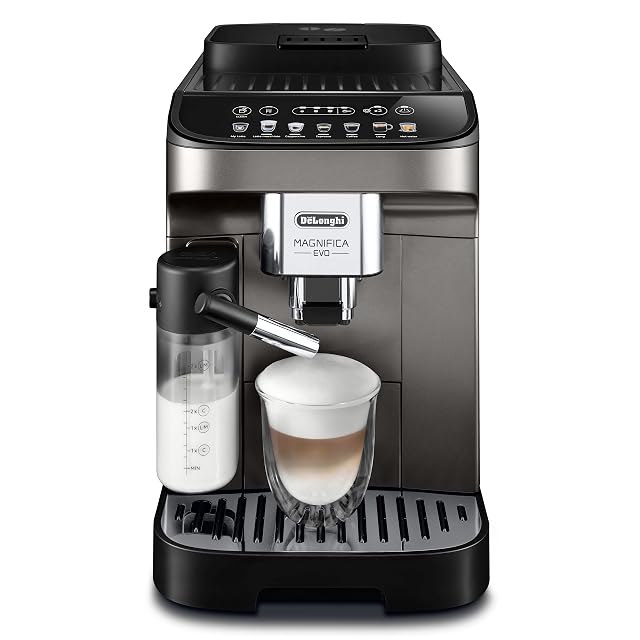
The machine most people should start with. The grinder is ordinary and the coffee is good rather than great — but the brew unit pops out in two seconds, and that single design decision is why these are still running after eight years.
Best for: Someone moving off capsules who wants fresh coffee without a hobby attached.
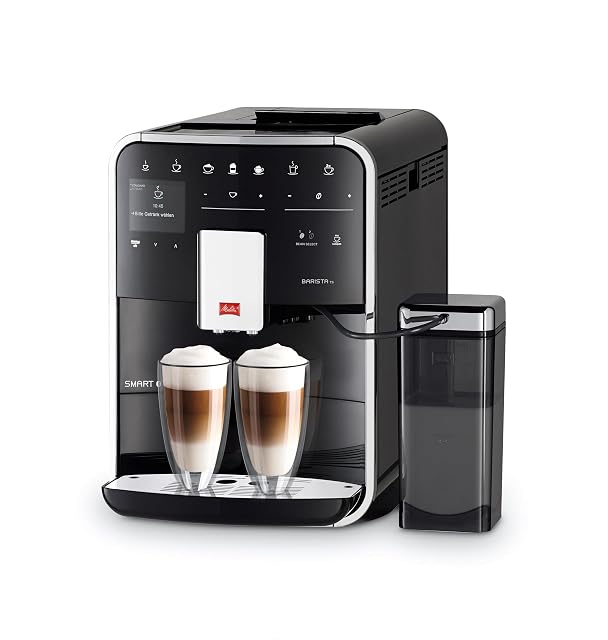
Two separate bean chambers, so a decaf drinker and an espresso drinker share one machine without either compromising. The app is beside the point; the second hopper is not.
Best for: A household where one person drinks decaf after six and nobody wants to swap beans.
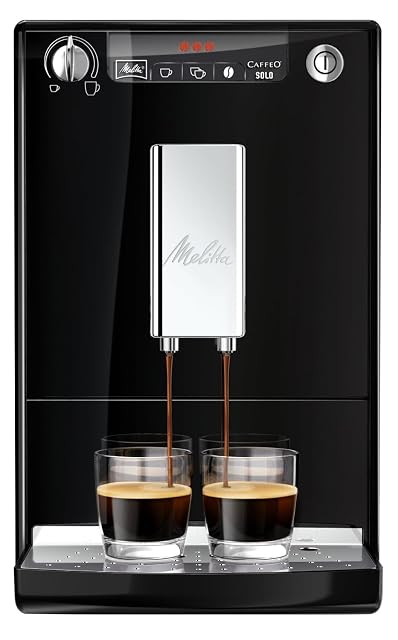
A bean-to-cup machine that deliberately does not do milk, and is cheaper, narrower and simpler for it. If you drink your coffee black, you are paying for nothing you do not use.
Best for: Espresso, lungo and americano drinkers who genuinely never make a cappuccino.