Two separate bean chambers, so a decaf drinker and an espresso drinker share one machine without either compromising. The app is beside the point; the second hopper is not.
The bottom line The only sensible answer for a two-coffee household.
Most bean-to-cup comparisons come down to milk systems and grinders. This machine wins on a problem nobody else at the price addresses: what happens when two people in the house drink different coffee.
A single hopper means one bean. If your partner drinks decaf in the evening, or you brew a light roast in the morning and a dark one after dinner, the theory is that you empty the hopper and refill it. In practice nobody does that, so somebody drinks the wrong coffee for years.
The Barista TS Smart has two chambers and lets you assign either to any drink. That is it — and it is genuinely worth the premium if it describes your household.
Around that sits a competent machine: a removable brew unit, which is unusual at this price where sealed units dominate, four user profiles with real recipe memory, and a tube-fed milk carafe that works well and needs the daily rinse every tube-fed carafe needs.
The app is the weakest part of the proposition. It mirrors the front panel, stores recipes you could store in a profile, and adds a dependency on a phone to a machine that works perfectly without one. Nothing about it is bad; nothing about it justifies the word Smart in the name.
What we like, and what we don't
Strengths
Two bean chambers — decaf and regular without emptying anything
Removable brew unit, which its price competitors mostly abandon
21 drinks with genuinely separate recipes per user profile
Compromises
The app adds little that the front panel does not already do
Large, and the two hoppers make it taller than most
Milk system uses a tube-fed carafe
Where this one sits in its aisle
At 900 £, it is the 5 cheapest of the 6 models in this category published here.
Cheapest in the aisle280 £
Median800 £
Dearest in the aisle2000 £
Specifications
Bean chambers
Two, switchable per drink
Brew unit
Removable
Drinks
21
Profiles
4 users
Water tank
1.8 L
Questions people actually ask
Is the second bean chamber a gimmick?
It is the reason to buy this machine. Any household mixing decaf and regular, or a light filter roast and a dark espresso roast, otherwise empties and refills a hopper every time — which nobody does, so somebody drinks the wrong coffee. Two chambers removes the problem entirely.
Is the app worth anything?
Very little. It duplicates the front panel and adds recipe storage you could equally keep in a profile. Buy this machine for the hoppers and the removable brew unit; treat the app as packaging.
Our score
8.2/ 10
The only sensible answer for a two-coffee household.
Who this one is for
A household where one person drinks decaf after six and nobody wants to swap beans.
Compared with its closest rivals
Same category, nearest prices. Only the specifications every one of them states are shown — a half-empty column compares nothing.
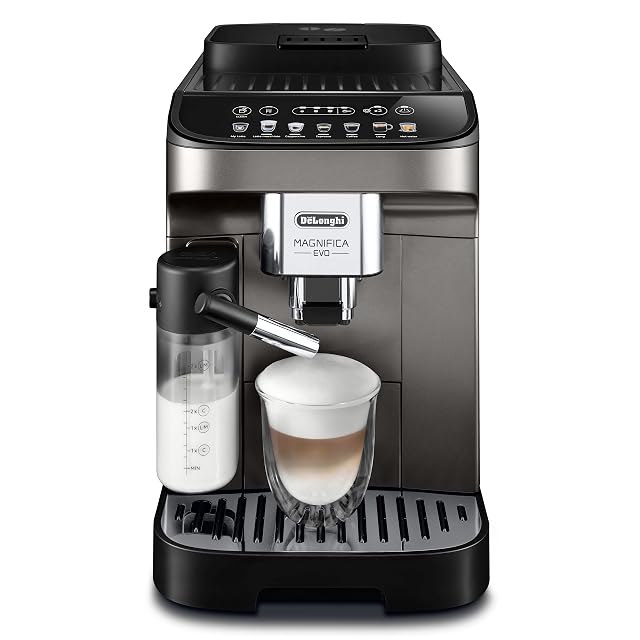
If price decides: De'Longhi Magnifica Evo, at 600 £.
Highest Water tank in the table: De'Longhi Magnifica Evo (1.8 L).
If this one is not the right fit
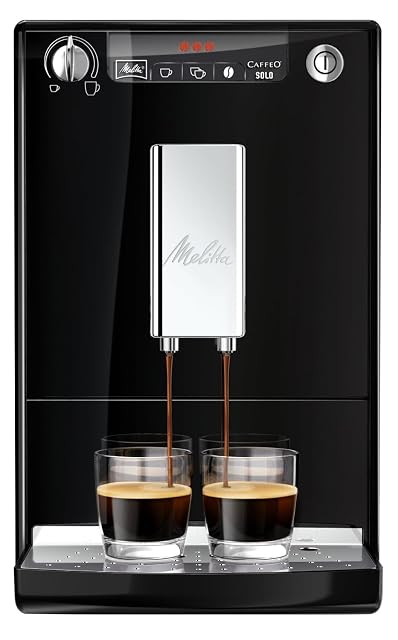
On a tighter budget: Melitta Caffeo Solo, at 280 £ in the same category. see the review
Price and availability
A reference exists on these Amazon stores: France, Germany, Italy, Spain, United Kingdom, United States. Listed is not the same as in stock — availability changes daily.
Details checked on August 8, 2026.
Sources
Specifications: manufacturer sheet and Amazon product page. Prices and availability: Keepa. No product on this site has been physically tested.
The machine most people should start with. The grinder is ordinary and the coffee is good rather than great — but the brew unit pops out in two seconds, and that single design decision is why these are still running after eight years.
Best for: Someone moving off capsules who wants fresh coffee without a hobby attached.
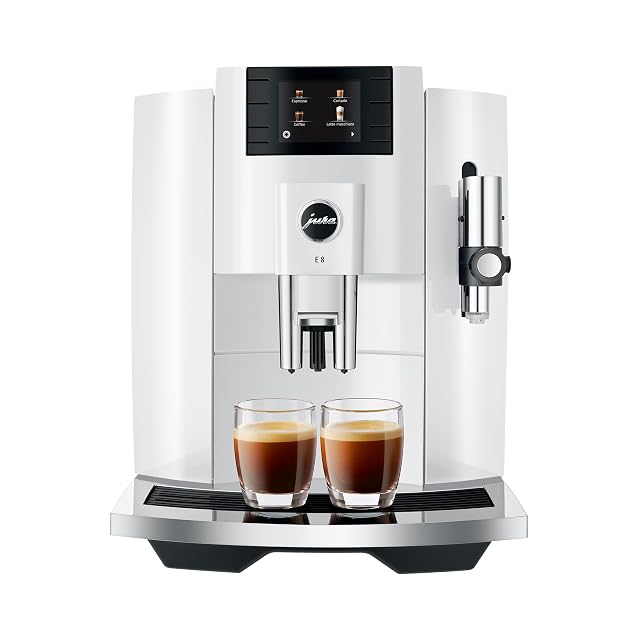
The best espresso an automatic machine makes, from a company that will not let you clean the part that brews it. Extraordinary in the cup, uncomfortable as a ten-year purchase — and you should know both before spending this much.
Best for: Someone who drinks short black coffee daily, values the cup over the repair bill, and will pay for it.
A bean-to-cup machine that deliberately does not do milk, and is cheaper, narrower and simpler for it. If you drink your coffee black, you are paying for nothing you do not use.
Best for: Espresso, lungo and americano drinkers who genuinely never make a cappuccino.