The V60 is the reference pour-over, and it earns that by refusing to help you.
The design
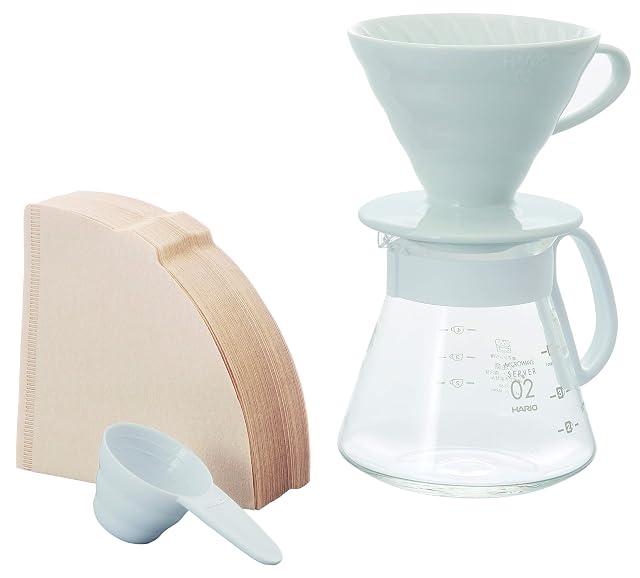
A 60-degree cone, a single large hole at the bottom, and spiral ribs running the full height that hold the paper off the wall so air can escape. Nothing about it restricts flow — the coffee bed is the only resistance.
That is why the cup is so clear, and why it is unforgiving.
The recipe
- 15 g coffee, medium grind
- 250 g water at 93 °C
- Rinse the filter, tip the water out
- Bloom with 45 g, swirl, wait 45 seconds
- Pour to 150 g in slow circles
- Pour to 250 g
- Finish between 2:30 and 3:30
The two things that decide it
Where the water lands. Poured in one place, it digs a hole and runs straight through. Circles keep the bed level, which is the actual goal.
Whether you touch the paper. Water on the filter runs down the side and bypasses the coffee entirely.
Ceramic, plastic or glass
Ceramic has real thermal mass — pre-heat it or it steals heat from your first pour, and pre-heated it holds temperature better than plastic. Plastic steals nothing and holds nothing, and it is unbreakable. Glass is between the two and looks best.
If it keeps going wrong
The Hario Switch is the same cone with a valve, so you can brew it as an immersion and remove pour rate from the equation entirely. It is the honest answer for anyone who wants V60 clarity without V60 practice.
Questions people actually ask
Why does everyone say the V60 is difficult?
Because it does not regulate flow. One large hole and full-height ribs mean water leaves as fast as you pour it in, so the pour is the brew. Every inconsistency in how you deliver water shows up in the cup.
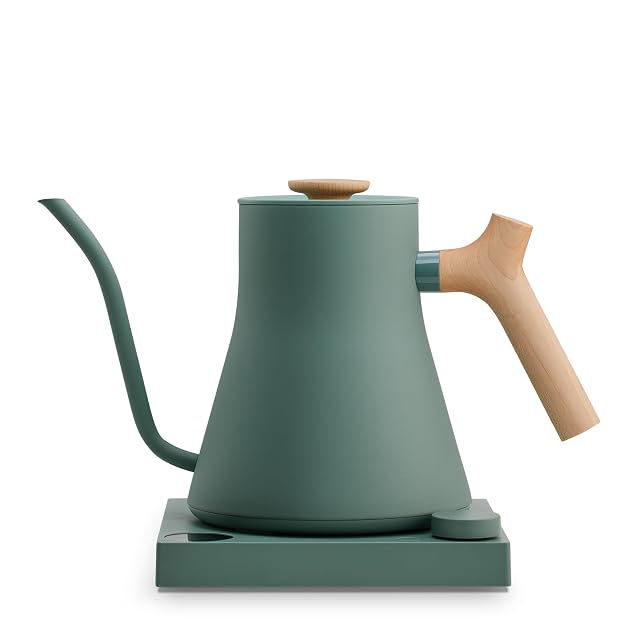
Do I really need a gooseneck kettle?
For this brewer, effectively yes. A normal kettle delivers water in surges that punch channels through the bed. On an immersion brewer it would not matter; here it decides the result.