The best-pouring kettle sold, and the hold function matters more than the thermometer. Expensive for boiling water — but if you brew pour-over daily, it is the accessory that most improves the cup.
The bottom line Buy it for the hold and the pour. The thermometer is the least of it.
There is a reasonable objection to this kettle, which is that it costs as much as a decent grinder and its job is to make water hot. Worth answering directly: what you are buying is not temperature, it is flow.
A pour-over is controlled almost entirely by how you deliver water. A normal kettle has a wide spout designed to fill a mug quickly, so it delivers water in surges you cannot moderate — which punches through the coffee bed, opens a channel and lets the rest of the water escape without doing any work. The gooseneck exists so that you can pour a thin, steady stream exactly where you want it, and the Stagg’s does that better at very low flow rates than anything else on the market.
The counterbalanced handle is the underrated part. Conventional kettles get top-heavy as they empty and want to tip forward, which turns into a wobble at precisely the moment the bed is most fragile. This one stays level from full to empty.
The temperature display gets the attention and deserves the least of it. Brewing at 92 °C rather than 96 °C is a genuine but modest difference — considerably smaller than one click of grind adjustment. What earns its keep is the hold function: set 94 °C, and the kettle is still at 94 °C after you have ground the beans, rinsed the filter and weighed your dose. That removes a variable you did not know you had.
Be clear about the limits. Nine hundred millilitres is a coffee kettle, not a household one, and it boils more slowly than the 3 kW kettle you already own. And the accuracy figure is measured at the element rather than at the spout, so treat it as repeatable rather than absolute — which, for brewing, is the property that actually matters.
What we like, and what we don't
Strengths
Best flow control of any kettle — slow pours stay genuinely slow
Hold function keeps temperature steady while you grind and rinse
Counterbalanced handle makes long, level pours easy
Looks like an object rather than an appliance
Compromises
Very expensive for what it fundamentally is
0.9 L is small — not the kettle for tea for four
Slower to boil than a cheap 3 kW kettle
The stated accuracy is at the element, not necessarily at the spout
Where this one sits in its aisle
At 195 $, it is the 5 cheapest of the 5 models in this category published here.
Cheapest in the aisle60 $
Median90 $
Dearest in the aisle195 $
Specifications
Capacity
0.9 L
Temperature
Variable, 1 °C steps
Hold
Yes, 60 minutes
Spout
Counterbalanced gooseneck
Base
Wireless, 360°
Material
Stainless steel
Questions people actually ask
Is variable temperature worth paying for?
Less than the marketing suggests. The difference between brewing at 92 °C and 96 °C is real but small, and far smaller than a grind change. What is worth paying for is the hold: the kettle sitting at your target while you grind, rinse the filter and weigh the dose, so every brew starts from the same place.
What does the counterbalanced handle actually do?
It moves the centre of gravity so the kettle stays level and steady as it empties. A conventional kettle gets top-heavy and wants to tip, which shows up as a wobbling pour just when the bed is most vulnerable. It is a small piece of engineering you feel on every brew.
Do I need this, or will a cheap gooseneck do?
A cheap gooseneck gets you most of the benefit — the spout is the point. This one pours more controllably at very low flow, holds temperature, and is nicer to own. If you brew pour-over every day, the difference is worth it. If you brew at weekends, it is not.
Our score
8.6/ 10
Buy it for the hold and the pour. The thermometer is the least of it.
Who this one is for
Daily pour-over, where flow rate is the variable you are trying to control.
Compared with its closest rivals
Same category, nearest prices. Only the specifications every one of them states are shown — a half-empty column compares nothing.
A reference exists on these Amazon stores: France, Germany, Italy, Spain, United Kingdom, United States. Listed is not the same as in stock — availability changes daily.
Details checked on August 8, 2026.
Sources
Specifications: manufacturer sheet and Amazon product page. Prices and availability: Keepa. No product on this site has been physically tested.
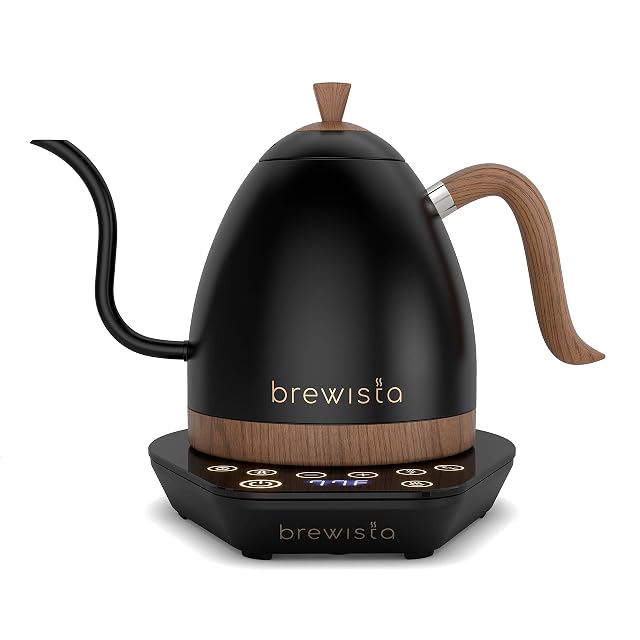
Almost everything the Fellow Stagg does, for meaningfully less money and with a litre of capacity instead of 900 ml. It is less beautiful, and that is genuinely the main difference.
Best for: Daily pour-over where the money is better spent on the grinder.
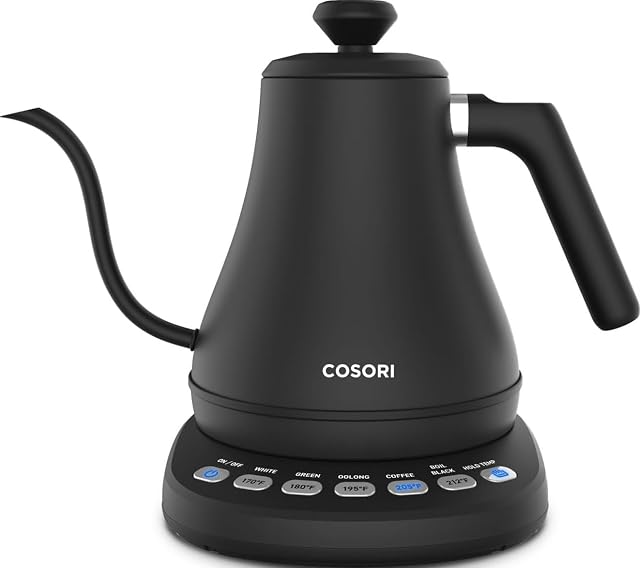
A gooseneck spout and variable temperature for well under half the price of the specialists. The pour is good rather than excellent, and for most people learning pour-over that is enough.
Best for: A first gooseneck, to find out whether pour-over is a habit or a phase.
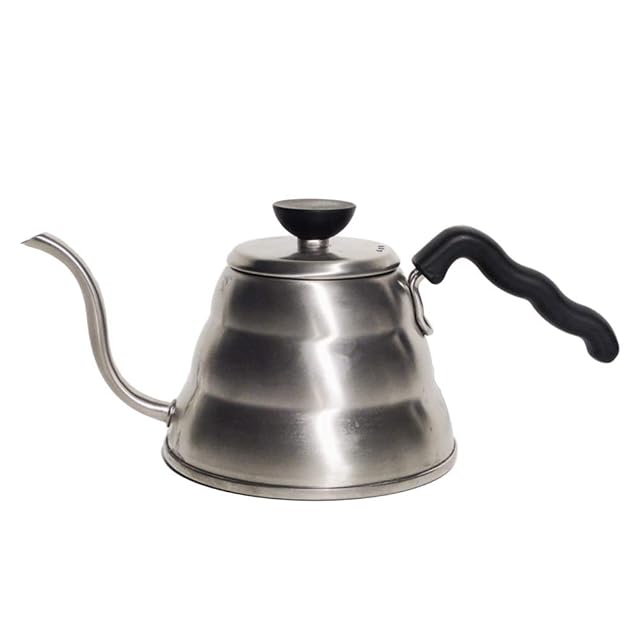
A stovetop gooseneck at a third the price of an electric one. No temperature control, no hold — just the spout, which is the part that actually changes your brews.
Best for: A beginner in pour-over, or anyone who considers a 180-euro kettle absurd.