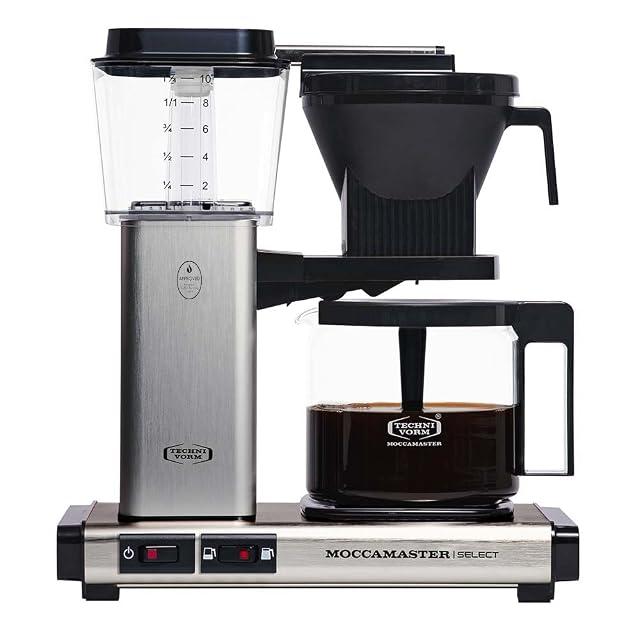
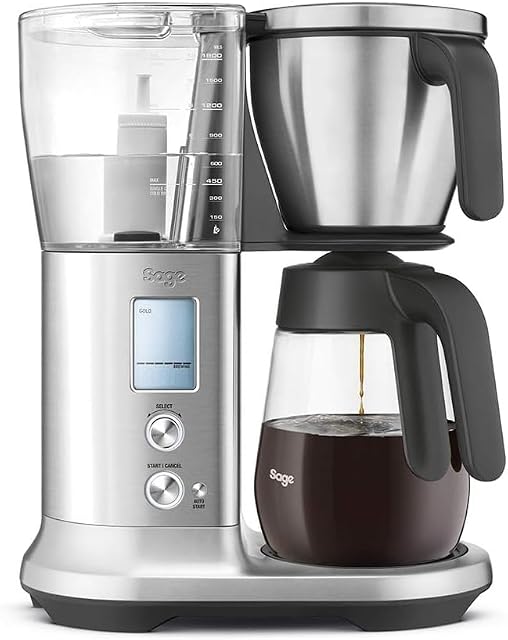
Batch brewing is filter coffee made by machine: water heated, distributed over a bed of ground coffee, drained through paper into a carafe. It is exactly what a pour-over does, without you standing there.
Done properly it is as good as hand-brewed coffee. The reason most people think otherwise is that most machines do it badly.
The one specification that matters
Brew temperature held between 92 and 96 °C for the whole cycle.
Cheap machines trickle water that starts below 90 °C and gets cooler as the cycle runs. That under-extracts: the acids come out early, the sugars need heat and time and never arrive. Sour, thin, papery coffee — which is what most people believe filter coffee tastes like.
SCA certification tests exactly this, along with total brew time and extraction yield. It is a real pass mark rather than a badge.
The recipe
- 60 g of coffee per litre
- Medium grind, a little coarser than a V60
- Full carafe rather than half — machines are calibrated for their rated volume
- Decant when it finishes
Do not leave it on the hotplate
A hotplate keeps coffee hot by continuing to cook it, and after half an hour it tastes stewed. Decant into a thermal jug, or buy a machine with an insulated carafe and no hotplate.
Grind
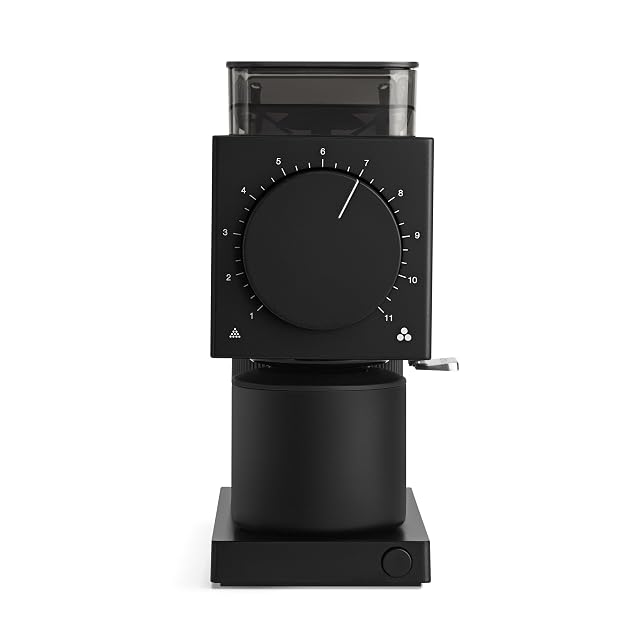
Medium. If the brew tastes weak and finishes fast, go finer; if it is bitter and the bed is still wet long after, coarser. Batch brewers are more forgiving than a V60, and grind still matters.
Questions people actually ask
Why is cheap drip coffee always sour?
Under-extraction. A cheap machine trickles water that starts below 90 C and cools further, so it pulls the acids without the sugars. Holding 92 to 96 C across a four-minute brew is the whole difference.
Should I stir during the brew?
A brief stir after the bloom helps on machines with a flat shower arm rather than a true spiral head — including the Moccamaster — because they wet the bed less evenly than the price suggests.