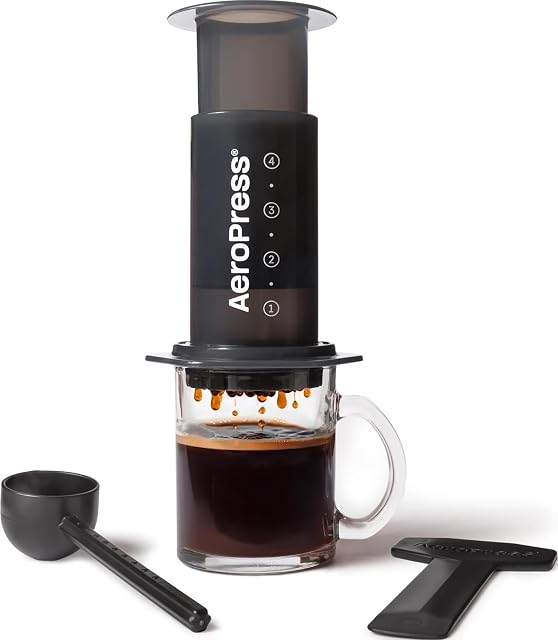
The AeroPress is a chamber, a plunger and a paper disc. Coffee steeps in water, then you push it through the filter.
It is the most forgiving brewer in this encyclopedia and the reason is structural: because the coffee steeps rather than having water poured over it, pour rate stops existing as a variable. What remains is grind size and time, both of which are easy to control.
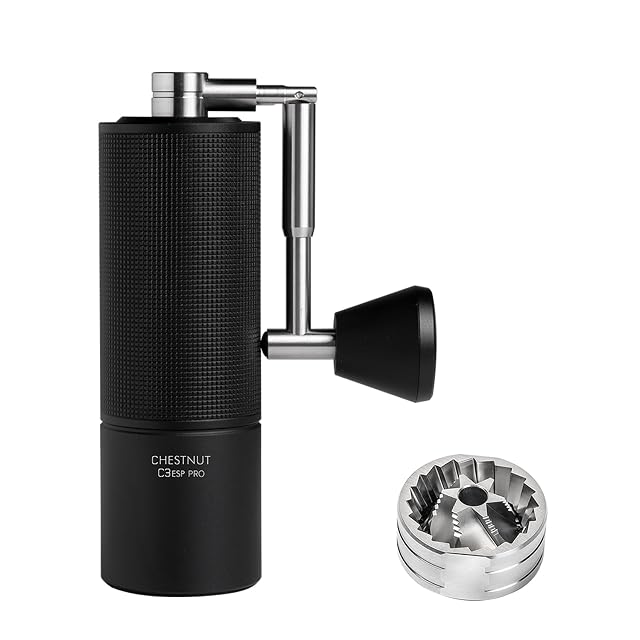
That is why it works with a modest grinder and an ordinary kettle.
The standard method
- 15 g coffee, medium-fine
- Chamber on the cup, filter rinsed
- 220 g water at 85 to 92 °C
- Stir, cap, steep 1:30 to 2:00
- Press slowly, 20 to 30 seconds
- Stop when you hear the hiss
The inverted method
Assemble upside down so nothing drips, add coffee and water, steep as long as you like, then flip the whole thing onto the cup and press.
It brews better with long steeps and it involves inverting a full chamber of near-boiling coffee over ceramic. It occasionally ends on the floor. Learn the standard method first.
Temperature
Lower than most brewers — 85 °C is common, and some recipes go to 80. The immersion is long enough that hot water over-extracts.
Cleaning
Eject the puck in one push, rinse. About ten seconds, and it is why the AeroPress gets used when other brewers sit in a cupboard.
Filters
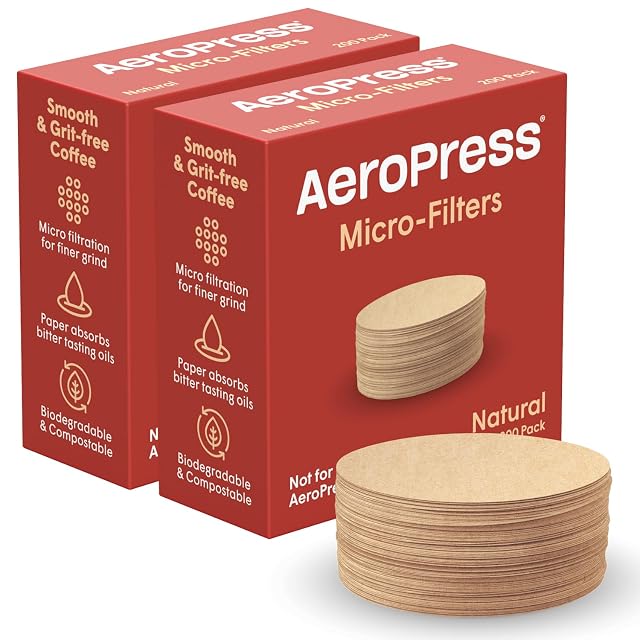
Paper for clarity, metal for body. A metal filter turns it into something closer to a French press, which is a legitimate preference rather than an upgrade.
Questions people actually ask
Does it make espresso?
No. Espresso needs around nine bars; your arm through a plunger produces well under one. What you get is a concentrated, low-acidity immersion coffee that makes a very good base for milk drinks, with no real crema.
Standard or inverted?
Standard for consistency and for not spilling boiling water. Inverted lets you steep as long as you like without dripping, which genuinely brews better with long steeps — and it involves flipping a full chamber of hot coffee over a cup.