Nyeri is a county in Kenya’s central highlands, on the slopes below Mount Kenya, and it produces what many people consider the most distinctive acidity in coffee.
The profile
Blackcurrant is the note everyone reaches for, and it is genuinely there. Alongside it: tomato, grapefruit, a savoury edge, and a juicy, mouth-watering acidity with a syrupy body underneath.
It is intense and it is not subtle. Kenyan coffee polarises for that reason.
Why it tastes like this
Several factors, none sufficient alone.
Varieties. SL28 and SL34, selected in Kenya in the 1930s specifically for cup quality, are among the finest arabica varieties anywhere.
Soil. Red volcanic soil unusually rich in phosphoric acid, which is credited with the characteristic sharpness.
Altitude between 1,600 and 2,000 metres.
Processing. Kenyan washing stations use a distinctive double fermentation with an intermediate soak, which produces exceptional clarity.
Grades
Kenyan coffee is graded AA, AB, PB and so on. These are screen sizes — bean diameter — not quality assessments. AA beans are larger and have historically fetched more, and a superb AB is better than a mediocre AA. Do not pay for the letters.
The auction
Most Kenyan coffee moves through a weekly auction in Nairobi, with lots identified by washing station. That system provides unusually good traceability and it has been the subject of long-running reform debates about how much reaches farmers.
Brewing it
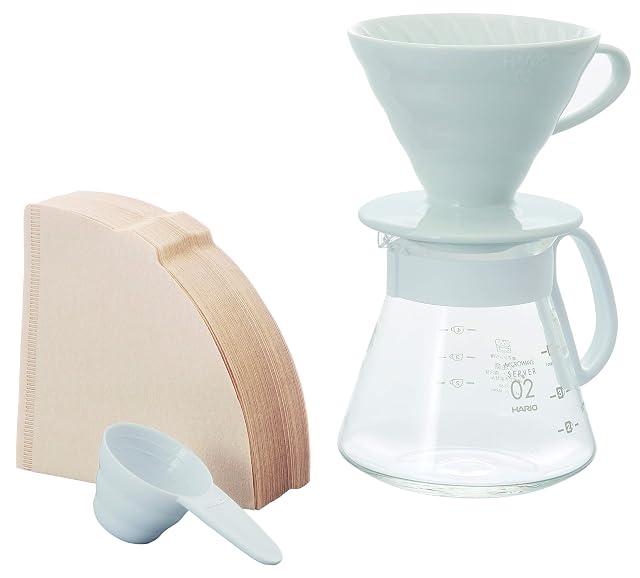
Filter, light roast, clean brewer. Kenyan acidity needs a method that shows it. Grind fine and brew hot — these are dense beans, and under-extraction turns the acidity sour rather than bright.