The flat white came out of Australia and New Zealand in the 1980s — both countries claim it — and travelled worldwide with the specialty coffee movement. It is now the default order for a lot of people who used to drink lattes, and it is usually made wrong outside its home countries.
What defines it
Three things together:
A strong base. Usually a double ristretto rather than a normal double, so the coffee stands up to the milk without needing volume.
Around 150 to 175 ml total. Small enough that the coffee remains the dominant flavour.
Microfoam, not foam. A thin glossy layer — perhaps five millimetres — folded through the milk rather than floating on top. The drink is uniform from the first mouthful to the last, with no foam left at the end.
The name says it: flat, meaning without the thick foam cap of a cappuccino.
Why it is hard to make
The milk texture is genuinely difficult. You need a very short stretch — three seconds or less — and then a long, thorough spin to break every bubble down and integrate it. Over-stretch and you have a small latte; under-spin and the foam separates before you finish pouring.
This is also why it is the drink latte art is usually poured into: the texture required for a flat white is exactly the texture that pours a pattern.
Making one at home
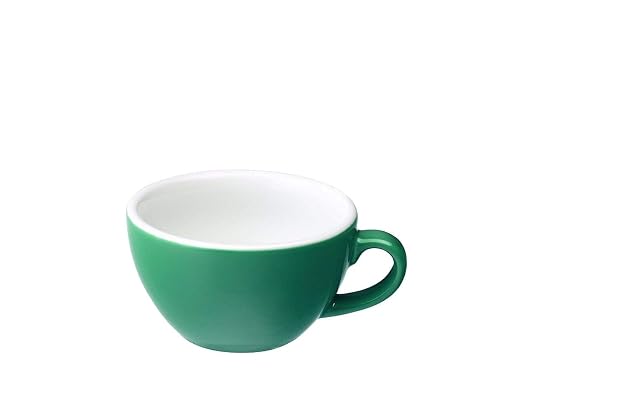
Double ristretto in a 150 to 175 ml cup. Texture around 130 ml of whole milk to 60 to 65 °C, stretching barely at all. Pour low and close so the milk goes under the crema.
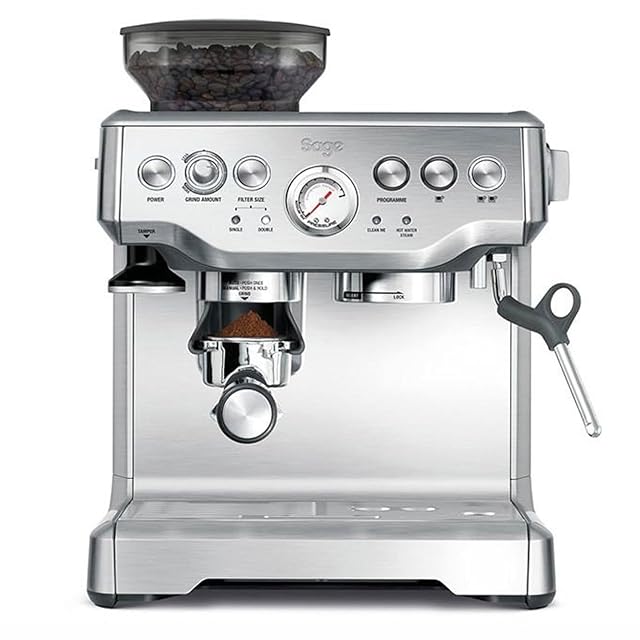
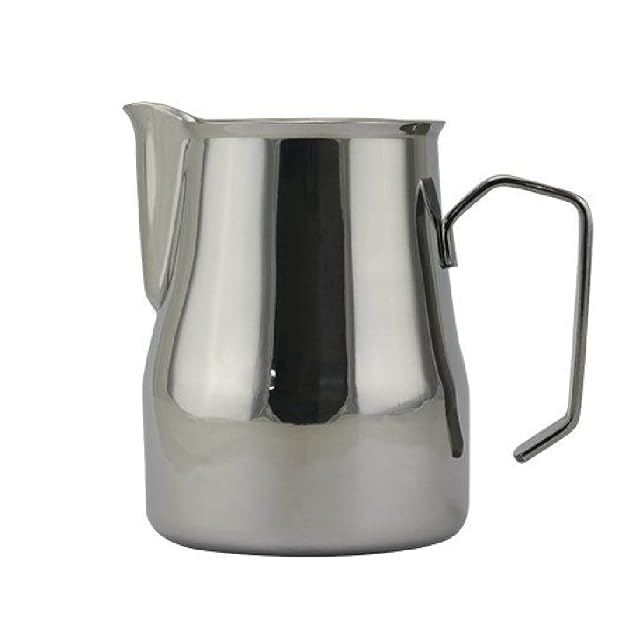
Automatic frothers cannot do this. It needs a steam wand and a pitcher.
Questions people actually ask
Is it just a small latte?
No, and this is the common misunderstanding. The defining feature is the texture — a thin layer of glossy microfoam folded through the milk rather than sitting on it — and a higher coffee-to-milk ratio. A small latte has more foam and less coffee.
Can an automatic machine make one?
It can make a good milk drink at the right ratio. What it cannot produce is pourable microfoam, which is the texture the drink is named for.