The pitcher most European baristas actually use. The sharp, low spout is what puts a pattern on the surface rather than a blob — and it costs less than most people spend on beans in a month.
The bottom line The cheapest upgrade that visibly changes what comes out of your machine.
People spend hundreds on a machine and then texture milk in whatever jug came free in the box, and then conclude they cannot do latte art. The jug is doing more of the work than they think.
Two things matter. The first is the spout, and the Europa profile is why this pitcher has the reputation it does: sharp, low-set, and precisely formed, so the milk leaves in a thin controllable stream you can steer across the surface of the crema. A rounded, high spout releases a wide flow that sinks through the crema instead of sitting on it, which is exactly why the pattern turns into a blob.
The second is balance. Five hundred millilitres of heavy 18/10 stainless stays steady in the hand as it empties, where a light jug becomes twitchy at precisely the moment the pour needs to be finest.
Size is the mistake people make. Milk textures properly when the jug is between a third and half full, because the whirlpool needs room to move. A 500 ml pitcher is correct for 150 to 250 ml of milk, which is one large or two small drinks. A litre jug with 150 ml in it will not texture, no matter how good the wand is.
There is no temperature indicator, which is deliberate — most baristas judge by the hand on the side of the jug, stopping when it becomes uncomfortable to hold at around 60 to 65 °C. If you would rather measure, a clip-on thermometer costs almost nothing.
What we like, and what we don't
Strengths
Sharp, precisely-formed spout — the single biggest factor in latte art
Heavy 18/10 stainless that stays balanced as it empties
Made in Italy and effectively indestructible
Compromises
No temperature indicator; you learn by hand or buy a thermometer
500 ml suits one or two drinks, not a dinner party
Fingerprints show on the polished finish immediately
Where this one sits in its aisle
At 40 $, it is the 2 cheapest of the 5 models in this category published here.
Cheapest in the aisle30 $
Median80 $
Dearest in the aisle130 $
Specifications
Capacity
500 ml
Material
18/10 stainless steel
Spout
Sharp, low-set Europa profile
Suits
1–2 drinks
Origin
Italy
Questions people actually ask
Does the pitcher really matter for latte art?
More than almost anything except the milk texture itself. The spout controls how the stream leaves the jug — a sharp, low spout gives a thin, controllable flow you can steer; a rounded, high one dumps milk in a wide stream that buries the crema. You can learn on a bad pitcher, and you will learn faster on a good one.
Which size should I buy?
500 ml for one or two drinks, which is what most home setups make. Texturing milk needs the jug between a third and half full, so a 500 ml pitcher is right for 150–250 ml of milk. Buying a 1 litre jug and texturing 150 ml in it does not work.
Our score
8.9/ 10
The cheapest upgrade that visibly changes what comes out of your machine.
Who this one is for
Anyone with a steam wand who has been wondering why their pours look like blobs.
Compared with its closest rivals
Same category, nearest prices. Only the specifications every one of them states are shown — a half-empty column compares nothing.
A reference exists on these Amazon stores: France, Germany, Spain, United Kingdom, United States. Listed is not the same as in stock — availability changes daily.
Details checked on August 8, 2026.
Sources
Specifications: manufacturer sheet and Amazon product page. Prices and availability: Keepa. No product on this site has been physically tested.
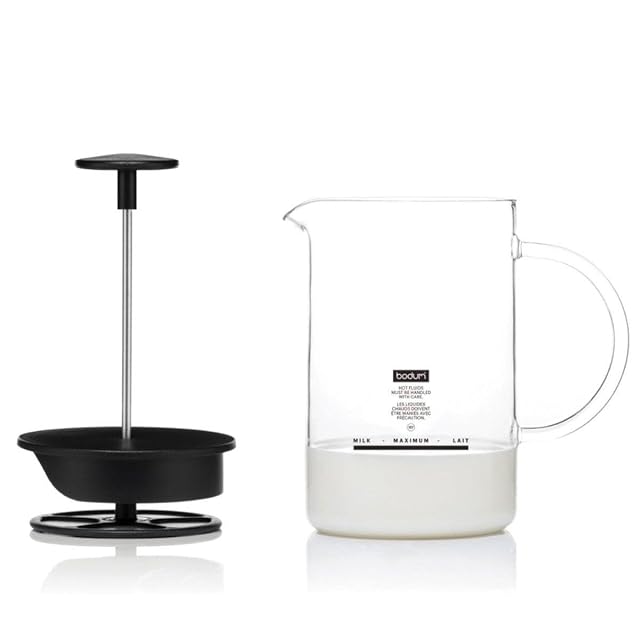
A glass jug and a plunger. No electricity, no cleaning ritual, and foam that is genuinely decent — provided you warm the milk first and accept that it will never be microfoam.
Best for: An occasional cappuccino, a student kitchen, or a second frother for a desk.
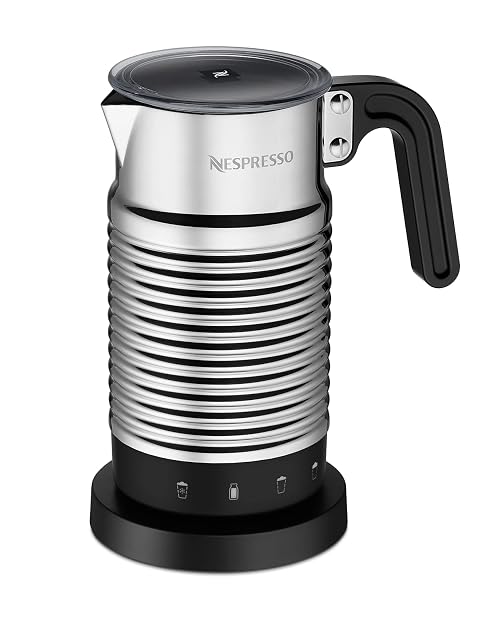
The Aeroccino 4 without the two extra modes and without the price. If all you want is hot foam and cold foam, this does exactly that with the same non-stick jug and the same fifteen-second clean.
Best for: A capsule machine owner who wants cappuccino without paying for four modes.
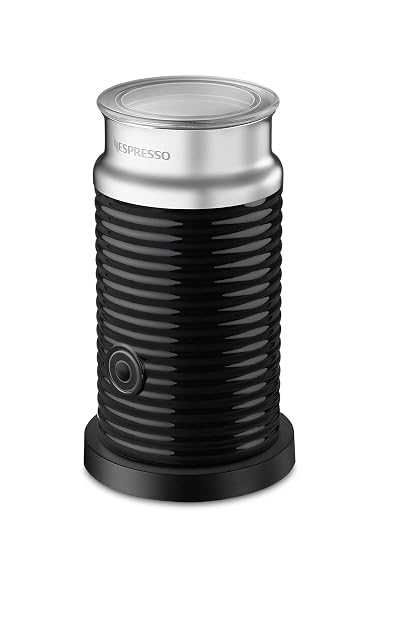
Pour milk in, press once, walk away. It makes better foam than most people manage by hand, handles oat milk properly, and the whole jug goes under a tap.
Best for: A capsule or black-coffee machine owner who wants cappuccino without a steam wand.