Vietnam’s national coffee drink, and the reason condensed milk and robusta are inseparable from Vietnamese coffee culture.
Why condensed milk
Fresh dairy was historically difficult to keep in a hot climate with limited refrigeration, and French colonial coffee culture met that constraint with sweetened condensed milk. What began as a practical substitute became a defining preference.
Why robusta
Vietnam is the world’s largest robusta producer. Robusta is bitter, heavy, low in acidity and roughly twice the caffeine of arabica — which is exactly what stands up to a large volume of very sweet condensed milk and a full glass of ice.
Arabica in this drink is pleasant and does not taste like Vietnamese coffee.
Making one
Two to three centimeters (about an inch) of sweetened condensed milk, roughly 30 ml (2 tablespoons), in the bottom of a tall glass.
Set a phin filter on top: 20 to 25 g (0.7 to 0.9 oz) of medium-coarse coffee, press plate on, bloom with a splash, then fill with water at 95 °C (203 °F). It should drip for four to six minutes.
Stir the coffee and milk together, then pour over a full glass of ice.
Variations
Cà phê đen đá — the same without milk, black and iced.
Bạc xỉu — much milkier, the local answer to a latte.
Cà phê trứng — egg coffee, from Hanoi.
Without a phin
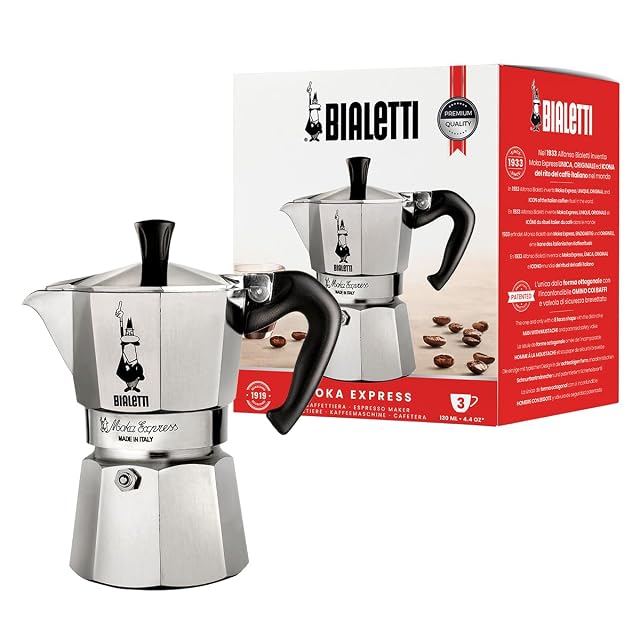
A phin costs very little and is worth having, but a strong AeroPress or moka pot coffee, made with a dark roast, comes close. Vietnamese-style ground coffee, often a robusta blend, is sold in Asian groceries in the US.