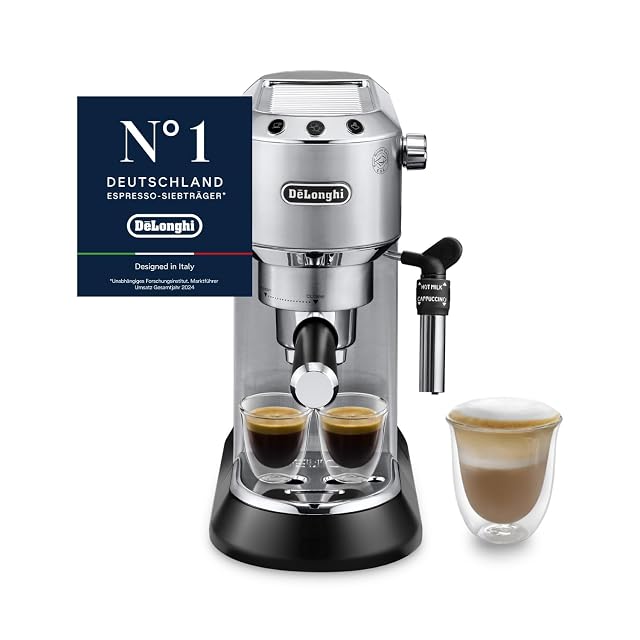
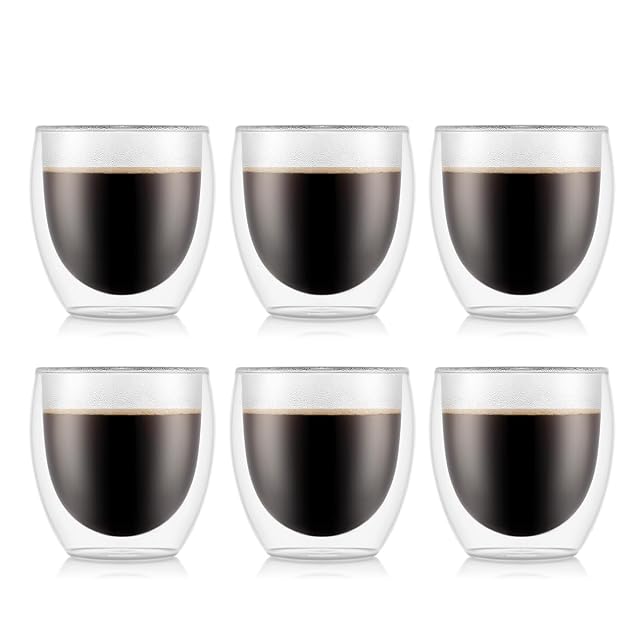
A café bombón is an espresso poured over an equal volume of sweetened condensed milk, in a small clear glass so the two layers are visible.
It comes from Valencia and it is now common across Spain, and in various forms across South East Asia where condensed milk coffee has its own long tradition.
Why the layers hold
Sweetened condensed milk is dense with sugar and considerably heavier than espresso. Poured first, it stays at the bottom, and the espresso floats above it with the crema on top. Three visible bands in a clear glass.
They will mix if you stir, and most people do before drinking.
Making one
Roughly 25 ml of condensed milk in the bottom of a small glass. Pull a single espresso and pour it gently over the back of a spoon so it settles on top rather than punching through.
That is it. The ratio is around 1:1 and it is very sweet — this is a dessert coffee rather than a morning one.
Cà phê sữa đá in Vietnam is the same idea taken further: strong phin-brewed coffee over condensed milk, poured over ice. Robusta rather than arabica, and stronger.
Kopi susu across Malaysia and Indonesia works similarly.
The common thread is places where fresh milk was historically difficult to keep and condensed milk was not — a practical origin that turned into a preference.
A note on the coffee
Because the sugar is so dominant, this is not the drink for an expensive single origin. A darker, more robust coffee holds its own better; a delicate washed Ethiopian disappears entirely.
Questions people actually ask
Do I stir it or drink it in layers?
Both are done. The visual of the two layers is part of the appeal, and most people stir before drinking. Drinking it unstirred gives you bitter coffee first and syrup at the end, which is less pleasant.
Can I use evaporated milk instead?
No — evaporated milk is unsweetened and much thinner, so it will neither layer nor sweeten. The drink depends on sweetened condensed milk specifically.