Ninety years old, sold by the million, and misused by almost everyone who owns one. Brewed properly — low heat, pre-boiled water, off the hob at the first gurgle — it is one of the great cheap coffees.
The bottom line Cheap, immortal, and much better than its reputation once you stop boiling it.
The Moka Express is probably the most-owned coffee maker in Europe and the most consistently badly used. Its reputation for harsh, bitter coffee is almost entirely a reputation for one brewing habit: cold water, high flame, walk away.
Here is why that ruins it. Cold water in the base takes several minutes to reach pressure, and during those minutes the aluminium body and the coffee sitting directly above it are being roasted. By the time brewing starts, the grounds have already been cooked. Then, because the flame is high, the last of the water blasts through as steam and drags out everything bitter.
Fill the base with water already boiled in a kettle instead. Pressure builds in under a minute, the coffee never sits and bakes, and you take the pot off the heat the moment it begins to gurgle. Same pot, same coffee, entirely different drink — sweet, thick and chocolatey rather than acrid. It is the cheapest improvement in coffee anyone can make.
Two more things people get wrong. A moka must be filled to its rated capacity: the basket needs a full bed for the water to pass through evenly, and a half-filled pot over-extracts what little is there. And the grind sits between espresso and filter — espresso-fine chokes it and makes it spit.
The 3-cup is the size most single drinkers should buy, because Bialetti counts in 40 ml Italian cups, not mugs. Three of those is one decent morning coffee. Buy the 6-cup because it sounds more useful and you will be brewing half-loads forever.
One limitation is absolute: this is aluminium, so it will not work on induction. Bialetti’s stainless Venus and Musa or the dedicated Induction model solve that; an adapter disc technically works but heats slowly and unevenly, which is the one thing a moka pot really does not want.
What we like, and what we don't
Strengths
Genuinely excellent coffee for the price, if you brew it correctly
No paper, no electricity, no parts that can fail
Gaskets and funnels are stocked everywhere, forever
The 3-cup is the size most single drinkers should actually buy
Compromises
Aluminium — will not work on an induction hob
Brews bitter if you use cold water and high heat, which is what everyone does
Must be filled to capacity; a half-filled pot over-extracts
Gasket hardens over time and needs replacing every year or two
Where this one sits in its aisle
At 35 $, it is the 1 cheapest of the 4 models in this category published here.
Cheapest in the aisle35 $
Median60 $
Dearest in the aisle60 $
Specifications
Capacity
3 cups — 130 ml
Material
Aluminium
Induction
No — see the Induction/Musa versions
Grind
Between espresso and filter
Gasket
Rubber, replaceable
Dishwasher
No — hand rinse only
Questions people actually ask
Why does my moka coffee taste burnt?
Almost always heat and time. Filling with cold water means the pot sits on the flame for minutes while the aluminium and the coffee bed cook before any brewing happens. Fill with water already boiled from a kettle, use low heat, and take it off the hob the moment it starts to gurgle. That one change transforms the cup.
Can I use it on induction?
Not this one — aluminium is not magnetic. Bialetti sells stainless steel versions (Venus, Musa) and an Induction model with a ferromagnetic base plate. An induction adapter disc also works, though it heats slowly and unevenly, which is the opposite of what a moka wants.
Which size should I buy?
The one matching your normal serving, because a moka pot only brews well when filled to its rating. A 6-cup pot making 3 cups over-extracts badly. Bialetti's 'cups' are Italian espresso cups of roughly 40 ml, so the 3-cup is one large mug — which is what most people actually want.
Our score
8.0/ 10
Cheap, immortal, and much better than its reputation once you stop boiling it.
Who this one is for
One or two strong cups on a gas or electric hob, at almost no cost.
Compared with its closest rivals
Same category, nearest prices. Only the specifications every one of them states are shown — a half-empty column compares nothing.
A reference exists on these Amazon stores: France, Germany, Italy, Spain, United Kingdom, United States. Listed is not the same as in stock — availability changes daily.
Details checked on August 8, 2026.
Sources
Specifications: manufacturer sheet and Amazon product page. Prices and availability: Keepa. No product on this site has been physically tested.
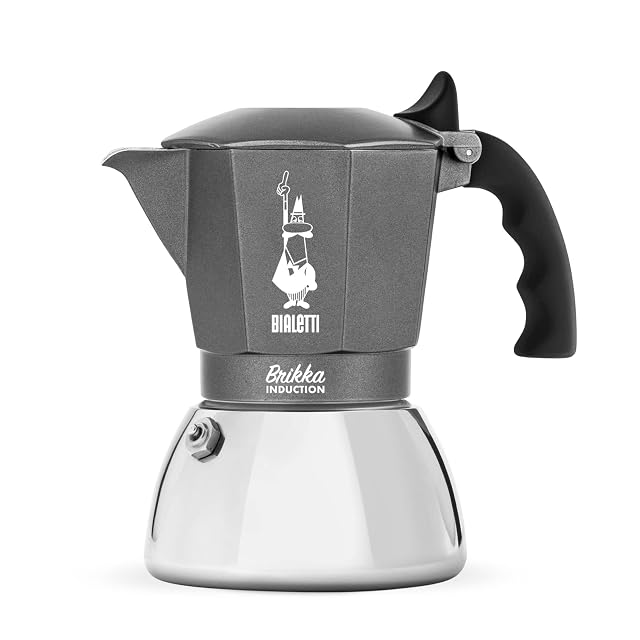
A weighted valve holds pressure back until it releases in one burst, which produces a genuine layer of crema. It is also fussier than a normal moka, and unforgiving if you fill it wrong.
Best for: A moka drinker who wants something closer to espresso and will follow the instructions.
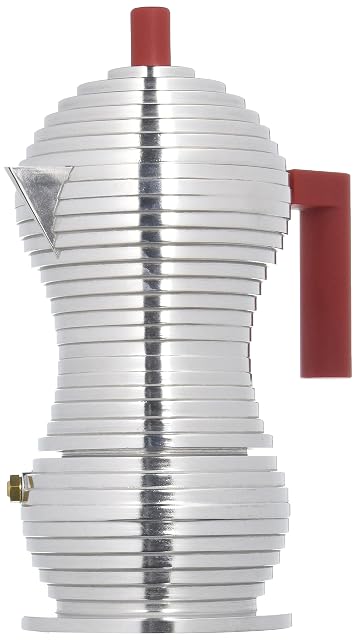
Alessi asked an engineer, not a stylist, to fix the moka pot. The internal profile interrupts the flow before the bitter steam phase arrives — which is the one thing a classic moka cannot do for you.
Best for: A moka drinker who will not reliably take the pot off the hob at the right moment.
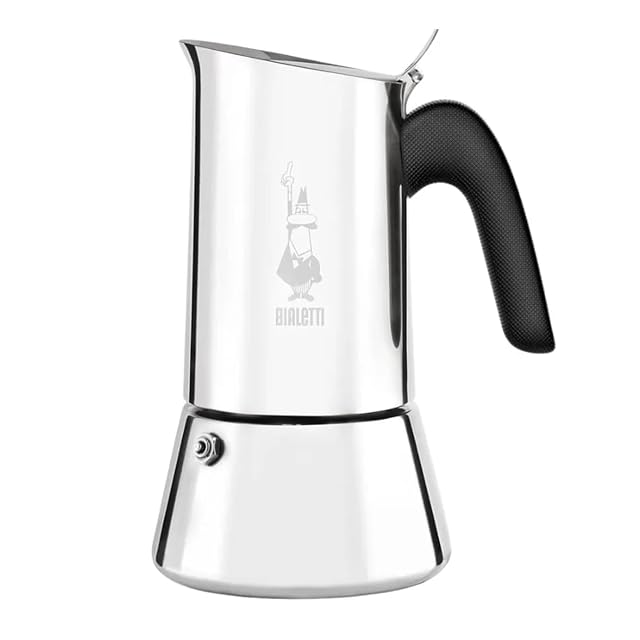
The stainless Bialetti that works on induction, which the aluminium Moka Express does not. Slower to heat, easier to clean, and it will outlive the classic.
Best for: Anyone with an induction hob, or who wants a moka pot that goes in the dishwasher.