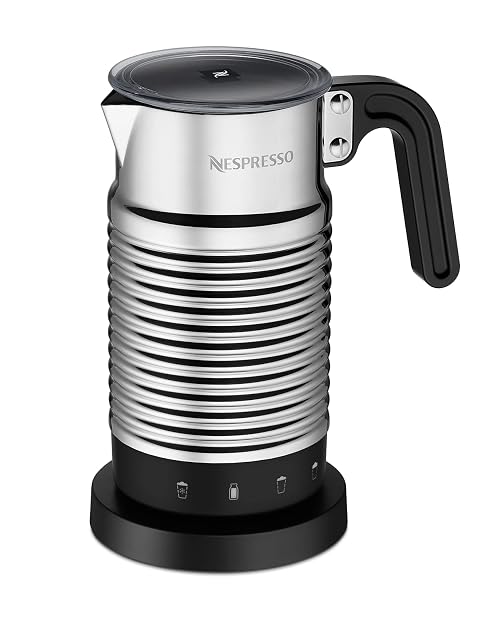
The Aeroccino 4 without the two extra modes and without the price. If all you want is hot foam and cold foam, this does exactly that with the same non-stick jug and the same fifteen-second clean.
The bottom line Buy this unless you specifically want the 4’s extra modes.
The Aeroccino 4 is the better frother and the Aeroccino 3 is the one most people should buy, which is worth explaining rather than asserting.
Both share the things that matter. A jug with a non-stick interior and a magnetic whisk that lifts out, so cleaning is a rinse rather than a task — which is the single factor deciding whether a milk appliance keeps getting used or ends up in a cupboard. Both handle barista-edition plant milks properly, holding a narrower temperature than cheap induction frothers that overheat and collapse the proteins.
What the 4 adds is two more modes: warm milk with no foam, and a latte setting that produces a thinner layer. If your household drinks cappuccinos and iced coffee, neither of those is a loss. If you make flat whites, where the milk should be barely foamed and fully integrated, the 4’s extra setting genuinely does it better.
Everything else is identical in use: pour in milk, press once, walk away, come back to dense stable foam at drinking temperature.
Neither will make latte art. That is a limitation of every automatic frother — they produce foam that sits correctly on a drink rather than the glossy microfoam that pours. If a pattern matters, you want a steam wand and a pitcher.
What we like, and what we don't
Strengths
Same non-stick jug and easy cleaning as the Aeroccino 4
Hot foam and cold foam, which covers most of what people make
Noticeably cheaper than the 4 for a modest loss of function
Compromises
Two modes rather than four — no warm milk, no latte setting
240 ml is one large drink
No temperature choice; it stops where it stops
Where this one sits in its aisle
At 100 $, it is the 4 cheapest of the 5 models in this category published here.
Cheapest in the aisle30 $
Median80 $
Dearest in the aisle130 $
Specifications
Capacity
240 ml froth / 120 ml milk
Modes
2 — hot froth, cold froth
Interior
Non-stick
Cleaning
Rinse; jug is dishwasher-safe
Whisk
Magnetic, removable
Questions people actually ask
What do I lose against the Aeroccino 4?
Two modes: warm milk without foam, and a latte setting that produces a thinner foam layer. If you make cappuccinos and iced coffee, you lose nothing you will use. If you make flat whites where the milk should barely be foamed, the 4 does it better.
Does it handle oat milk?
Barista editions, yes. Standard supermarket oat milk foams less in any frother, which is a property of the milk rather than the machine.
Our score
7.9/ 10
Buy this unless you specifically want the 4’s extra modes.
Who this one is for
A capsule machine owner who wants cappuccino without paying for four modes.
Compared with its closest rivals
Same category, nearest prices. Only the specifications every one of them states are shown — a half-empty column compares nothing.
Highest Capacity in the table: SEVERIN SM 3587 Milk Frother (700 ml).
If this one is not the right fit
On a tighter budget: Bodum Latteo, at 30 $ in the same category. see the review
If you need more Capacity: SEVERIN SM 3587 Milk Frother states 700 ml. see the review
Price and availability
A reference exists on these Amazon stores: France, Germany, Italy, Spain, United Kingdom, United States. Listed is not the same as in stock — availability changes daily.
Details checked on August 8, 2026.
Sources
Specifications: manufacturer sheet and Amazon product page. Prices and availability: Keepa. No product on this site has been physically tested.
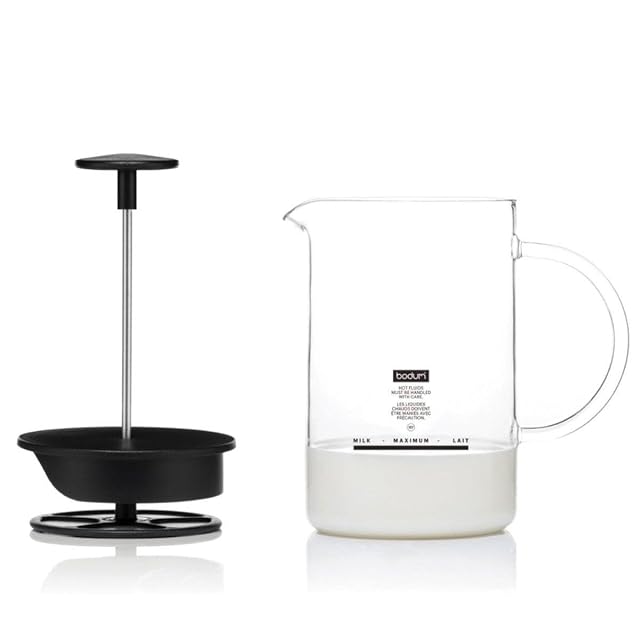
A glass jug and a plunger. No electricity, no cleaning ritual, and foam that is genuinely decent — provided you warm the milk first and accept that it will never be microfoam.
Best for: An occasional cappuccino, a student kitchen, or a second frother for a desk.
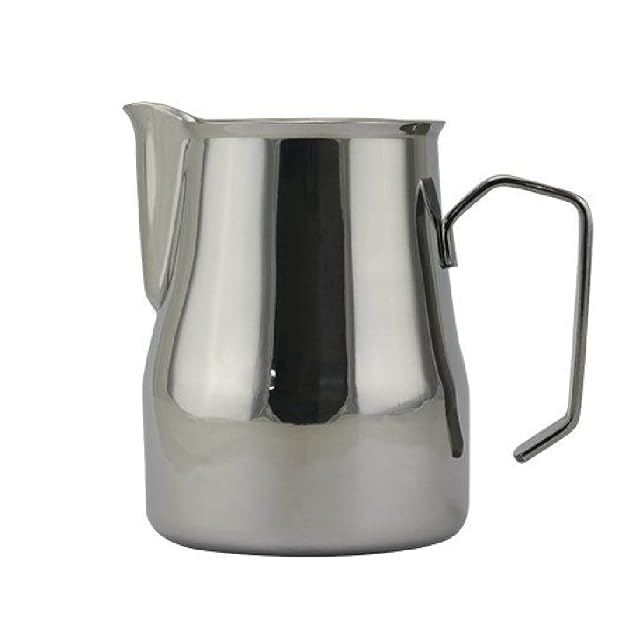
The pitcher most European baristas actually use. The sharp, low spout is what puts a pattern on the surface rather than a blob — and it costs less than most people spend on beans in a month.
Best for: Anyone with a steam wand who has been wondering why their pours look like blobs.
Pour milk in, press once, walk away. It makes better foam than most people manage by hand, handles oat milk properly, and the whole jug goes under a tap.
Best for: A capsule or black-coffee machine owner who wants cappuccino without a steam wand.