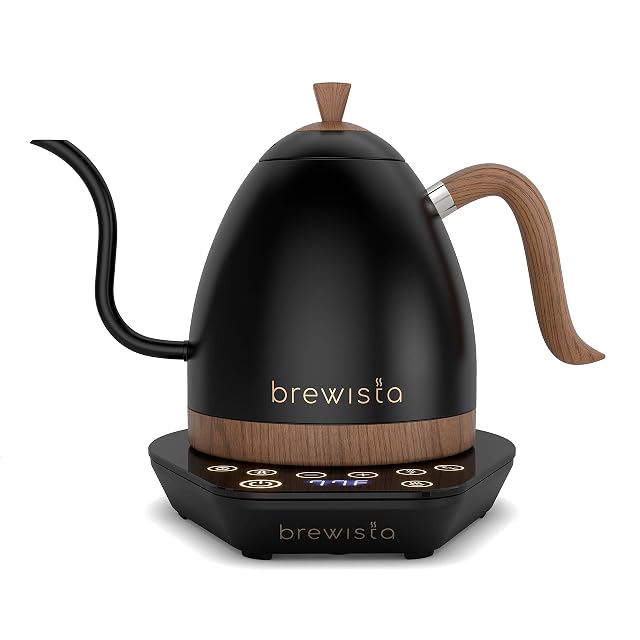
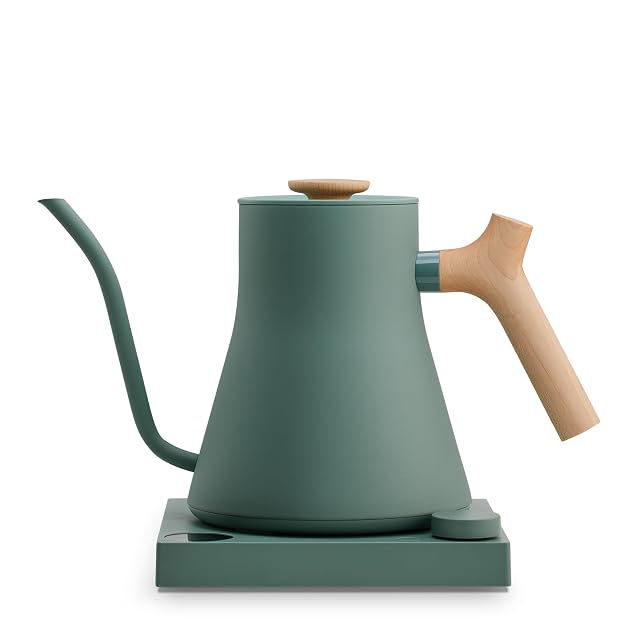
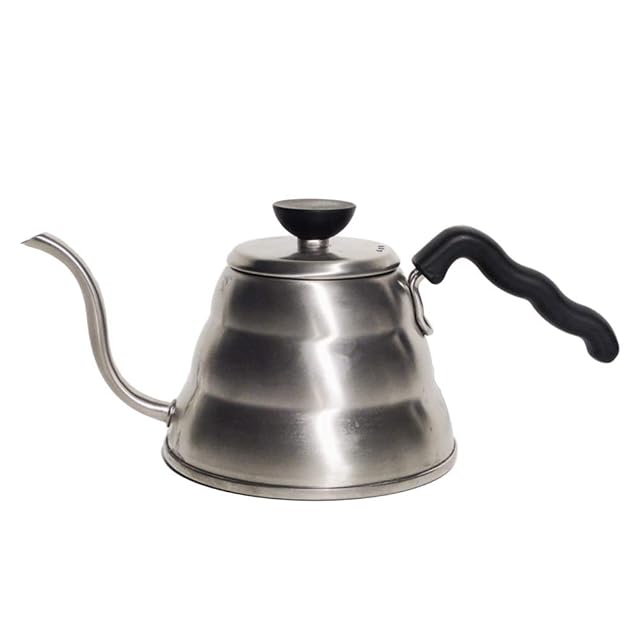
A gooseneck spout and variable temperature for well under half the price of the specialists. The pour is good rather than excellent, and for most people learning pour-over that is enough.
The bottom line The right first gooseneck. Upgrade later, if pour-over sticks.
There is a reasonable argument against spending two hundred pounds on a kettle before you know whether you enjoy pour-over. This is the answer to it.
The spout is the part that matters and this has a proper one — narrow, curved, and capable of a controlled stream rather than a surge. Going from a normal kitchen kettle to this changes your brews far more than going from this to a Fellow Stagg would. The bulk of the benefit is in the first step.
Five presets cover the useful range and there is a keep-warm hold, which is the feature that quietly makes brewing repeatable: the kettle is still at temperature when you have finished grinding, so every brew starts the same way. One-degree increments are a refinement rather than a requirement.
Where it falls short is at the slowest pour rates. Easing out a thin, steady stream for a bloom, the Cosori is less predictable than the specialists — it wants to either dribble or run, and finding the middle takes more attention. Experienced brewers notice this immediately; beginners largely do not.
The handle also warms more than it should, and 0.8 litres is one large brew rather than two.
On the /go link for this one: we could only verify this model on Amazon US. Visitors from every other country are sent to a search on their own store, because Cosori's gooseneck range is listed under different model numbers across Europe and we will not guess at an ASIN.
What we like, and what we don't
Strengths
A genuine gooseneck spout at an entry price
Five temperature presets plus a keep-warm hold
Fast to boil and light in the hand
Compromises
Pour is less controllable than a Stagg or Artisan at very slow rates
0.8 L, and the handle warms up more than it should
Presets rather than 1 °C steps
Where this one sits in its aisle
At 70 $, it is the 2 cheapest of the 5 models in this category published here.
Cheapest in the aisle60 $
Median90 $
Dearest in the aisle195 $
Specifications
Capacity
0.8 L
Temperature
5 presets
Keep warm
Yes
Spout
Gooseneck
Body
Stainless steel
Questions people actually ask
Is a cheap gooseneck worth it over a normal kettle?
Yes, by a wide margin. The single biggest improvement is the spout, and this has one. Going from a normal kettle to any gooseneck changes your brews more than going from this to a Stagg does.
Are presets enough, or do I need 1 °C steps?
Presets are enough. Brewing at 93 °C rather than 94 °C is not a difference you will taste; brewing at 85 °C because your kettle boiled ten minutes ago is. What you want is a hold, and this has one.
Our score
7.5/ 10
The right first gooseneck. Upgrade later, if pour-over sticks.
Who this one is for
A first gooseneck, to find out whether pour-over is a habit or a phase.
Compared with its closest rivals
Same category, nearest prices. Only the specifications every one of them states are shown — a half-empty column compares nothing.
Almost everything the Fellow Stagg does, for meaningfully less money and with a litre of capacity instead of 900 ml. It is less beautiful, and that is genuinely the main difference.
Best for: Daily pour-over where the money is better spent on the grinder.
The best-pouring kettle sold, and the hold function matters more than the thermometer. Expensive for boiling water — but if you brew pour-over daily, it is the accessory that most improves the cup.
Best for: Daily pour-over, where flow rate is the variable you are trying to control.
A stovetop gooseneck at a third the price of an electric one. No temperature control, no hold — just the spout, which is the part that actually changes your brews.
Best for: A beginner in pour-over, or anyone who considers a 180-euro kettle absurd.