Dialling in has a reputation for being fiddly, and the fiddliness is almost always self-inflicted. People change the grind and the dose and the tamp all at once, taste something different, and have no idea which change did it. Here is a method that converges.
Fix two things, change one
Choose a dose and do not move it. Eighteen grams in a double basket is a sensible default; whatever your basket is rated for is better. Weigh it every time.
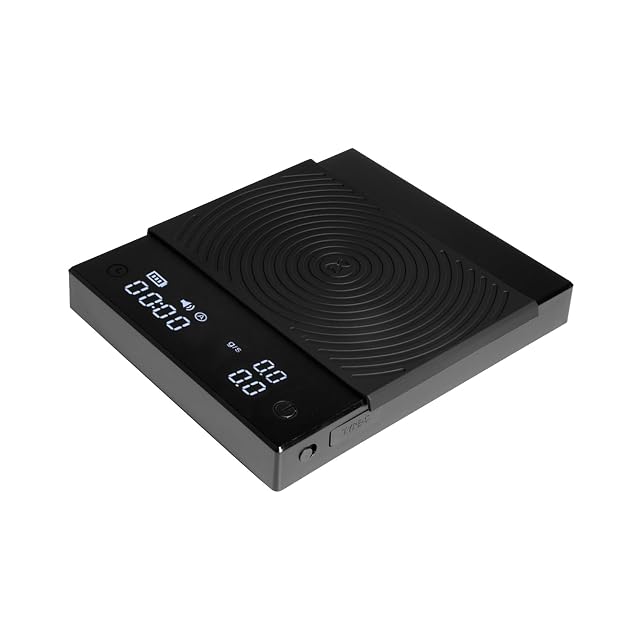
Choose a yield and do not move it. Twice the dose is the standard starting point — 18 g in, 36 g out. Weigh it, do not eyeball the cup.
Now the only variable is grind, and the only measurement is time. You are aiming for that 36 g to arrive somewhere between 25 and 32 seconds from the moment you start the pump.
Read the clock, not the taste
- Too fast — the shot hits 36 g in under 22 seconds. Grind finer.
- Too slow — it is still crawling past 40 seconds. Grind coarser.
- In the window — now, and only now, taste it.
Time is a proxy for extraction and it is far easier to judge than flavour when you are starting out. Get the time right first, then use taste to fine-tune.
Then taste, and adjust in one direction
Once the shot lands in the window, taste tells you where to go:
- Sour, thin, salty, sharp — under-extracted. Grind slightly finer, or extend the yield to 38 g.
- Bitter, dry, harsh, hollow finish — over-extracted. Grind slightly coarser, or pull back to 34 g.
- Sweet with a clean finish — stop touching it.
Why this fails, and it is usually the grinder
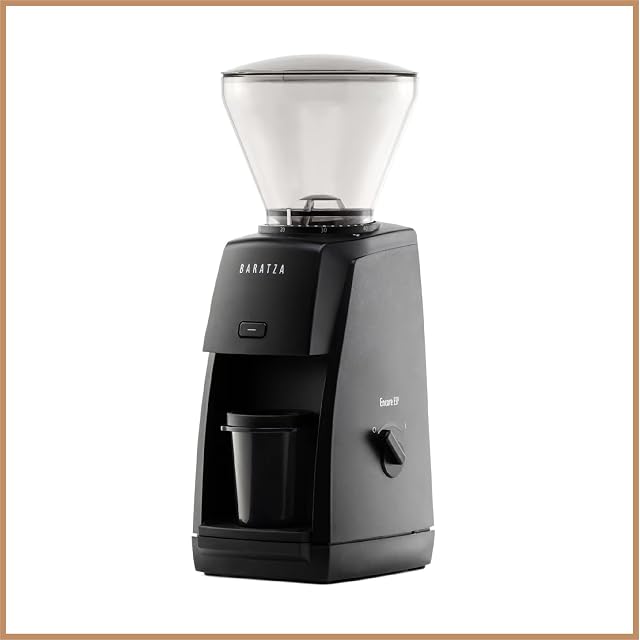
If a single click takes you from gushing to choking with nothing in between, the method is fine and the grinder is not. Espresso lives in a narrow band of fineness and needs fine steps inside it. That is the whole reason we recommend grinders by their espresso adjustment range rather than by burr material.
The second common cause is channelling, which produces sour and bitter simultaneously and cannot be dialled out. Stir the coffee bed with a WDT tool before tamping and try again.
Questions people actually ask
How many shots should dialling in take?
Three to five with a new bag if you hold dose and yield constant. If you are still wandering after ten, you are almost certainly changing more than one variable per attempt, or your grinder cannot resolve finely enough in the espresso range.
Do I need to re-dial for every bag?
Yes, and often within a bag. Roast level, density and age all change how the coffee grinds and how fast water passes through it. Fresh beans degas and run faster; the same bag at three weeks usually needs a slightly finer grind.
What if the shot tastes sour and bitter at once?
That is channelling, not extraction. Water has found a path around part of the puck, so some coffee is over-extracted and some barely touched. Grinding differently will not fix it — stir the bed with a WDT tool before tamping.
Last reviewed 8 August 2026