Channeling is the most common cause of bad home espresso and the least understood, because its symptom looks like two different problems at once.
What is actually happening
Water pushed at nine bars takes the path of least resistance. If part of the coffee bed is denser than the rest, water goes around the dense part rather than through it. The result is over-extraction where the water ran and under-extraction where it did not — in the same cup, at the same time.
That is why the shot tastes sour and bitter. No grind setting produces both, so no grind setting fixes it.
Where the dense parts come from
Your grinder. Ground coffee is statically charged and slightly oily, so it leaves the chute in clumps rather than as loose particles. A clump is denser than the coffee around it. Tamping does not break clumps up — it compresses them along with everything else, and now they are dense clumps in a dense puck.
The fix, in order of how much it helps
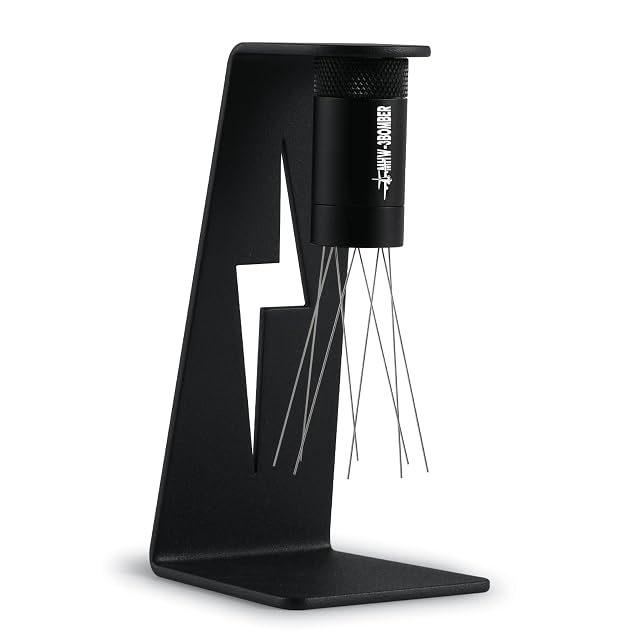
- Stir the bed with a WDT tool. Eight fine needles, ten seconds, stirred through the full depth of the coffee rather than just the surface. This breaks the clumps. It costs about $25 and it fixes more shots than anything else you can buy.
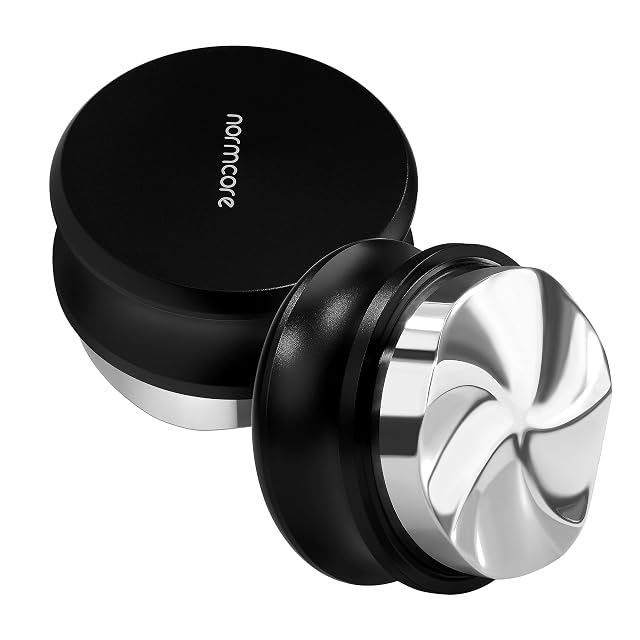
- Tamp level. A tilted tamp creates a thin side of the puck, and water finds it immediately. Level matters far more than pressure.
- Do not knock the portafilter after tamping. Tapping to “settle” the puck cracks it, and a crack is a channel.
- Check your basket is full enough. A basket well under its rated dose leaves headroom, the puck swells into it unevenly, and water pools at the edges.
What does not help
Tamping harder. Buying a heavier tamper. Distributing only the surface with a leveling tool while leaving clumps underneath. Adjusting the grind, over and over, in the hope that the sour-and-bitter goes away.
See it once
A bottomless portafilter costs little and turns this from a theory into a picture. A good shot comes down as one even column that converges into a single stream. A channeling shot sprays sideways from one or two points, and you will never mistake it again.
Other things that help
A puck screen, a thin metal disc laid on top of the tamped coffee, spreads water from the shower screen more evenly and keeps the screen cleaner; it helps some machines more than others. Pre-infusion, wetting the puck at low pressure before full pressure, lets it swell evenly and reduces channeling on machines that offer it. A grinder with less retention and less static, helped by a drop of water on the beans before grinding, produces fewer clumps to begin with. None of these replaces WDT; they add to it.
When it is the equipment
If every shot channels despite careful preparation, check the basket for dents and blocked holes, the shower screen for blockage, and the group gasket for wear that lets the portafilter sit unevenly.
What people want to know
How do I know it is channeling and not a grind problem?
Two signs. The taste is sour and bitter simultaneously, which extraction alone cannot produce. And on a bottomless portafilter you see one or two jets spraying sideways rather than a single even column. A pure grind problem gives you one fault, not both.
Does tamping harder help?
No. Above roughly fifteen kilograms the puck is about as compressed as it will get, and tamping harder on an uneven bed simply compresses the unevenness. Level matters; force does not.
Do I need a bottomless portafilter to diagnose this?
It is the fastest way to see it, and it is cheap. Without one you are inferring from taste, which works but takes longer. With one, channeling is visible on the first shot.
Last reviewed 30 October 2026