Ready in three seconds, nineteen centimetres wide, and it textures milk automatically to a temperature you choose. The one espresso machine that suits a small kitchen without pretending grind does not matter.
The bottom line The machine to buy when the grinder budget is already spoken for.
Most compact espresso machines are compromised in the way that matters: they are small because the boiler is small, so they are slow, weak at steam, or both. The Bambino Plus is small for a different reason. There is no boiler at all.
A thermojet heats water as it flows, which means the machine reaches brew temperature in about three seconds from cold. In practice that changes how you use it. There is no waiting, no warm-up ritual, no deciding you cannot be bothered because it takes five minutes. You switch it on, and by the time the portafilter is loaded it is ready.
The automatic milk texturing is the other surprise. It is not a jug frother bolted on: it is a real steam wand with a temperature probe, and it stops at the temperature you selected having produced glossy, pourable microfoam. Most people cannot do this by hand for the first two months. You can also turn it off entirely and learn properly, which is the right long-term answer.
The honest limitation is that there is no grinder, and this machine will expose a bad one immediately. With non-pressurised 54 mm baskets, grind consistency decides everything, and pairing this with a supermarket blade grinder produces worse coffee than a capsule machine. Budget for the machine and the grinder together, or buy the Barista Express instead.
What we like, and what we don't
Strengths
Genuinely 3 seconds from cold to first shot — a thermojet, not a boiler
Automatic milk texturing that produces real microfoam, not stiff foam
19 cm wide; it fits on worktops that cannot take a Gaggia
Compromises
No grinder — budget for one separately, it is not optional
54 mm basket locks you into Sage's own accessories
Small drip tray fills fast if you flush properly
Where this one sits in its aisle
At 500 $, it is the 4 cheapest of the 6 models in this category published here.
Cheapest in the aisle200 $
Median500 $
Dearest in the aisle700 $
Specifications
Portafilter
54 mm
Heating
Thermojet, ≈ 3 s
Milk
Automatic texturing, 3 temperatures
Width
19 cm
Water tank
1.9 L
Questions people actually ask
Bambino Plus or Barista Express?
The Barista Express includes a grinder and costs less than the two bought apart, which is why it is the usual first machine. The Bambino Plus has no grinder, heats far faster and takes up much less room, and its automatic milk texturing is better than what most people achieve by hand. Buy the Express if you want one box; buy the Bambino plus a proper grinder if you want better coffee for similar money.
Is the automatic milk texturing any good?
Yes, unusually. Unlike jug frothers it uses a real steam wand and a temperature probe, so the result is pourable microfoam rather than stiff foam sitting on hot milk. You can also switch it off and texture by hand once you have learnt.
Our score
8.4/ 10
The machine to buy when the grinder budget is already spoken for.
Who this one is for
Someone who already owns a grinder, or is buying one, and has no space.
Compared with its closest rivals
Same category, nearest prices. Only the specifications every one of them states are shown — a half-empty column compares nothing.
A reference exists on these Amazon stores: France, Germany, Italy, Spain, United Kingdom, United States. Listed is not the same as in stock — availability changes daily.
Details checked on August 8, 2026.
Sources
Specifications: manufacturer sheet and Amazon product page. Prices and availability: Keepa. No product on this site has been physically tested.
51 mm portafilter · 15 cm wide · pressurised baskets
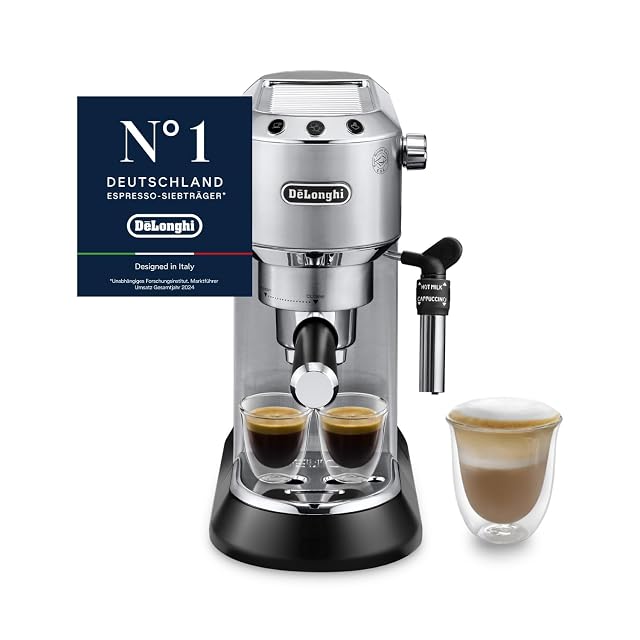
Fifteen centimetres wide, heats in forty seconds, and makes a decent drink for under 200. It ships with pressurised baskets that fake crema from any grind — which is exactly why it works for beginners and why it stalls after a year.
Best for: A tiny kitchen, a first espresso machine, or a second machine for an office.
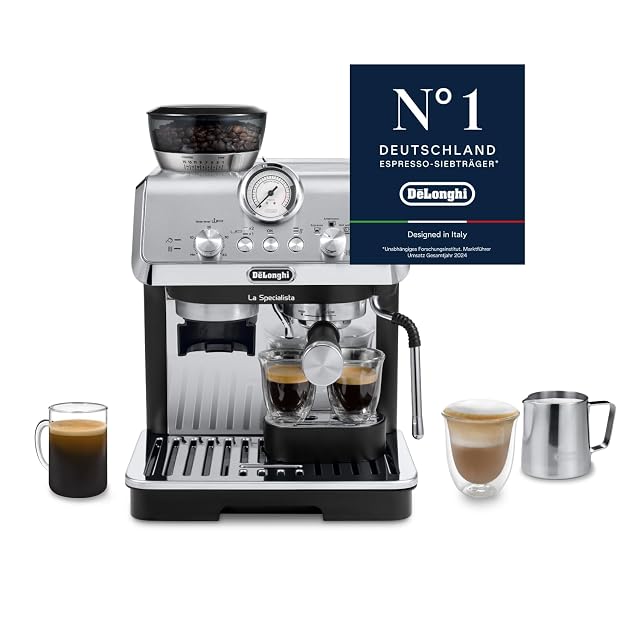
De'Longhi's answer to the Barista Express, with a tidier grinder-to-portafilter workflow and better temperature control. Worth comparing directly rather than assuming Sage wins by default.
Best for: A first serious espresso setup where one appliance has to do everything.
58 mm commercial portafilter · 3-way solenoid · steel body
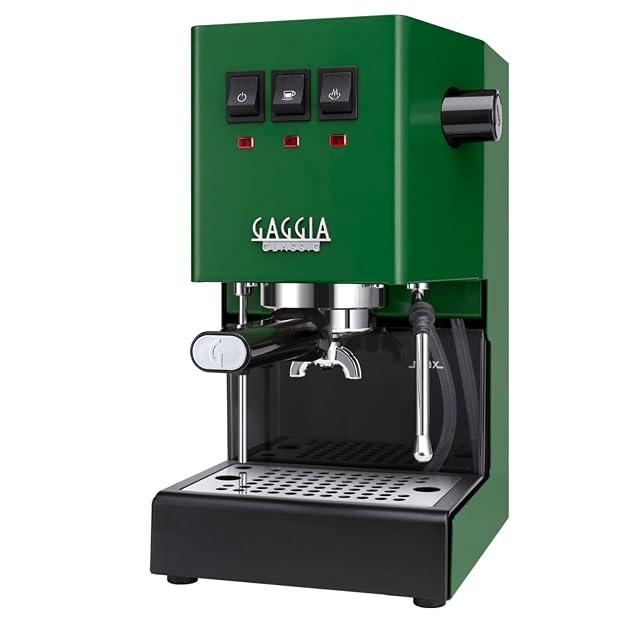
A 58 mm commercial portafilter, a steel body and a three-way solenoid, in a machine cheap enough to modify. Nothing else at this price is still worth owning in fifteen years, and nothing else has this much of an aftermarket.
Best for: Someone who wants one espresso machine for the next fifteen years and does not mind learning it.