A 58 mm single boiler with a proper PID, which is a specification that normally starts several hundred higher. Temperature you can set and trust, in a machine that costs about what a Gaggia does.
The bottom line PID temperature at Gaggia money — a genuinely unusual offer.
There is a well-trodden upgrade path in home espresso: buy a single boiler, learn its temperature rhythm, get frustrated, fit a PID, and end up with a machine that costs as much as one that came with a PID. The Anna skips the middle.
Temperature matters more than beginners expect and less than forums claim. A non-PID single boiler swings between a thermostat’s limits, which is why owners learn to flush a little water and wait a specific number of seconds before pulling. That routine works, and it is one more thing to get right at seven in the morning. A PID simply holds the temperature you asked for.
Everything else is conventional in the good sense. A full 58 mm commercial portafilter means the entire aftermarket fits — precision baskets, bottomless portafilters, distribution tools. Brass boiler, Italian assembly, spares widely available.
The compromises are the ones every single boiler makes. Steam power is modest, so texturing milk takes longer and rewards patience, and you cannot brew and steam at the same time. For one or two drinks that is invisible; for a household of four it is a slow morning.
The one thing it lacks against a Gaggia Classic is a three-way solenoid, so the puck comes out wetter and the group needs more wiping. Choose on whether you value set-and-forget temperature or a cleaner, simpler machine.
What we like, and what we don't
Strengths
PID temperature control at a price where nobody else offers it
Full 58 mm commercial portafilter — the whole aftermarket fits
Italian build with widely stocked spares
Compromises
Small boiler; steaming after brewing means a wait
Steam power is modest — texturing takes longer than on a bigger machine
The PID interface is functional rather than pleasant
Where this one sits in its aisle
At 450 £, it is the 2 cheapest of the 6 models in this category published here.
Cheapest in the aisle200 £
Median500 £
Dearest in the aisle700 £
Specifications
Portafilter
58 mm commercial
Temperature
PID controlled
Boiler
Single, brass
Pre-infusion
Manual via the pump
Water tank
2.7 L
Questions people actually ask
What does a PID actually change?
It holds the boiler at a set temperature instead of letting it swing between a thermostat’s upper and lower limits. On a non-PID machine you learn a flush-and-wait routine to land in the right window; with a PID the machine is simply at the temperature you chose, every shot. It removes a variable rather than improving a good shot.
Anna or Gaggia Classic?
The Gaggia has a three-way solenoid, so the puck comes out dry and the group stays clean, and its parts ecosystem is enormous. The Anna has a PID, so temperature is set rather than learnt. If you chase light roasts, the Anna; if you want the simplest machine to live with and modify, the Gaggia.
Our score
8.5/ 10
PID temperature at Gaggia money — a genuinely unusual offer.
Who this one is for
Someone who wants repeatable brew temperature without stepping up to a dual boiler.
Compared with its closest rivals
Same category, nearest prices. Only the specifications every one of them states are shown — a half-empty column compares nothing.
Highest Portafilter in the table: Gaggia Classic Evo Pro (58 mm commercial).
Highest Water tank in the table: this model (2.7 L).
This model holds the table’s highest figure for Water tank.
If this one is not the right fit
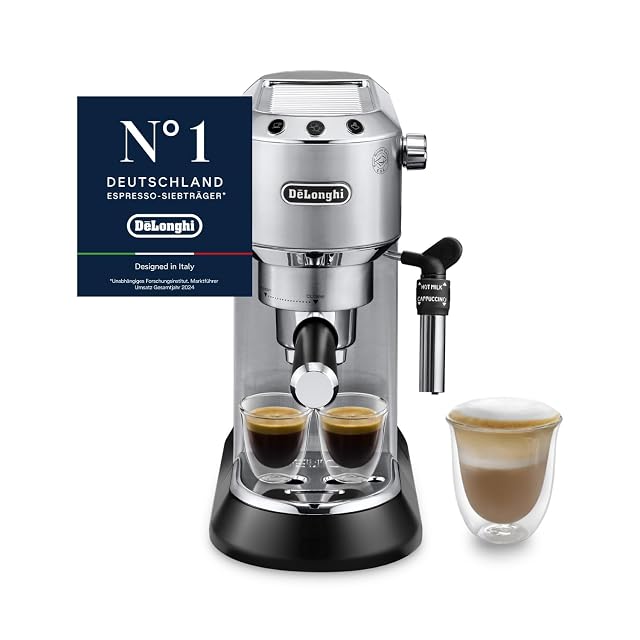
On a tighter budget: De'Longhi Dedica Style EC685, at 200 £ in the same category. see the review
Price and availability
A reference exists on these Amazon stores: France, Germany, Italy, Spain, United Kingdom. Listed is not the same as in stock — availability changes daily.
Details checked on August 8, 2026.
Sources
Specifications: manufacturer sheet and Amazon product page. Prices and availability: Keepa. No product on this site has been physically tested.
51 mm portafilter · 15 cm wide · pressurised baskets
Fifteen centimetres wide, heats in forty seconds, and makes a decent drink for under 200. It ships with pressurised baskets that fake crema from any grind — which is exactly why it works for beginners and why it stalls after a year.
Best for: A tiny kitchen, a first espresso machine, or a second machine for an office.
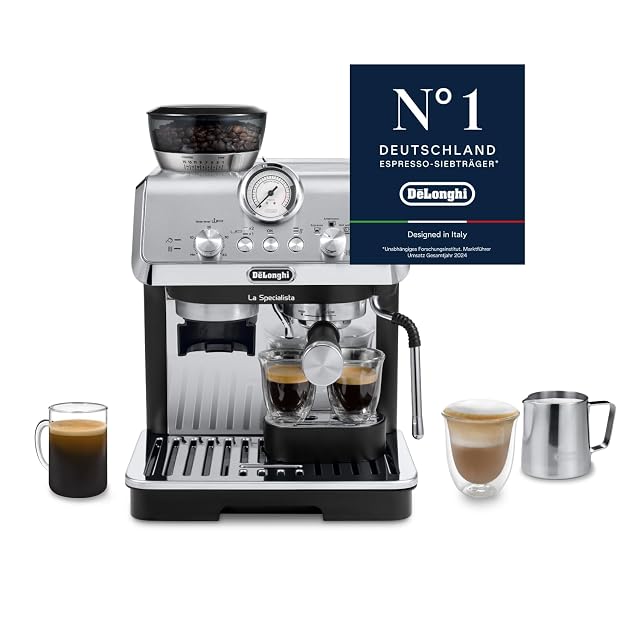
De'Longhi's answer to the Barista Express, with a tidier grinder-to-portafilter workflow and better temperature control. Worth comparing directly rather than assuming Sage wins by default.
Best for: A first serious espresso setup where one appliance has to do everything.
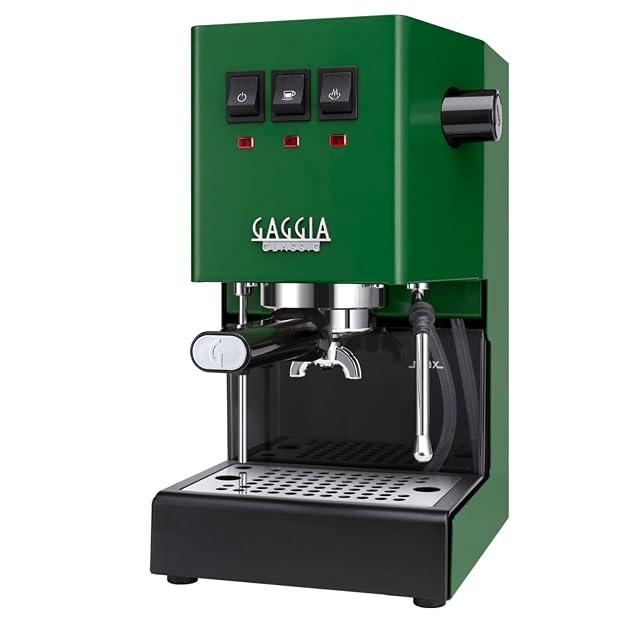
58 mm commercial portafilter · 3-way solenoid · steel body
A 58 mm commercial portafilter, a steel body and a three-way solenoid, in a machine cheap enough to modify. Nothing else at this price is still worth owning in fifteen years, and nothing else has this much of an aftermarket.
Best for: Someone who wants one espresso machine for the next fifteen years and does not mind learning it.