The in-tank cartridge for De'Longhi bean-to-cup machines. It does what an in-tank filter does — reduces the hardness reaching the boiler with no habit to maintain — at the manufacturer's price.
The bottom line Convenience at the manufacturer’s price, which is the whole in-tank bargain.
There are two ways to keep limescale out of a coffee machine and the difference between them is behavioural rather than chemical.
A filter jug is cheaper, works with any machine, and requires you to fill from the jug every single time. On the mornings when you are late and the tank is empty, you will fill it from the tap, and each of those exceptions undoes part of the protection.
An in-tank cartridge removes the decision. It sits in the tank, and every drop the machine draws passes through it. That is the entire value proposition and it is a real one.
What you pay for it is manufacturer pricing on a small quantity of ion-exchange resin and activated carbon, replaced roughly every two months. Over a machine’s life that is a meaningful running cost, and it belongs in the purchase decision rather than being discovered afterwards.
Two things to be clear about. It reduces the carbonate hardness that forms scale; it does not eliminate it, so descaling still happens — just far less often. And on very soft water it is close to pointless, since your problem is the opposite one: water with too few minerals extracts poorly and tastes hollow.
Find your water hardness before deciding. Your utility publishes it, and it takes two minutes.
What we like, and what we don't
Strengths
No jug habit — every drop the machine draws is filtered
The machine tracks it and prompts you to change it
Substantially lengthens the interval between descales
Compromises
De’Longhi pricing for what is a small piece of resin and carbon
Two months is a short life compared with Philips AquaClean
Reduces hardness; it does not remove the need to descale
Where this one sits in its aisle
At 25 £, it is the 1 cheapest of the 4 models in this category published here.
Cheapest in the aisle25 £
Median40 £
Dearest in the aisle45 £
Specifications
Type
In-tank cartridge
Life
≈ 2 months / 50 L
Fits
De'Longhi ECAM and Magnifica ranges
Reduces
Carbonate hardness, chlorine
Tracking
By the machine
Questions people actually ask
Filter cartridge or a filter jug?
The cartridge is more convenient and more expensive; the jug is cheaper, universal and only works if you use it. If you know you will fill the tank straight from the tap when you are in a hurry, buy the cartridge — a filter you bypass protects nothing.
Does it replace descaling?
No. It reduces the carbonate hardness reaching the boiler, which lengthens the interval considerably. Scale still forms. Descale when the machine asks, and be glad it asks less often.
Our score
7.7/ 10
Convenience at the manufacturer’s price, which is the whole in-tank bargain.
Who this one is for
Any De'Longhi bean-to-cup owner who will not reliably fill from a filter jug.
Compared with its closest rivals
Same category, nearest prices. Only the specifications every one of them states are shown — a half-empty column compares nothing.
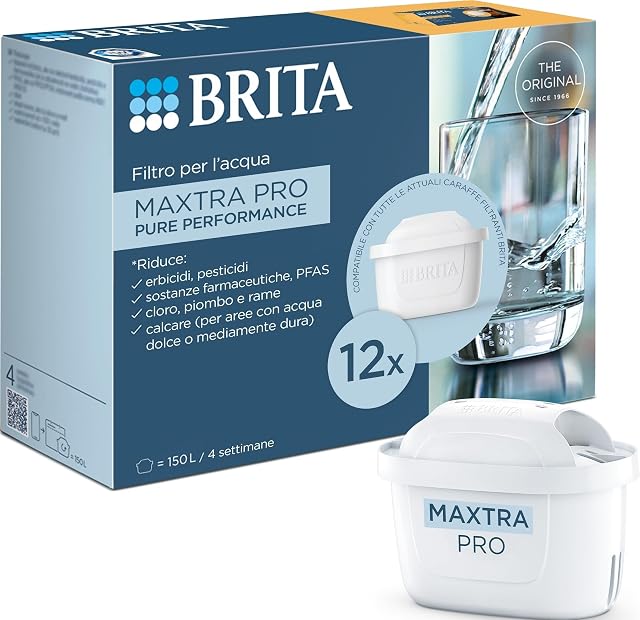
Jug cartridge · reduces carbonate hardness · ≈ 4 weeks
Not a coffee product, and the highest-return thirty euros in this whole site. Hard water is what kills espresso machines, and a jug filter in front of the tank buys years of life for the price of a few bags of beans.
Best for: Anyone on water above roughly 150 ppm — which is most of northern Europe.
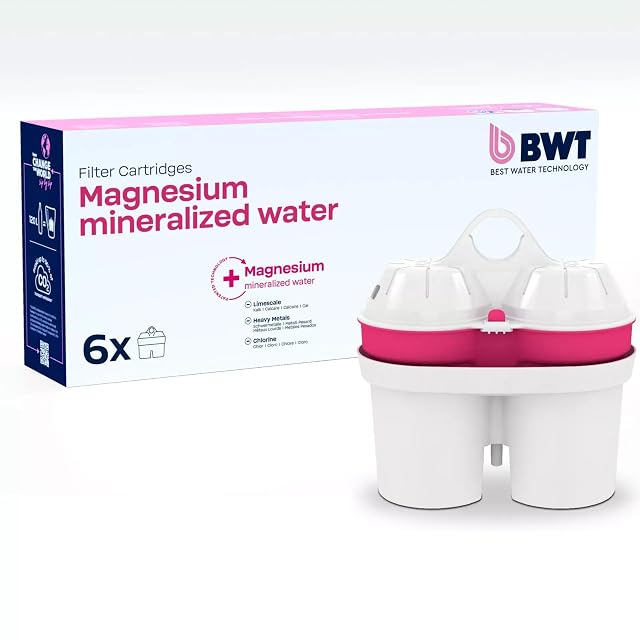
Unlike a standard filter, this one adds magnesium back after removing hardness. Magnesium is what pulls flavour out of coffee, so the cup gets sweeter rather than just safer for the machine.
Best for: Someone already filtering who wants the water to improve the coffee, not just protect the machine.
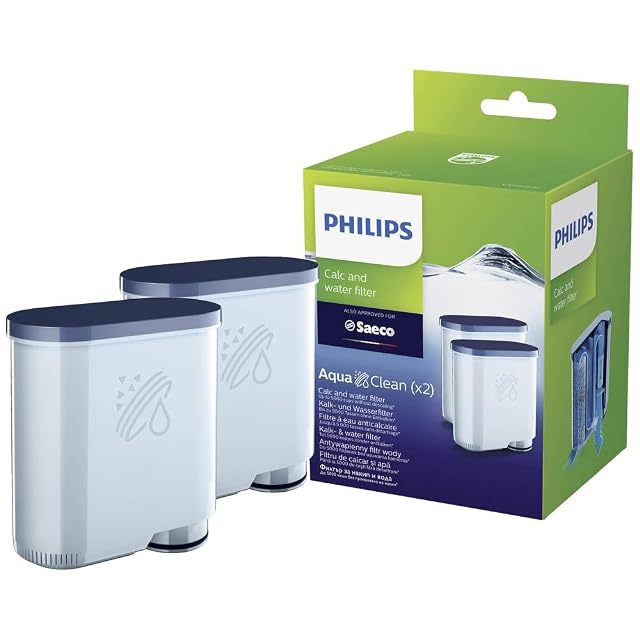
Philips claims up to 5,000 cups without descaling if the filter is replaced on schedule. That is broadly true and entirely conditional — miss a replacement and the claim expires with it.
Best for: Philips and Saeco bean-to-cup owners on medium to hard water.