Philips claims up to 5,000 cups without descaling if the filter is replaced on schedule. That is broadly true and entirely conditional — miss a replacement and the claim expires with it.
The bottom line Excellent if you are disciplined, worthless if you are not.
In-tank filters solve the practical problem with jug filters, which is that a jug is a habit and habits lapse. The cartridge sits in the water tank, and every drop the machine draws passes through it whether you were thinking about it or not.
Philips builds its AquaClean claim around that: up to 5,000 cups without descaling, provided the filter is replaced when the machine asks.
The claim is broadly true and worth reading carefully. It assumes the first cartridge went into a machine that had never scaled, and that every subsequent replacement happened on time. If you fit one to a three-year-old machine on hard water, the scale already inside does not go anywhere — you descale first, then begin the cycle. And a missed replacement does not merely pause the protection; the machine keeps drawing unfiltered water and scale resumes.
The machine counts cups and prompts you, which removes most of the discipline problem. Third-party cartridges exist and mostly work, and since the machine counts rather than senses, it will prompt identically whichever you fit.
For a Philips or Saeco owner on medium or hard water this is the right approach, and it is a genuine running cost — two cartridges a year, at Philips prices — that belongs in the ownership arithmetic rather than being discovered later.
What we like, and what we don't
Strengths
Genuinely postpones descaling for thousands of cups
Sits in the tank, so there is no jug habit to maintain
The machine tracks the filter and tells you when to change it
Compromises
Only works if you never miss a replacement, from the first one
Locked to Philips and Saeco machines and Philips prices
Does nothing once the machine has already scaled
Where this one sits in its aisle
At 30 £, it is the 2 cheapest of the 4 models in this category published here.
Cheapest in the aisle25 £
Median40 £
Dearest in the aisle45 £
Specifications
Type
In-tank cartridge
Claim
Up to 5,000 cups descale-free
Fits
Philips and Saeco espresso machines
Life
≈ 3 months or by cup count
Tracking
By the machine
Questions people actually ask
Is the 5,000-cup claim real?
Broadly, and conditionally. It assumes the first filter went in when the machine was new and that every replacement happened on time. Start filtering a machine that already has scale in it and the claim does not apply — you descale first, then start the cycle.
Can I use a third-party cartridge?
They exist and generally work, and the machine will keep prompting you as though you had fitted a genuine one, since it counts cups rather than sensing the filter. Quality varies more than the price difference suggests.
Our score
8.1/ 10
Excellent if you are disciplined, worthless if you are not.
Who this one is for
Philips and Saeco bean-to-cup owners on medium to hard water.
Compared with its closest rivals
Same category, nearest prices. Only the specifications every one of them states are shown — a half-empty column compares nothing.
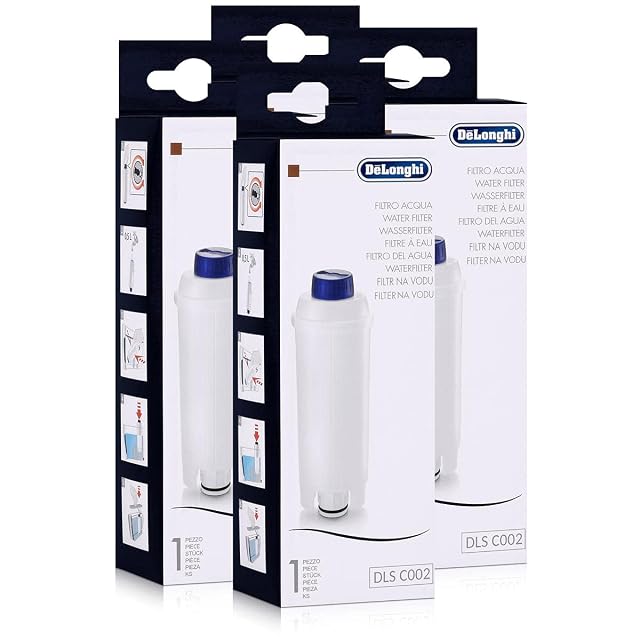
If price decides: De'Longhi DLSC002 Water Filter, at 25 £.
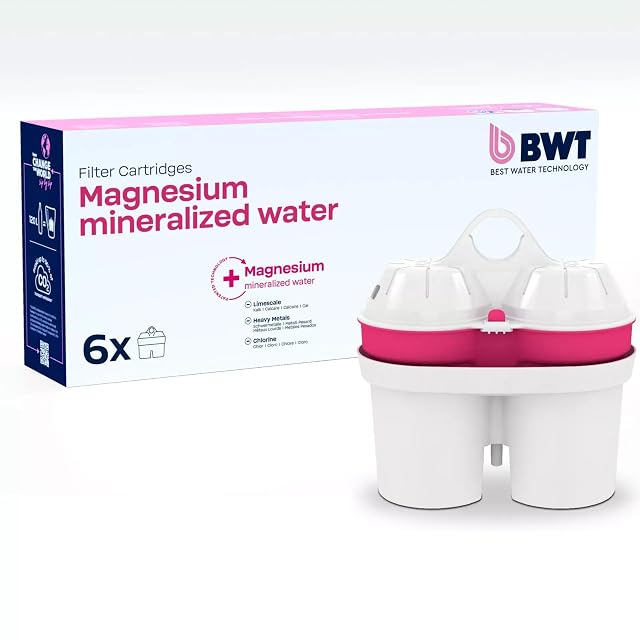
Highest Life in the table: BWT Magnesium Mineralized Water cartridges (≈ 4 weeks / 120 L).
If this one is not the right fit
On a tighter budget: De'Longhi DLSC002 Water Filter, at 25 £ in the same category. see the review
Price and availability
A reference exists on these Amazon stores: France, Germany, Italy, Spain, United Kingdom, United States. Listed is not the same as in stock — availability changes daily.
Details checked on August 8, 2026.
Sources
Specifications: manufacturer sheet and Amazon product page. Prices and availability: Keepa. No product on this site has been physically tested.
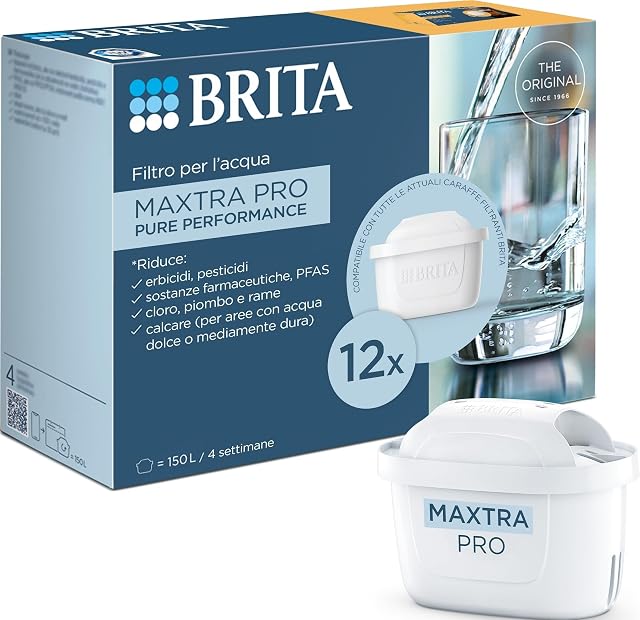
Jug cartridge · reduces carbonate hardness · ≈ 4 weeks
Not a coffee product, and the highest-return thirty euros in this whole site. Hard water is what kills espresso machines, and a jug filter in front of the tank buys years of life for the price of a few bags of beans.
Best for: Anyone on water above roughly 150 ppm — which is most of northern Europe.
Unlike a standard filter, this one adds magnesium back after removing hardness. Magnesium is what pulls flavour out of coffee, so the cup gets sweeter rather than just safer for the machine.
Best for: Someone already filtering who wants the water to improve the coffee, not just protect the machine.
The in-tank cartridge for De'Longhi bean-to-cup machines. It does what an in-tank filter does — reduces the hardness reaching the boiler with no habit to maintain — at the manufacturer's price.
Best for: Any De'Longhi bean-to-cup owner who will not reliably fill from a filter jug.