Not a coffee product, and the highest-return thirty euros in this whole site. Hard water is what kills espresso machines, and a jug filter in front of the tank buys years of life for the price of a few bags of beans.
The bottom line The least exciting purchase here, and the one with the highest return.
Coffee is about 98 % water, which is the reason this page exists, but it is not the reason you should buy a filter. The reason is that limescale is what kills coffee machines, and it kills them silently.
Every machine with a boiler heats water, and heating hard water deposits calcium carbonate on the element and through the pipework. The machine does not fail suddenly. It heats more slowly, flow drops, temperature stability decays, shots get worse — and by the time it stops working the deposit has been building for years. A machine on hard water that is never protected typically reaches this point somewhere between year three and year five. The same machine on filtered water frequently passes ten.
The intervention costs about thirty euros a year. Fill the tank from a filter jug instead of the tap, and the carbonate hardness reaching the boiler falls substantially. It does not fall to zero, which is the part people get wrong: filtered machines still need descaling, just far less often. Treat the machine’s prompt as the schedule and the filter as what stretches the interval.
There is a limit in the other direction that almost nobody mentions. Extraction actually needs minerals — magnesium and calcium participate in pulling flavour compounds out of coffee, and water that is too soft produces a flat, hollow cup. If you already live somewhere with very soft water, a filter makes it worse, not better. That is the case where mineral recipes, dosed into distilled water, genuinely earn their complexity.
Find your water hardness first. Your utility publishes it by postcode. Above about 150 ppm, buy the filter today; below about 50 ppm, your problem is the opposite one.
What we like, and what we don't
Strengths
Meaningfully reduces the carbonate hardness that forms scale
Costs a fraction of a descaling service, let alone a new machine
Universally available — no machine-specific cartridge to hunt down
Also removes chlorine, which does show up in the cup
Compromises
Reduces scale, does not eliminate it — you still descale, just far less often
Strips minerals that extraction actually needs; very soft water brews flat
A jug is a habit; an in-tank filter is automatic
Cartridges are a recurring cost forever
Where this one sits in its aisle
At 40 $, it is the 3 cheapest of the 4 models in this category published here.
Cheapest in the aisle25 $
Median40 $
Dearest in the aisle45 $
Specifications
Type
Jug cartridge
Life
≈ 4 weeks / 100 L
Reduces
Carbonate hardness, chlorine, some metals
Fits
All BRITA Maxtra and Maxtra+ jugs
Cost per litre
≈ 0.03 €
Alternative
In-tank filter, or a mineral recipe
Questions people actually ask
How do I know if my water is hard enough to worry about?
Your water utility publishes it by postcode, usually in °dH, °fH or ppm. Above roughly 150 ppm (about 8.4 °dH) scale is a real threat to any machine with a boiler. Below about 50 ppm you have the opposite problem — water that soft extracts poorly and tastes hollow.
Does filtering mean I never have to descale?
No, and believing that is how filtered machines still die. A jug filter reduces carbonate hardness substantially but not to zero, so scale still forms — just much more slowly. You descale on the machine's schedule; you simply reach it far less often.
Filter jug, in-tank cartridge, or a mineral recipe?
In-tank is the most convenient and ties you to your manufacturer's cartridge prices. A jug is cheaper and universal but only works if you actually use it. Mineral recipes — third-party sachets dosed into distilled water — give the best cup and the most control, and are a genuine commitment. Start with the jug.
Our score
7.8/ 10
The least exciting purchase here, and the one with the highest return.
Who this one is for
Anyone on water above roughly 150 ppm — which is most of northern Europe.
Compared with its closest rivals
Same category, nearest prices. Only the specifications every one of them states are shown — a half-empty column compares nothing.
A reference exists on these Amazon stores: France, Germany, Italy, Spain, United States. Listed is not the same as in stock — availability changes daily.
Details checked on August 8, 2026.
Sources
Specifications: manufacturer sheet and Amazon product page. Prices and availability: Keepa. No product on this site has been physically tested.
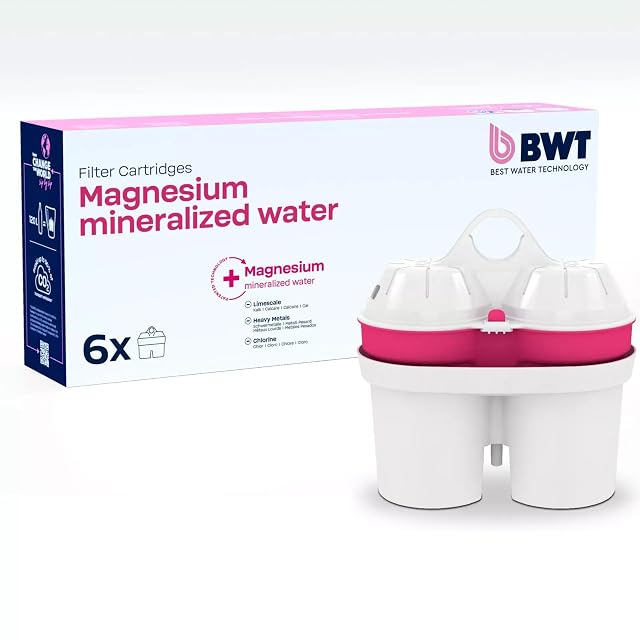
Unlike a standard filter, this one adds magnesium back after removing hardness. Magnesium is what pulls flavour out of coffee, so the cup gets sweeter rather than just safer for the machine.
Best for: Someone already filtering who wants the water to improve the coffee, not just protect the machine.
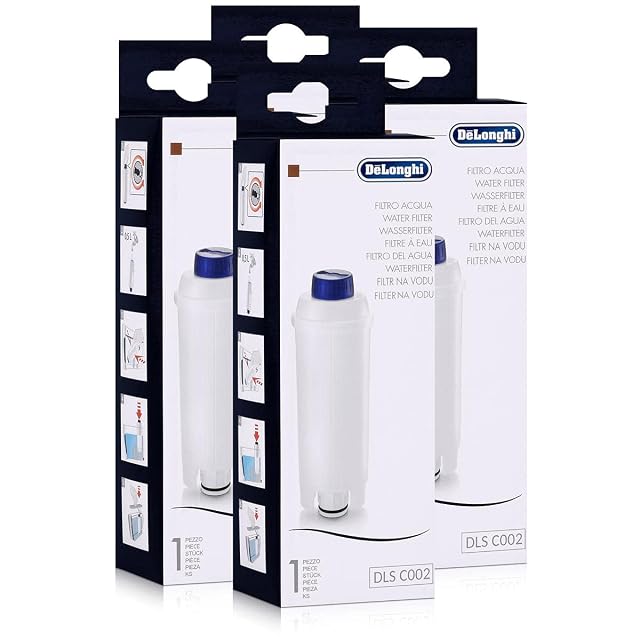
The in-tank cartridge for De'Longhi bean-to-cup machines. It does what an in-tank filter does — reduces the hardness reaching the boiler with no habit to maintain — at the manufacturer's price.
Best for: Any De'Longhi bean-to-cup owner who will not reliably fill from a filter jug.
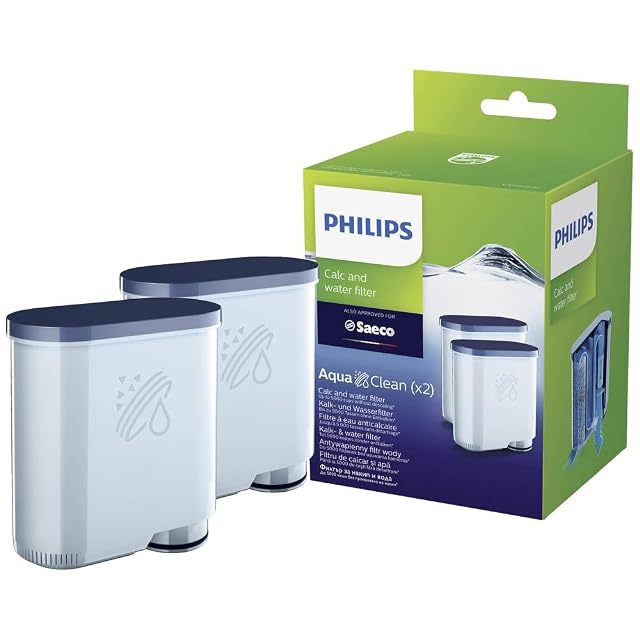
Philips claims up to 5,000 cups without descaling if the filter is replaced on schedule. That is broadly true and entirely conditional — miss a replacement and the claim expires with it.
Best for: Philips and Saeco bean-to-cup owners on medium to hard water.