Where we land on it The cheapest way to find out what is actually wrong with your shots.
Espresso is unusual among cooking processes in that you cannot see it happen. Coffee goes into a metal basket, disappears into a machine, and something comes out of a spout — and if it tastes wrong, the cause is hidden inside the part you cannot see.
Removing the base solves that.
A good shot appears across the entire underside of the basket, quickly forms a single converging stream, and stays dark and even. A channeling shot does something visibly different: one or two jets spray sideways, often starting before the rest, and the stream is pale and uneven. That is water finding a path around your coffee instead of through it, and it is the commonest cause of home espresso that tastes sour and bitter at once.
Reading about channeling teaches you the concept. Watching it happen teaches you to fix it, because you can change one thing — stir the bed, tamp more level, dose differently — and see the result on the next shot.
Two warnings. It will spray, and it will spray onto whatever is beside the machine, so clear the countertop before the first attempt. And there are no spouts, so splitting a double into two cups is no longer possible.
Many people use one for two weeks, sort out their distribution, and go back to the spouted portafilter. That is a fine outcome and still worth the money.
What it gets right, and wrong
Strengths
Makes channeling visible — the fastest way to diagnose a bad shot
Fits any 58 mm (2.28 in) machine, and takes standard precision baskets
Better looking and better balanced than the stock portafilter
Compromises
Sprays across the kitchen when a shot goes wrong, which it will
No spouts means no splitting a shot into two cups
Check the basket seats correctly before the first pull
Specifications
Size
58 mm (2.28 in)
Base
Bottomless / naked
Basket
Standard 58 mm (2.28 in) precision baskets
Handle
Walnut
Weight
Heavier than stock
What people want to know
What am I supposed to look for?
A good shot emerges from the whole base and converges into a single stream, dark and even. A channeling shot sprays sideways in one or two jets, often before the rest has started. Once you have seen the difference you will never mistake it again.
Is it worth it if I am not a hobbyist?
Use it for two weeks while you learn, then decide. Many people diagnose their distribution problem, fix it with a WDT tool, and go back to the spouted portafilter for daily use. That is a perfectly good outcome for fifty dollars.
Our score
8.6/ 10
The cheapest way to find out what is actually wrong with your shots.
Today’s price and availability, for coffee machines
A reference exists on these Amazon stores: United Kingdom, United States. Listed is not the same as in stock — availability changes daily.
Details checked on October 30, 2026.
This one and its buyer, among coffee machines
Anyone learning espresso who cannot work out why some shots are bad.
Sources
Specifications: the manufacturer sheet for coffee equipment and the matching Amazon product page. Prices and availability: Keepa. Every figure on this page names its source.
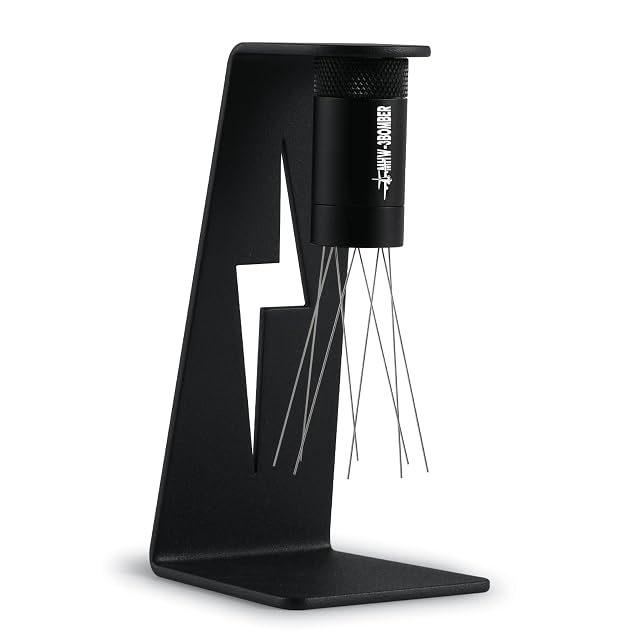
Eight fine needles you stir through the grounds before tamping. It costs about $25 and fixes more bad shots than any other accessory here — including ones costing twenty times as much.
Best for: Every single person with a non-pressurized basket. There is no exception worth naming.
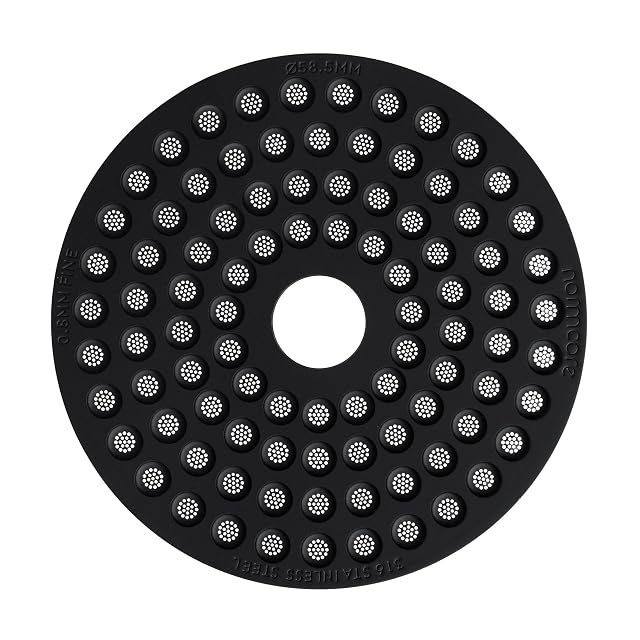
58.5 mm (2.30 in) · 1.7 mm (0.07 in) mesh · stainless
A fine steel disc that sits on the puck. It distributes the incoming water and keeps the shower screen clean — the second of which is the reason to buy it.
Best for: Anyone tired of wiping the shower screen after every session.
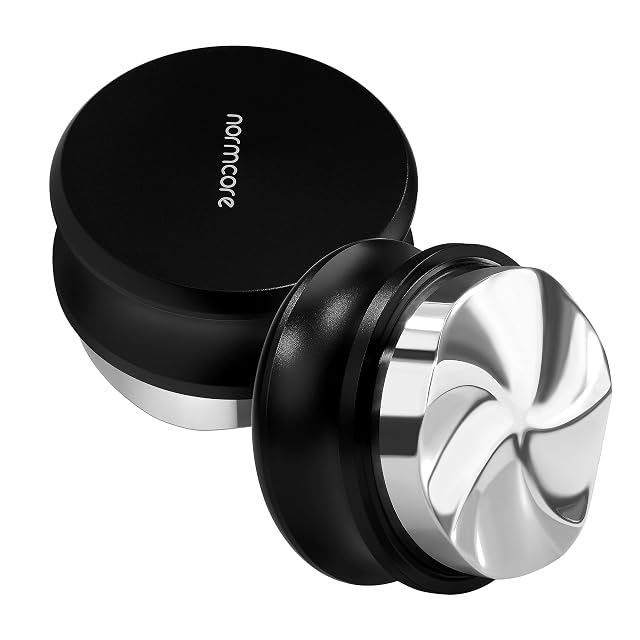
58.5 mm (2.30 in) · gravity-driven · depth adjustable
Spins under its own weight to level the bed before tamping, rather than compressing it. Useful if your distribution is poor — and redundant if you already use a WDT tool properly.
Best for: A grinder that clumps badly, where a WDT alone is not producing an even bed.