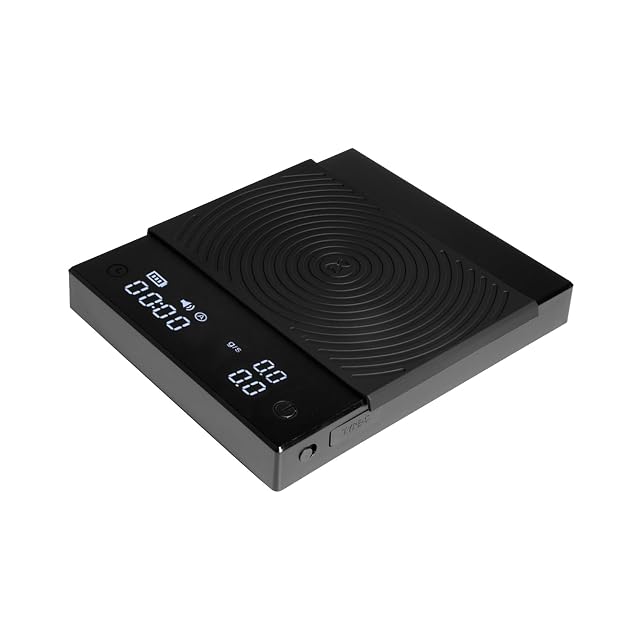
The Black Mirror shrunk to fit a drip tray with room to spare, or a jacket pocket. Same 0.1 g resolution and fast refresh, without the flow-rate display.
The bottom line The scale that fits, which beats the better scale that does not.
The most common reason a coffee scale stops being used is not accuracy. It is that it does not fit under the portafilter, so weighing the shot means balancing a cup on a scale beside the machine, and after a week you stop bothering.
The Nano exists for that. It is small enough to sit on drip trays that defeat every other scale, and it keeps the two specifications espresso genuinely needs: 0.1 g resolution, because a gram is over five per cent of a shot, and a refresh fast enough that the number on the display is what is in the cup now rather than half a second ago.
What it drops against the Basic 2 is the flow-rate readout, and that is a real loss for diagnosis. Flow rate is what tells you a shot is channelling while it is happening — a sudden jump to a high g/s means water has found a path around the puck. Without it you see the final weight and the elapsed time, which tells you something went wrong but not what.
For pour-over it works with a V60 and a small server, and gets precarious under a Chemex, which overhangs the platform.
The weakness it shares with every scale at this price is water. A silicone mat underneath and a wiped tray roughly doubles its life.
What we like, and what we don't
Strengths
Genuinely small — fits drip trays that defeat other scales
0.1 g resolution with a fast refresh, which espresso needs
USB-C charging and weeks of battery life
Compromises
No flow-rate display, which the Basic 2 has
Small platform; a large cup overhangs it
Not waterproof — the usual cause of death
Where this one sits in its aisle
At 50 $, it is the 1 cheapest of the 4 models in this category published here.
Cheapest in the aisle50 $
Median60 $
Dearest in the aisle80 $
Specifications
Capacity
2 kg
Resolution
0.1 g
Modes
Espresso, pour-over, manual
Charging
USB-C
Flow rate
No
Questions people actually ask
Nano or Basic 2?
The Basic 2 shows live flow rate, which diagnoses channelling while there is still time to learn from it. The Nano is smaller and cheaper. If your drip tray fits the Basic 2, buy that; if it does not, the Nano is the scale that will actually get used.
Is the platform too small for pour-over?
For a V60 and a small server, no. For a Chemex or a large carafe, the vessel overhangs and can become unstable. Check what you brew into before choosing the small one.
Our score
8.2/ 10
The scale that fits, which beats the better scale that does not.
Who this one is for
Espresso on a machine with a shallow drip tray, or travel.
Compared with its closest rivals
Same category, nearest prices. Only the specifications every one of them states are shown — a half-empty column compares nothing.
A reference exists on these Amazon stores: France, Germany, Italy, Spain, United Kingdom, United States. Listed is not the same as in stock — availability changes daily.
Details checked on August 8, 2026.
Sources
Specifications: manufacturer sheet and Amazon product page. Prices and availability: Keepa. No product on this site has been physically tested.
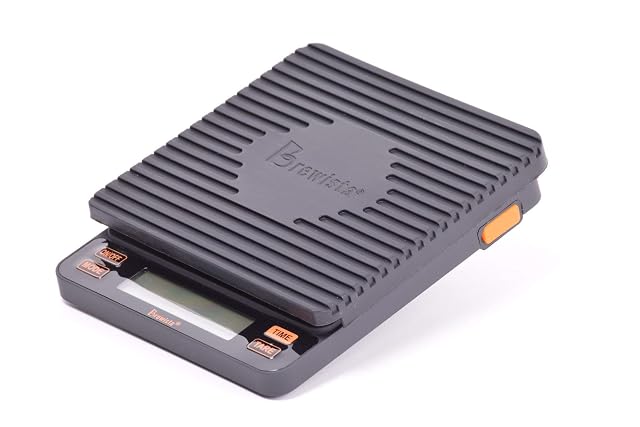
The one scale here built to survive a drip tray. Six modes, auto-start timers and a silicone cover — which addresses the thing that actually kills coffee scales.
Best for: Espresso on a wet drip tray, which is where scales go to die.
2 kg × 0.1 g · flow rate · under-portafilter footprint
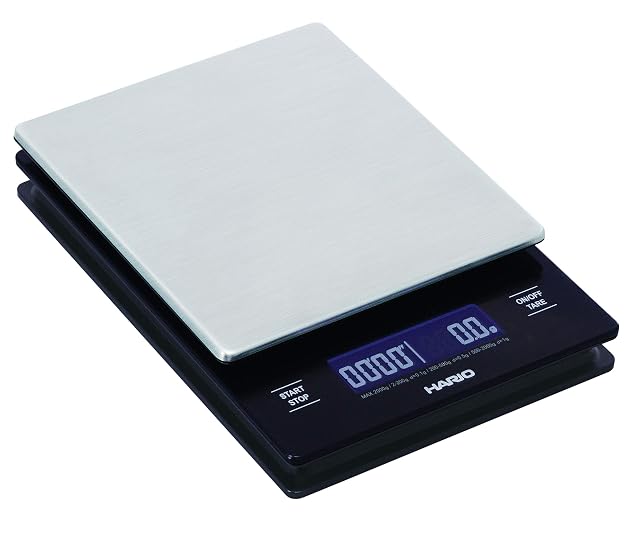
Fast enough for espresso, small enough for a drip tray, and it shows flow rate — which is the one number that tells you what your shot is doing while it is still happening.
Best for: Espresso, where 0.1 g and a fast refresh genuinely change what you can control.