Machine and grinder in one box, at a price that undercuts buying them separately. The compromises are real — 54 mm basket, single boiler, a grinder you will outgrow — but nothing else takes a beginner this far this cheaply.
The bottom line The most espresso per euro anyone sells, with the compromises stated on the tin.
The Barista Express has been the default answer to “how do I start making espresso” for over a decade, and it has earned it arithmetically. A decent entry espresso machine and a decent entry espresso grinder, bought separately, cost more than this does together. That is the whole argument, and it is a strong one.
What you get is a genuine espresso machine: a real portafilter, a real steam wand, low-pressure pre-infusion, and a pressure gauge that teaches you something every shot. The gauge matters more than it looks. Watching the needle race to the top tells you the grind is too coarse; watching it strain tells you the opposite. It converts an invisible process into a dial you can read, which is exactly what a beginner lacks.
The compromises are equally genuine. The single boiler means brewing and steaming are sequential, never simultaneous — fine for two drinks, tedious for six. The 54 mm basket is Sage’s own size, so the vast aftermarket built around the 58 mm standard is closed to you. And the integrated grinder, the thing that makes the price work, is also the ceiling: it will hold you back long before the machine does.
None of that argues against buying it. It argues for buying it knowingly. Most people who start here keep the machine and add a real grinder later, which is a perfectly good outcome — you end up with a capable setup and you learnt on something forgiving. What you should not do is buy this expecting it to be the last espresso purchase you make.
What we like, and what we don't
Strengths
Grinder and machine together for less than the two bought apart
Fast to temperature; you are pulling a shot within a minute of switching on
Every wear part is a stocked spare — these stay repairable
Steam wand is real, so latte art is actually learnable
Compromises
Single boiler: you brew, then you steam, never both
54 mm basket limits you to the ecosystem's own accessories
The built-in grinder is the first thing serious users replace
Sold as Breville in the US, Sage in Europe — same machine, different name
Where this one sits in its aisle
At 700 $, it is the 6 cheapest of the 6 models in this category published here.
Cheapest in the aisle200 $
Median500 $
Dearest in the aisle700 $
Specifications
Portafilter
54 mm
Boiler
Single, thermocoil
Grinder
Integrated conical, 18 settings
Pre-infusion
Low-pressure, automatic
Water tank
2 L
Pressure gauge
Yes
Questions people actually ask
Sage or Breville — which do I buy?
Whichever your country sells. It is the same machine under two brands: Breville across North America and Australia, Sage across the UK and Europe, after Breville found the Breville name already taken in Europe. Accessories and baskets are interchangeable.
Is the built-in grinder good enough?
Good enough to learn on, and the reason the package is worth buying. It is not good enough to stop there — its adjustment is coarser than a dedicated espresso grinder, and channelling you blame on your technique is often the grinder. Most owners add a separate grinder within two years and keep using the machine.
What does single boiler actually cost me?
Time and sequence. You pull the shot, the machine heats to steam temperature, you texture the milk, then it cools back down before the next shot. For one or two drinks it is a non-issue. For six guests it is a slow morning.
Our score
8.6/ 10
The most espresso per euro anyone sells, with the compromises stated on the tin.
Who this one is for
Your first portafilter machine, if you want one purchase rather than a project.
Compared with its closest rivals
Same category, nearest prices. Only the specifications every one of them states are shown — a half-empty column compares nothing.
A reference exists on these Amazon stores: France, Germany, Italy, Spain, United Kingdom, United States. Listed is not the same as in stock — availability changes daily.
Details checked on August 8, 2026.
Sources
Specifications: manufacturer sheet and Amazon product page. Prices and availability: Keepa. No product on this site has been physically tested.
51 mm portafilter · 15 cm wide · pressurised baskets
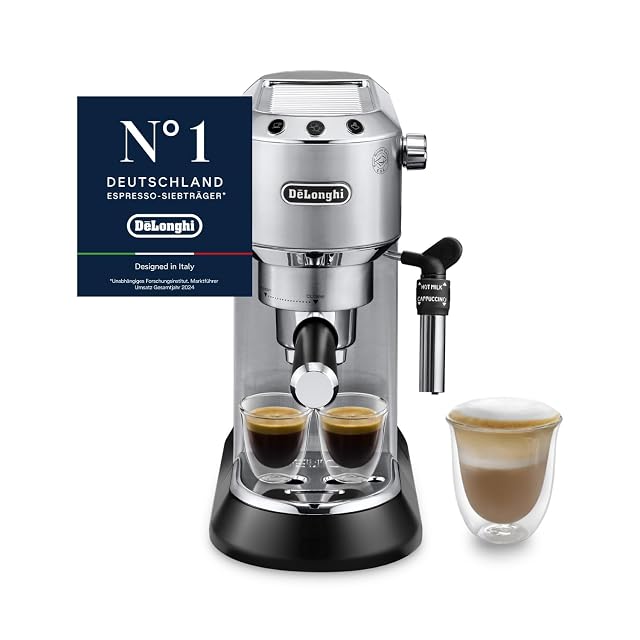
Fifteen centimetres wide, heats in forty seconds, and makes a decent drink for under 200. It ships with pressurised baskets that fake crema from any grind — which is exactly why it works for beginners and why it stalls after a year.
Best for: A tiny kitchen, a first espresso machine, or a second machine for an office.
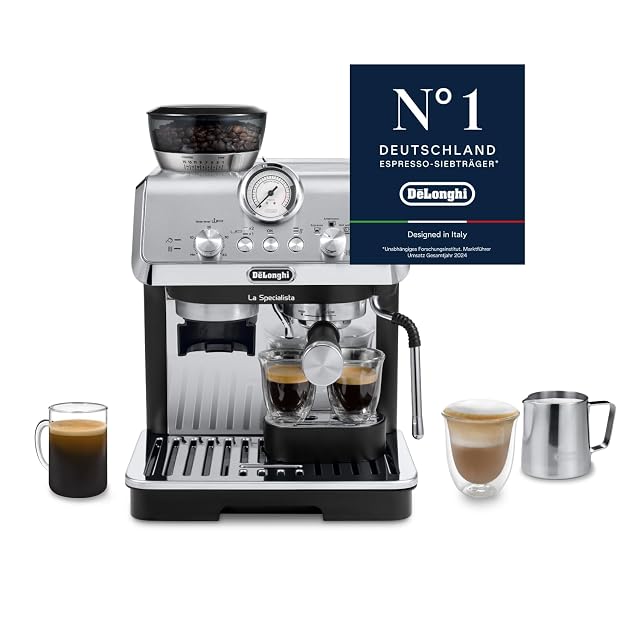
De'Longhi's answer to the Barista Express, with a tidier grinder-to-portafilter workflow and better temperature control. Worth comparing directly rather than assuming Sage wins by default.
Best for: A first serious espresso setup where one appliance has to do everything.
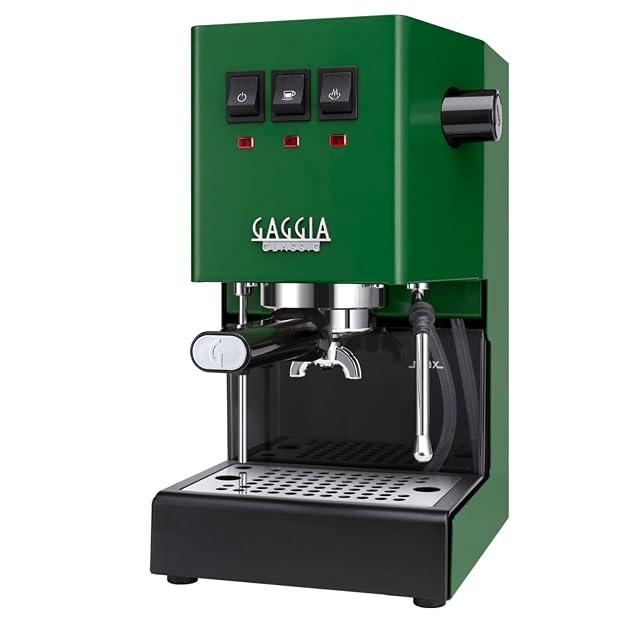
58 mm commercial portafilter · 3-way solenoid · steel body
A 58 mm commercial portafilter, a steel body and a three-way solenoid, in a machine cheap enough to modify. Nothing else at this price is still worth owning in fifteen years, and nothing else has this much of an aftermarket.
Best for: Someone who wants one espresso machine for the next fifteen years and does not mind learning it.